Showing posts with label feline cancer. Show all posts

Monday, June 15, 2015

Bladder stones: A Technician's Perspective


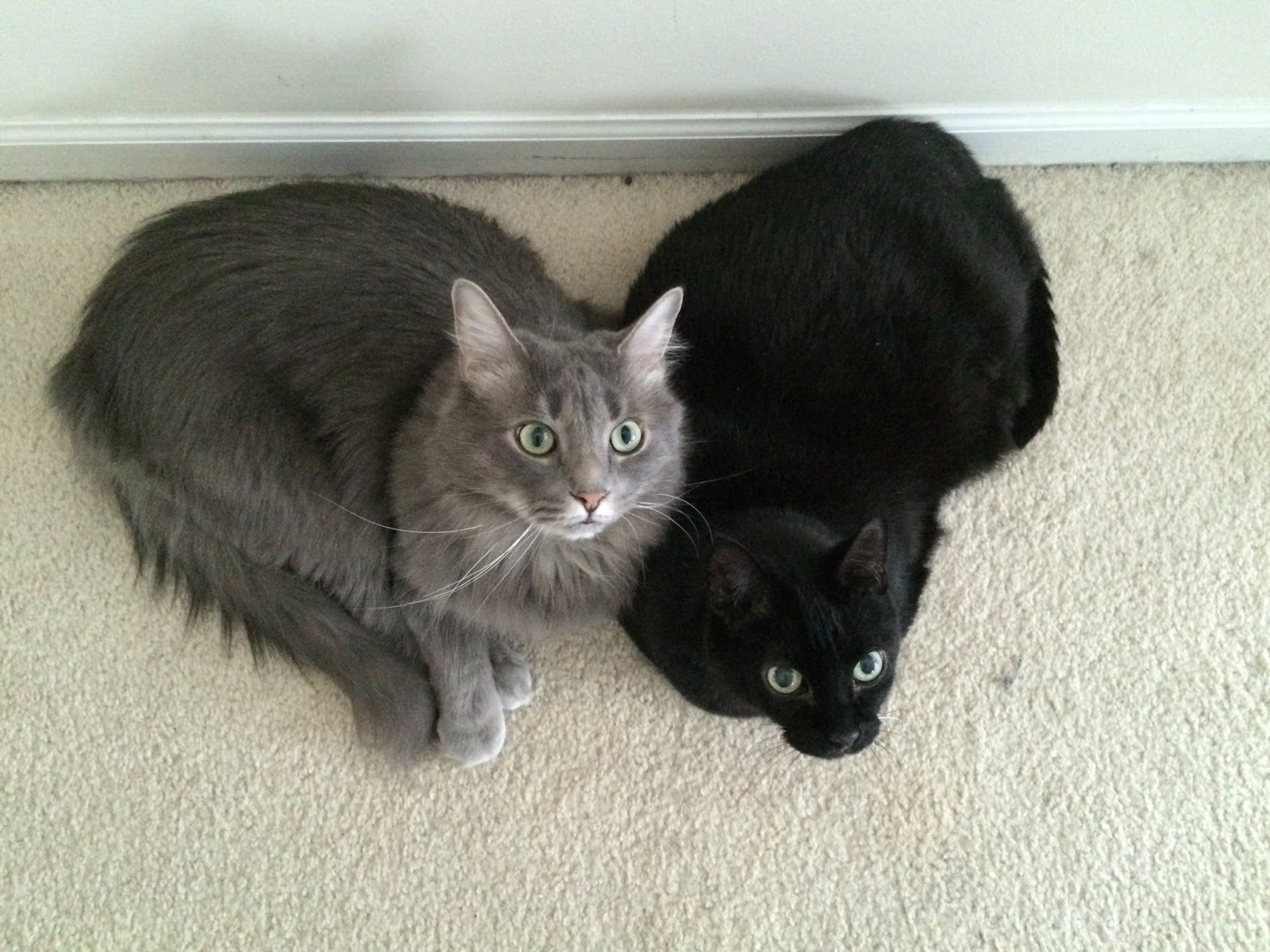
Can you tell which cat has bladder stones?


In light of the numerous cases of bladder stones, crystals and inappropriate urination issues we have seen in the last month, I thought that I would share my own experience with bladder stones, in the hopes that others will take away the same lessons that I learned.

Marley
For over a decade, I shared my life with two lovely cats who were brother and sister. Mina, the sister, is still with me, but I lost Marley to lung cancer in 2013. Both cats came from a rescue group in East Lansing, siblings from a litter of hand-raised kittens whose mother had died when they were 10 days old. Both cats were fairly healthy during their younger years - Marley had a congenital cataract, Mina had some foul diarrhea. Marley had chronic skin allergies. Both cats went through a period of time when they had adverse vaccine reactions. Mina occasionally has bouts of bronchitis. Together, they
kept my hands full!

In September of 2009, I noticed that Marley had stopped squatting to urinate. I was annoyed by the habit, because he would stand in the litterbox and a big stream of urine would splatter out onto the floor in front of the box. I watched this go on for two weeks, because he didn't seem to be in pain - he didn't vocalize or strain when he urinated, he didn't seem to be going all that frequently - maybe 2-3 times daily. He didn't seem to be drinking more water than usual, and the urine wasn't bloody. I wondered if he had developed some arthritis in his hips - after all he was 9 years old at the time. I brought him in to work with me and after a thorough exam, we took hip x-rays. Dr. Brooks looked at the x-ray and said, "Well, his hips are fine, but he has bladder stones." I thought she was teasing me. I couldn't believe it. I looked for myself. Sure enough, there they were - 7 stones (I would share the x-ray, but it is in attic storage, now, and I don't like attics). A few weeks later, I scheduled him for surgery - I forget now, why I waited. It might have been a busy surgery schedule. I might have been saving up money. Anyway, it was a dumb idea to wait, because I was on pins and needles the whole time, worrying that he might become obstructed with a stone. This was a little silly, not because it wasn't possible, but because it takes weeks to months for stones to form, so he could have become obstructed at any time prior to his diagnosis, and I had not been worried, before. Worrying wasn't going to help him. Surgery was the only option.

Calcium oxalate stones
Surgery went smoothly, and 7 large stones (and two smaller stones that were not visible on the x-ray) were removed. We sent off the stones for analysis at the Minnesota Urolith Center and the report stated that they were 70% Calcium Oxalate Monohydrate and 30% Ammonium Acid Urate stones. After surgery, Marley didn't like using the clay litter we use here in the hospital, so he urinated bloody urine on the floor and towel until we switched him back to scoopable clumping litter. At home, he resumed urinating in the box normally, squatting like a good boy.

After that, he switched to a canned stone-prevention diet. Calcium oxalate stones do not dissolve with a dietary change, but they can be prevented from re-forming in many cases. Marley had bladder radiographs and urine rechecks every 6 months until 2012. I had a baby and went on maternity leave around the time that he was due for a recheck. In retrospect, I should have brought him in for a recheck early, but I was caught up in my own medical issues at the end of my pregnancy, and I figured a few months' delay was not that important.

But it was. In May of 2012, four months after the birth of my daughter, I was scheduling Marley for a
One large stone that required surgery to remove, and the many smaller stones we expressed.
repeat cystotomy. He had a bladder full of stones again. They were smaller, this time, but one stone was large enough that it could not be expressed. Marley recovered well from his second cystotomy and continued to do well until July 2013, when cancer took its toll.

Mina
Shortly after I lost Marley, his biological sister, Mina, started vomiting. She has had occasional bouts of acute vomiting, and was empirically
diagnosed with inflammatory bowel disease in 2005. In August 2012, she had a bout of vomiting that lasted about a week, and I brought her in for abdominal x-rays. At that time, she was having no issues urinating in the litterbox. She did not have any intestinal abnormalities, but there was a shadow in her bladder, which turned out to be a "puddle" of small stones. Fortunately, since she is a female, we were able to express all the small stones out of her bladder, and surgery was avoided. We sent in the stones to the Minnesota Urolith Center and they were 100% Calcium Oxalate stones. She has also been eating a crystal prevention diet and so far, she has had no further sign of stones on any of her followup xrays or urine samples.

If I had taken my own advice, many years ago, and fed canned food to my cats more often, I might

Sometimes, a lot of small stones look like one large stone
never have had to deal with this issue, as their urine might have been more dilute and less likely to form stones. I was very fortunate that neither of my cats decided to start urinating outside the litterbox due to discomfort - in fact, they are both very good examples of the fact that cats hide their problems from their owners. As a technician, I should be more attuned to signs and symptoms of illness, and I was unaware of the issues my own cats had. They are also a good testament to the importance of follow-up. Even if your cat seems fine after a treatment or procedure, it is important to follow-up on schedule. If I had brought Marley back 3 months earlier for a recheck, he might have been able to avoid the second cystotomy surgery. It may be that Mina will be one of the lucky few cats that never re-forms stones after a cystotomy, but you can be sure that I will continue to check her every 6 months!
Mina would rather nap than have a bladder recheck

Monday, June 17, 2013

Five reasons to spay or neuter your cat

At Exclusively Cats Veterinary Hospital, we are often asked why people should spay or neuter their cats. Here are some of the reasons why it is a good idea:

1.      Population control
Every year 3-4 million unwanted pets are euthanized by various animal control organizations (nearly 10,000 every day). This equals about 70% of the cats that enter shelters each year. Even more are abandoned for various reasons – to the outdoors, in abandoned houses, or dropped alongside highways, Dumpsters, in
JAVMA kitten statistics
parking lots or worse.
It is currently estimated that about 25% of pets are un-spayed. That equates over 40 million un-spayed and un-neutered cats and dogs. Seventy million dogs and cats are born every day in the US – that’s nearly 50 born every minute3!
One female cat can produce an average of 2-3 litters per year and 1-8 kittens in each litter, usually an average of 4 kittens. That equates to 2-16 kittens yearly per female cat. Some estimated figure that a pair of intact, breeding cats can produce as many as 420,000 offspring in seven years2. The Journal of the American Veterinary Medical Association (JAVMA) estimates more conservatively at 32,768 kittens after 7 years, but then points out that cats are living longer, healthier lives, so could conceivably reproduce for longer, producing up to 2,097,152 offspring in 10 years. 

2.      Health
Spayed and neutered cats tend to be healthier. While there is a slight risk for weight gain following ovariohysterectomy (spay) and orchidectomy (neuter) surgeries, monitoring your cat’s diet and weight closely can help prevent this. 
Conversely, the health benefits of spaying and neutering a cat are vast. For females, the risk of cancer is decreased by 25% overall1. If spayed before the first heat cycle, the risk decreases even more – to virtually nothing. These cancers are fatal 90% of the time in cats. In addition, spayed females have a decreased risk
Mammary cyst in un-spayed 11 year old calico cat
Mammary Cyst in un-spayed 11 year old cat
for urinary tract infections and hormonal changes. Spaying also completely e
liminates the risk of potentially fatal uterine infections (pyometra) or other complications of the uterus (read Debbie’s Story).
Male cats that are neutered tend to live 40% longer than un-neutered males.

Many people think that they must wait until 6 months of age or until their cat has had one heat cycle before having a spay surgery performed, however that is not entirely true. Younger kittens tend to bounce back more quickly and with advancements in surgical techniques, anesthesia protocols and surgical protocols, it is just as safe at 3 months as it is at 6 months. 


3.      Prevent inappropriate urination and marking
Most people know that un-neutered males will spray very stinky smelling urine to mark their territory and ward off other males. However, what many people do not know is that females that are not spayed will also mark territory with urine. They will urinate in front of males in order to attract attention, or may urinate near doors and windows as a signal to outdoor cats or in frustration that they cannot escape outside to find a mate. More information about inappropriate elimination behavior can be found in our blog article Feline Inappropriate Urination: Acting out all over the house!

4.      Prevent unwanted behaviors and side effects
Did you know that 70% of people that acquire animals end up giving them away, abandoning them or taking them to shelters? Of the 6 to 8 million pets a year that enter animal shelters, only about 10% have been spayed or neutered.3

Some of the reasons that un-altered pets are turned over to shelters include behaviors that stem from the fact that they are not spayed or neutered. The single most pressing desire of an un-altered pet is the desire to find a mate. Un-neutered males and un-spayed females will try all the tricks in their books to escape out open doors and windows. If they already go outside, they may roam farther than normal. If trapped inside, they hay howl at night or become excessively moody, aggressive, needy or simply unpredictable. Often, un-neutered males have rough, thin or otherwise poor hair coats and develop a sticky “goo” at the base of their tail called “stud tail”. Un-neutered males tend to be more aggressive and develop very odorous urine.

5.      Overall happiness – for all!
Spayed and neutered cats are more relaxed, less-single-mindedly interested in trying to get outside or frustrated at being trapped inside. Altered pets are less unpredictable, calmer and more social. They tend to get along with other pets better, too! As an added benefit, happy pets make for happy pet parents!

The cost of spaying or neutering a pet is far less than the cost of dealing with the complications of pregnancy or the cost of raising and caring for a litter of kittens. It is also far less than the cost of treating uterine infections, mammary cancer, or the cleanup involved after your cat has sprayed around the house. Never mind the frustration!


1.Data on file at IDEXX Laboratories, Inc. Westbrook, Maine USA.
2.Top 10 Reasons to Spay or Neuter Your Pets. American Society for the Prevention of Cruelty to Animals website. http://www.aspca.org/pet-care/spayneuter/spay-neuter-top-ten.aspx Accessed March 25, 2013.
3. Oxford-Lafayette Humane Society http://www.oxfordpets.com/index.php?option=com_content&view=article&id=61
4. Floyd, Lynya, 5 Ways to Add Years to Your Pet’s Life, http://www.familycircle.com/family-fun/pets/ways-to-add-years-to-your-pets-life/

Friday, March 15, 2013

Choosing Euthanasia: What happens next?


 The process of euthanasia

Once you have made the decision to euthanize your cat and called your veterinarian, the office staff will schedule a euthanasia appointment. Generally these appointments are open-ended, so that you can spend as much time as you need before or after the euthanasia to feel closure, and to feel composed enough to leave the hospital. It is best to bring someone with you, if possible, to drive you home, if needed. It is also best not to bring small children, if at all possible, or have them step out of the room while the euthanasia takes place, so that you are able to focus on your last moments with your cat.

Feral Cat Silhouuette by Blake Shaw
You have the option to be present with your pet during the euthanasia or to leave the room – either leaving your cat in the capable hands of your veterinary staff and exiting the building before the euthanasia takes place, or to come back into the room after the euthanasia solution has been administered to view your pet. There is no “right” way to do this, and most veterinary hospitals are very flexible about what can be done. The only thing that they may ask is that you allow a staff member to gently restrain your animal for the doctor, which might prevent you from having your cat in your arms or on your lap for the euthanasia, itself.

If your cat is distressed by the veterinary office, you may be offered a sedative either prior to travel to the hospital, or at the time of your appointment to relax your pet before the euthanasia takes place. Depending on the sedative, your cat may merely be calmer, or may actually fall asleep before the euthanasia.
During the euthanasia procedure, an overdose of an anesthetic medication is injected into one of your cat’s veins. Most cats do not react to the needle poke, though some may protest a little at having their leg held. This medication causes your cat to fall asleep first, and then the respirations and heart will stop. Many cats will heave a sigh, as though of relief, as they fall asleep and feelings of pain and discomfort subside. Sometimes, they may look around or look up as though they are having a moment of clarity, or are looking for your face, before they become unconscious. Usually, the cat’s heart has stopped before the veterinarian is finished giving the dose of the euthanasia medication. Most people are quite surprised at how peacefully and how quickly their pet is “gone”.

Some of the mechanical things that happen to the body as life passes can be uncomfortable to watch or disconcerting, especially if you are not expecting it. Unfortunately, cats do not close their eyes after euthanasia. Some cats will lick their lips – if this happens, their tongue may continue to stick out after euthanasia. Sometimes, a cat will urinate or defecate as their muscles relax. Rarely, several minutes after the cat is “gone”, electrical impulses in the body can trigger the diaphragm to move after the heart has stopped. It might look as though the cat is gasping for breath, but this is only a reflex.

After Care

At such a sad time, who wants to be faced with decisions? However, there is one last thing to decide – will you take your pet home to bury in the garden? You may need to check local ordinances in your area before doing this. Certain times of the year, this may be impractical – December in Michigan is a difficult time of year to try to bury anything! Most veterinary offices have other options available as well. There are a few places that provide a Pet Cemetery, where your pet can have a grave site that you can visit. There are also two cremation options - general or group cremation means that your cat will be taken to a special pet crematory facility and cremated along with several other pets. Their ashes will be combined with other ashes and buried on site. You cannot go visit them, however.  Private cremation means that only one pet is cremated at a time, and you can have the ashes returned to you – to bury, scatter in the garden, place in an urn or have turned into memorial jewelry or artwork. There are quite a few artists and businesses that will incorporate your pet’s ashes into a painting, drawing, glass bead or pendant.

Paw Prints are a lovely way to memorialize your cat
If you do not want your pet’s ashes returned, you have other options to memorialize your pet. Many people request that a small amount of fur be clipped and saved for them, others opt to have a clay pawprint made. Some people prefer to remember their cats through photos, and some people find it too painful to keep any memento of their cat and find themselves donating cat beds and toys to shelters and rescues. Some people go out right away to find a new cat to shelter and care for, while others may need to wait before welcoming in a new furry friend. Some may find that the thought of any other cat in their house is too painful. Again, there is no “right” way to deal with the loss of your cat. It hurts. You have to find the way that is best for your own self to heal that hurt. 

You may find that your other cats mourn the loss of their companion, just as you do. Your other cats may wander the house, investigating places where the missing cat used to sleep, or may call out as though looking for her. Your other cats may be more aloof or more clingy than previously, and may be either more agitated and restless or more sedentary and sleepy. Your cats may show less interest in eating – in fact, the ASPCA notes that 11% of cats that appear to be mourning will stop eating completely for a short period. If your cat goes on hunger strike for more than a couple days, however, it would be best to schedule a checkup with your veterinarian.

The process of choosing euthanasia for your cat, when laid out in black and white is a lot less scary and emotional than when you actually find yourself within the process. Remember, though, that while you must be the one to make the final decision, you don’t have to do it alone. We veterinary staff members are happy to answer your questions, let you voice your concerns and fears, and discuss treatment options to allow you and your cat to enjoy a long, healthy relationship and to help you make sense of these troubling, but important and compassionate decisions. Sometimes, we must choose to suffer, ourselves, so that our cat’s suffering can end.

Resources:
Association for Pet Loss and Bereavement
ASPCA Pet Loss Resources
Michigan Pet Loss Resources
Michigan State University College of Veterinary Medicine Pet Loss Support 
UP Pet Loss Support Group
Pet Loss Grief Support
Beyond the Pawprint Pet Loss Support Group, Farmington Hills, MI

Monday, January 21, 2013

Choosing Euthanasia: A technician’s perspective


Orange and white cat sleeping in the sun
 How do you know when the time is right to say goodbye to your cat?

Due to the advances in veterinary medicine, the average lifespan of the cat has increased significantly over the years. Once upon a time, a typical backyard cat could be expected to live about 4-5 years. Now, pampered felines average about 14 years of good life, and a good number of our patients are seeing the other side of 20 years! Our own hospital cat, Ginger, was 22 years old when she developed an inoperable squamous cell carcinoma in her mouth, and we had to say goodbye.

How did we make that decision? How do you know when the time is right to say goodbye? Sometimes the choice is easy, or there is no real choice – if your cat has a traumatic accident or rapid organ failure that medicine cannot treat, it is kindest to end his or her suffering and pain. However, if your cat develops a treatable or manageable but incurable disease, knowing when to make the decision to euthanize can be hard.

I recently posted about my cat, Curie, who was being treated with chemotherapy. Just before Christmas, I had to make some decisions about her further care, and after considering her quality of life and weighing the options, I came to the decision to euthanize her. It was no easy decision, and I cried all day on the day I made the decision. I also cried on subsequent days, after we had euthanized her. However, I stand firm in my belief that it was the right decision for her. What follows are some of the factors that I considered when making my decision.

Sunset cat silhouette


Deciding how to feel about Euthanasia
One thing to keep in mind is that, as a pet parent, you are your pet’s caretaker, their champion, and their advocate. Your veterinary doctor and staff, your friends and family, your breeder – they can all offer advice to you, but ultimately, the decision is yours. No one can make the decision to euthanize for you, and it is both a terrible and wonderful power to have.

Being able to make the decision to euthanize your cat is a huge responsibility because, even though you are not making decisions about a human being, you are still making decisions about life and death. Perhaps the decision is even harder than if it were a human being, because your cat can’t tell you what their wishes are. This is a very emotional and sensitive decision for most people. In my experience, as a caring human being who loves their cat, you will almost always second-guess your decision – no matter what decision you make - even if you know it is the right thing to do. Did I wait too long and let my cat suffer needlessly? Did I make the decision too soon? Would a little more time have made a difference? You wonder and worry simply because you care about your cat, and take your responsibility so seriously.

The power to decide can also be a relief, because when you know your dear friend is failing and there is nothing more that can be done, you can release them from suffering and spare them the misery of crippling pain, slow starvation or mental distress. I think most people know in their hearts when it is the right decision, even though it is not a decision they want to make. Once you have made the decision, you have to be firm with yourself that the decision was the right one - made with compassion and love.

As much as we may hate to admit it, for many of us, financial concerns may come into play. We may wish in our hearts to run every recommended diagnostic test, or try every possible treatment, no matter how new or experimental, but for most of us, a wall of dollar signs will eventually rise up. There is no reason to feel guilty that finances come into the equation. What good is it for you to have a kidney transplant performed for your cat if you cannot then afford to buy a high-quality, kidney-protective diet to feed her?

At some point, we may need to try to distance ourselves from our cat and pragmatically ask questions such as – What will continued treatment gain my cat? Am I continuing to treat her for her benefit or for mine? What is my cat’s current quality of life? Will continued treatment improve her quality of life? What is the likelihood of relapse? What kind of post-treatment care will be required at home? We may hate to ask these questions of ourselves, or of our cat’s veterinarian, but they can provide helpful decision-making information.  

Your veterinarian does not offer up euthanasia as an option lightly. The veterinary oath stresses that top priority is animal health and welfare, and their goal is to diagnose and treat your pet to the best of their ability. However, most veterinarians also know that there must be a balance between quality of life and quantity of life. What good does it do to have extra time with your cat when you can see that your cat suffers every day? In the veterinary office, we can only evaluate your pet based on a snapshot in time – the visit to the office. Ultimately, you know your cat better than we do, and are best equipped to make the final decision – based on the scientific, objective information that we veterinary staff can provide, and the contextual, subjective information that your cat displays at home, as well as your own emotions about your cat’s health and well-being, and any religious beliefs that you hold or financial factors that may affect your decisions about your cat’s care.

Assessing your cat’s Quality of Life
Many animal welfare organizations abide by rules called “The Five Freedoms”. These guidelines were developed in the UK for farm animals, but are applicable to any animal living under human care.

The Five Freedoms:
  1. Freedom from hunger or thirst by ready access to fresh water and a diet to maintain full health and vigor
  2. Freedom from discomfort by providing an appropriate environment including shelter and a comfortable resting area
  3. Freedom from pain, injury or disease by prevention or rapid diagnosis and treatment
  4. Freedom to express normal behavior by providing sufficient space, proper facilities and company of the animal's own kind
  5. Freedom from fear and distress by ensuring conditions and treatment which avoid mental suffering
Evaluating your cat with these guidelines in mind can help make your decision less complex.

Ideally, if you are preparing for the eventual need for this decision, you should set aside some time each day or every few days and evaluate your cat’s quality of life. Does your cat still enjoy the Five Freedoms? Does he or she get a passing grade on the Quality Of Life scale (shown here: http://aplb.org/resources/quality_of_life.html)? Does your cat seem to feel “good” more than 50% of the time or have more “good” days than “bad” days? If so, you can relax and enjoy a few more special days with your furry friend. If not, then you should call your veterinary office. You may be able to ask your veterinarian for alternative methods of medication or treatments that would allow you to delay your decision to euthanize, and keep your cat comfortable longer.

The most important thing to realize about the decision to euthanize is that there is no one “right” decision in all cases. Each case has special considerations and is the “right” decision for the cat and the person or people involved.

If I Should Grow Frail
-         Author Unknown

Orange and white cat in the sunIf it should be that I grow frail and weak
And pain does keep me from my sleep,
Then you do what must be done
For this – the last battle – can’t be won.
You will be sad I understand
But don’t let grief then stay your hand.
For on this day, more than the rest
Your love and friendship must stand the test.
We have had so many happy years,
You wouldn’t want me to suffer so.
When the time comes, please let me go.
Take me to where my needs they’ll tend,
Only stay with me till the end.
And hold me firm and speak to me
Until my eyes no longer see.
I know in time you will agree
It is a kindness you do to me.
Although my tail its last has waved,
From pain and suffering I have been saved.
Don’t grieve that it must now be you
Who has to decide this thing to do.
We’ve been so close – we two – these years,
Don’t let your heart hold any tears.

Saturday, November 3, 2012

Meet Mr. November!

Wily


Age: 11 years
Weight: 19.8 pounds, overweight
Birthday: May 27, 2001
Gender: Neutered Male
Breed: Pixie Bob
Demeanor at the veterinary office: Mostly a very nice boy, sometimes a bit cranky

  
Wily is a very special cat that is exceeding all our expectations! He had chronic diarrhea and soft stools all his life As a young cat, he had a parasite called Tritrichomonas which contributed to his diarrhea, but even after being treated for the parasite, he continued to have soft stools. Over time, Wily developed a mass in his colon. Dr. Bailey surgically removed the mass in November 2010. The mass was extensive, and so much of the colon was removed that Dr. Bailey was concerned that Wily would have even worse diarrhea after surgery. The colon is the part of the body that extracts water from our waste and returns it to the body. Without much room to extract water, it is expected that the waste will be a liquid consistency, or diarrhea. In order to counteract this problem, Wily started eating a high-fiber prescription diet called Science Diet R/D, and by March of 2011 was having solid stools for the first time in his life! 

The mass that was removed from Wily's colon was sent in to a pathologist to determine what it was. The pathologist reported that it was cancer - a high-grade lymphoma. The outlook for Wily was pretty grim. Strangely, however, Wily is thriving! He has gained weight, and continues to eat like there's no tomorrow.  We contacted the pathologist and had the sample re-examined, both by the same pathologist and others. They confirmed that the mass removed was definitely a high grade lymphoma.  

Wily is just one more example that while we have all kinds of statistics about medical conditions and know how the body should respond, sometimes a special patient will beat all odds! We love you Wily! You continue to amaze us!

Friday, October 19, 2012

Cats, Cancer and Chemotherapy – a technician’s personal experience


Curie receiving Adriamycin administration

Cancer. Whenever people, myself included, hear the “C” word, we enter into a state of despair. In its many forms, cancer is one of the most common problems affecting humans and animals today, but still very poorly understood. We either hear stories about or watch loved ones who go through terrible side effects of chemotherapy – nausea, pain, infections, long hospital stays, hair loss, and this is what we picture when the veterinarian mentions chemotherapy as a treatment option for your cat’s cancer. However, human chemotherapy is much more aggressive – we know what we are going through and why. People choose to subject themselves to the treatment in the hopes that they can soldier on. Should we make that choice for our cats?

In veterinary medicine, the goal of chemotherapy is to control the cancer without causing excessive pain and suffering in your pet. While some animals will experience side effects, most tolerate the drugs we use much better than humans do. Cats do not usually experience hair loss, though hair may be slow to regrow if shaved. While some cats do experience nausea, most of the time, it is easily controlled with anti-nausea drugs. Many cats will eat shortly after receiving a dose of chemotherapy! Some cats will feel tired for about 24 hours after treatment, but most will continue to keep their normal routines, and feel quite good.

Many small lymphocytes and two dividing cells or "mitotic figures"
Many know that chemotherapy is a method of cancer treatment that uses drugs to try to kill the cancer cells, but really, chemotherapy refers to any kind of treatment that involves medication. By definition, taking an aspirin for a headache is a form of chemotherapy, and it should not be a “bad” word. Not all cancers are treatable with chemotherapy. One of the most common cancers in cats is a cancer called lymphoma, which is also a very treatable cancer.

My cat, Curie, has been with me since college. She was an adult stray that showed up on a friend’s doorstep. I took her in, took her to the vet, got her spayed, vaccinated and treated her for parasites. She’s had bouts of dental disease issues, but otherwise has always been a healthy, hearty girl. In 2010, she started to lose weight - gradually, at first, but I kept bringing her in for bloodwork and it all looked fantastic, especially considering she was over 10 years of age. So, I put down more food. I joked that since all her bloodwork was so good, her weight loss must mean she had cancer.


Many lymphocytes of varying sizes, suggestive of lymphoma
The spring of 2012, I brought her in, and she was being cranky (always a feisty girl, she’s gotten more cantankerous with age!) and so we anesthetized her to draw her blood. Once she was asleep, we noticed two lumps on the left side of her neck, right near her jugular vein. After we drew her blood, one of the doctors collected a fine needle aspirate sample of the lumps and looked at it under the microscope. It was determined that the lumps were probably enlarged lymph nodes, based on the cells the doctor saw under the microscope. Enlarged lymph nodes could occur due to some sort of infection in the body, or could be due to lymphoma. We collected a slightly larger sample, called a TruCut biopsy, and sent it into the lab for a pathologist to examine.

Meanwhile, her bloodwork was still great, she still seemed to feel good other than her weight loss, and her x-rays came back with no sign of metastasis (cancerous spread) to the chest or abdominal lymph nodes.

My little chatterbox the day before surgery. See the swelling on the left under her jaw?


The pathologist determined that she had lymphoma. Often, when only cervical (neck) lymph nodes are affected, surgery will cure the disease. This is known as Feline Hodgkins-like lymphoma. We took Curie to surgery and she did very well. The lymph nodes were much larger than they appeared from the outside, and were very close to some important nerves. Dr. Bailey was concerned that Curie might have some lasting laryngeal paralysis and lose her voice, or might have some other nerve damage, but she recovered 100% of her function and has been just as talkative as ever!

I started monitoring her neck at home, just as a precaution, making sure to pet her under her jaw every evening when she sat on my lap while watching television. Unfortunately, there are a lot of lymph nodes in the neck, and while they looked normal at the time of surgery, about 2 months later, two more lymph nodes in the same chain (on the same side) became enlarged. At this point, rather than play “chase the cancer” through the rest of her cervical lymph nodes two by two, and put her through more surgery, we decided to try chemotherapy.
Curie's incision post-surgery.

Curie started with a dose of Vincristine, and then we checked her white blood cell count the next week. She seemed to feel no adverse effects from her first dose, and her lymph nodes were back to normal size. Every week after that, she returned for a CBC to check her white blood cell and red blood cell counts, and then got a dose of chemotherapy. We usually use a rotating cycle of drugs to treat lymphoma called the Modified Wisconsin Protocol (Vincristine, Cyclophosphamide, and Adriamycin in the hospital and Prednisolone given at home). We did have to delay one dose a week because she caught a cold, and developed some anemia (low red blood cell numbers). After some antibiotics and antivirals, and some injectable medication to stimulate her red blood cell production (Iron, B12 and Epogen), she was ready to continue the process.

Seven months post-surgery.
There were only a couple times that Curie had any kind of reactions. Both times she got cyclophosphamide, she vomited right after getting the drug. If she has to repeat chemotherapy, we will pre-treat her with an anti-vomiting medication before giving the cyclophosphamide. Five days after her first dose of Adriamycin, Curie had a seizure. She had a seizure of unknown origin in 2010, so we don’t know if this seizure was spontaneous or related to the chemotherapy. The second time she got Adriamycin, she did not have a seizure, but she did have some vomiting and diarrhea 6 days after treatment. She also vomited two large hairballs – did she vomit because of the chemotherapy or because of the hairballs or both? Who knows? Other than that, in 9 weeks, she felt very good for the majority of the time. She gained a little weight and then maintained it, when she had been losing weight for a long time prior to starting chemotherapy. Her appetite improved – she actually started knocking the butter dish off the kitchen counter, trying to get to the butter – something that she has never done before in the last 13 years. In fact, before this, she rarely got on the kitchen counters at all!

Leukeran is a tiny pill
Now that she has completed her injectable chemotherapy, and her lymph nodes have reduced in size, Curie can take oral chemotherapy at home (Leukeran and Prednisolone), as long as she continues to get a CBC checked every three weeks to make sure her cell counts don’t drop too low. Her hair is a little thinner on her belly, she has fewer whiskers than she used to, and her hair still has not fully regrown from where she had surgery, but she still seems to feel good. In fact, when I head to the kitchen in the evenings to get her pills, she runs ahead of me because she knows that she will get her favorite treats afterwards!

As a technician, I have always felt that cats seem to do well with chemotherapy, and so far my experience with my own cat has reinforced that belief. While she is not as robust a cat as she was before she developed cancer, her attitude is the same, her habits are the same, and I know that it is unlikely that I would still have her at this time if we had not started chemotherapy. I am so happy with how well she has done the last 5 months while being treated with chemotherapeutic drugs, and I hope that she continues to do well, and eventually goes into remission.


****

Still begging for treats!
One of the best ways to tell if your cat is handling chemotherapy well is to see how they respond to their first dose or two. Usually, you will see your cat improving in 1-2 weeks. My other cat Marley also has lymphoma (in his nose, and therefore, inoperable), and I always notice that he stops wheezing and sneezing about 5 days after a dose of chemotherapy. With chemotherapy, it is fairly easy to evaluate, and help the doctor evaluate, whether the chemotherapy is working after only a few doses. Committing to start chemotherapy does not mean committing to the entire process – if at any time your cat is not tolerating the treatment, or not responding well, the chemotherapy can be stopped. In most cases, if chemotherapy is offered, it is definitely worthwhile trying.

Possible side effects include:
  1. Suppression of the bone marrow
    The type of white blood cell that normally prevents development of serious bacterial infections (neutrophil) can be decreased. If this happens the cat can be at risk of developing severe life-threatening infections. This is the most serious potential side effect, and it is one of the reasons that we monitor the CBC while cats are being treated with chemotherapy – weekly in the initial phase and every 3 weeks after that. If the neutrophils are too low then further treatment is delayed until they have returned to normal. The CBC also allows us to monitor for anemia (decrease in red blood cells) and look for chemotherapy-related changes in the blood smear. Monitoring the cat with these blood tests helps us identify and treat problems before they become serious.
  2. Gastrointestinal side effects (nausea, vomiting and diarrhea, inappetence)
    With the most common drugs used at the recommended doses, digestive effects are uncommon. A few cats will, however, develop various gastrointestinal side effects. Most of the time appetite stimulants and anti-vomiting medications easily manage these effects and keep the patient comfortable. If more severe or long-term side effects occur, then the drug causing them can be stopped and an alternative drug can be tried that may be better tolerated.
  3. Extravasation of drug
    Chemotherapy drugs that are administered into a vein can be extremely irritating and painful if inadvertently given outside of the blood vessel. If your cat is grumpy or wiggly at the veterinary office, he or she may need sedation for the placement of IV catheters or even while giving the chemotherapy drug in order to make sure that things go smoothly and safely for all involved.
Additional resources: