Monday, November 19, 2012

On the First Day of Christmas, my True Love Gave to Me – a Cat in a Christmas Tree: Helping your Cat avoid the Emergency Room this Holiday (pt. 1):


While most people enjoy the holiday season of friends, family, feasting and frivolity, your cat may not feel the same way. The holidays are a time when we are busier than usual, so our cats may be bored and looking for excitement. In addition, we bring lots of new fun (and hazardous) toys into the house. What a perfect opportunity for your cat to get into some mischief!

Here are some of the top holiday items that cats love to play with (but shouldn’t!):

Ribbons
Cats love to play with ribbons and tinsel, but they can be devastating if swallowed, knotting up and clogging the intestinal tract. Tinsel, especially the loose "icicle" type, should be avoided if you have cats in your household.
Any ribbon-play should be supervised. Make sure that all package-wrapping materials are put away where the cat cannot access them when you are done wrapping. Once the packages are wrapped, make sure the cat is not nibbling at the ribbons and bows under the tree, or wherever the presents are displayed.
If you notice a string or ribbon hanging out of your cat’s mouth or rear end, do not attempt to pull it out. If the string is knotted up inside, tugging on it can cause devastating trauma to the intestinal tract. Seek a veterinarian’s care immediately if you suspect your cat has swallowed a length of ribbon, string or tinsel.
Signs that your cat may have been “Naughty” instead of “Nice” include vomiting, especially multiple times in a row, or unproductive vomiting, lethargy, depression, fever, poor appetite or refusal of food, or a tense or painful abdomen (vocalization when picked up, sitting in unusual positions, hiding).

Ornaments

Fragile ornaments, especially those made of glass, may be broken and ingested, as can the ribbon, hooks or wire holding the ornaments on the tree. If you have a young cat, it is best to put a tree up first, before decorating it. If the kitten shows any inclination to climb the tree, you may want to minimize how many family heirlooms you hang on it! Also, you may want to stabilize the tree by attaching a guide wire to the wall so that the cat doesn’t knock it over. If it is possible to keep your tree behind closed doors, all the better, but many cats do begin to ignore the tree after they have thoroughly investigated it. Hang the most non-breakable and “boring” ornaments at the bottom of the tree where they are in the cat’s line of sight, and the most interesting ones where the cat is less likely to see them. Ornaments that move on their own should be avoided, unless your cat is uninterested in the tree as they are more tempting than regular ornaments.

Liquid Potpourri

Liquid potpourri can be toxic to the liver as well as causing burns if heated. Additionally, the cationic detergent in liquid potpourri is a corrosive substance and can cause severe chemical burns to the skin or eyes. Part of the concern about liquid potpourri is that it is an oily substance that is not easy to remove quickly and will remain on the skin and hair coat, continuing to cause damage as you try to remove it. Cats that have skin contact with liquid potpourri should be immediately bathed in mild liquid dishwashing soap, with special attention paid to the area between the toes since they may have walked in the potpourri. It should be assumed that if the cat has potpourri on its skin, it has probably tried to groom itself and will likely have eaten some, which is a much more critical problem. Liquid potpourri can cause severe ulceration of the mouth, tongue and esophagus, some of which may not become apparent until several hours after exposure. Cats that have been affected with liquid potpourri should see a veterinarian as soon as possible.

Candles

Candle flames are hypnotizing to cats and look like great toys to a cat. Make sure they are placed in areas where the cat cannot play with them and burn a paw, singe off all its eyebrow whiskers, or knock them over and start a fire. For those with extra-curious cats, a battery-operated candle may be a better option.

Cords


Electric light cords may also be tempting to cats but can cause serious burns in the mouth if chewed. Keeping cords hidden and out of reach will help. “Bitter Apple” is a spray that is available at most pet stores that has a bitter taste to discourage your cat from chewing on cords. You can also wrap dangling cords with bubble wrap or double-sided tape to discourage chewing. Cords can also be a strangulation hazard.
Walk around your house with your cat in mind, and remove possible hazards from temptation. Make sure to take a few extra moments each day and spend some time with your cat. Keeping your cat feeling like he is still the center of the universe will help prevent boredom and the need to find new things to play with. The holidays are a busy time, but a few extra moments’ consideration can save you and your cat from a devastating situation.

Saturday, November 3, 2012

Meet Mr. November!

Wily


Age: 11 years
Weight: 19.8 pounds, overweight
Birthday: May 27, 2001
Gender: Neutered Male
Breed: Pixie Bob
Demeanor at the veterinary office: Mostly a very nice boy, sometimes a bit cranky

  
Wily is a very special cat that is exceeding all our expectations! He had chronic diarrhea and soft stools all his life As a young cat, he had a parasite called Tritrichomonas which contributed to his diarrhea, but even after being treated for the parasite, he continued to have soft stools. Over time, Wily developed a mass in his colon. Dr. Bailey surgically removed the mass in November 2010. The mass was extensive, and so much of the colon was removed that Dr. Bailey was concerned that Wily would have even worse diarrhea after surgery. The colon is the part of the body that extracts water from our waste and returns it to the body. Without much room to extract water, it is expected that the waste will be a liquid consistency, or diarrhea. In order to counteract this problem, Wily started eating a high-fiber prescription diet called Science Diet R/D, and by March of 2011 was having solid stools for the first time in his life! 

The mass that was removed from Wily's colon was sent in to a pathologist to determine what it was. The pathologist reported that it was cancer - a high-grade lymphoma. The outlook for Wily was pretty grim. Strangely, however, Wily is thriving! He has gained weight, and continues to eat like there's no tomorrow.  We contacted the pathologist and had the sample re-examined, both by the same pathologist and others. They confirmed that the mass removed was definitely a high grade lymphoma.  

Wily is just one more example that while we have all kinds of statistics about medical conditions and know how the body should respond, sometimes a special patient will beat all odds! We love you Wily! You continue to amaze us!

Friday, October 19, 2012

Cats, Cancer and Chemotherapy – a technician’s personal experience


Curie receiving Adriamycin administration

Cancer. Whenever people, myself included, hear the “C” word, we enter into a state of despair. In its many forms, cancer is one of the most common problems affecting humans and animals today, but still very poorly understood. We either hear stories about or watch loved ones who go through terrible side effects of chemotherapy – nausea, pain, infections, long hospital stays, hair loss, and this is what we picture when the veterinarian mentions chemotherapy as a treatment option for your cat’s cancer. However, human chemotherapy is much more aggressive – we know what we are going through and why. People choose to subject themselves to the treatment in the hopes that they can soldier on. Should we make that choice for our cats?

In veterinary medicine, the goal of chemotherapy is to control the cancer without causing excessive pain and suffering in your pet. While some animals will experience side effects, most tolerate the drugs we use much better than humans do. Cats do not usually experience hair loss, though hair may be slow to regrow if shaved. While some cats do experience nausea, most of the time, it is easily controlled with anti-nausea drugs. Many cats will eat shortly after receiving a dose of chemotherapy! Some cats will feel tired for about 24 hours after treatment, but most will continue to keep their normal routines, and feel quite good.

Many small lymphocytes and two dividing cells or "mitotic figures"
Many know that chemotherapy is a method of cancer treatment that uses drugs to try to kill the cancer cells, but really, chemotherapy refers to any kind of treatment that involves medication. By definition, taking an aspirin for a headache is a form of chemotherapy, and it should not be a “bad” word. Not all cancers are treatable with chemotherapy. One of the most common cancers in cats is a cancer called lymphoma, which is also a very treatable cancer.

My cat, Curie, has been with me since college. She was an adult stray that showed up on a friend’s doorstep. I took her in, took her to the vet, got her spayed, vaccinated and treated her for parasites. She’s had bouts of dental disease issues, but otherwise has always been a healthy, hearty girl. In 2010, she started to lose weight - gradually, at first, but I kept bringing her in for bloodwork and it all looked fantastic, especially considering she was over 10 years of age. So, I put down more food. I joked that since all her bloodwork was so good, her weight loss must mean she had cancer.


Many lymphocytes of varying sizes, suggestive of lymphoma
The spring of 2012, I brought her in, and she was being cranky (always a feisty girl, she’s gotten more cantankerous with age!) and so we anesthetized her to draw her blood. Once she was asleep, we noticed two lumps on the left side of her neck, right near her jugular vein. After we drew her blood, one of the doctors collected a fine needle aspirate sample of the lumps and looked at it under the microscope. It was determined that the lumps were probably enlarged lymph nodes, based on the cells the doctor saw under the microscope. Enlarged lymph nodes could occur due to some sort of infection in the body, or could be due to lymphoma. We collected a slightly larger sample, called a TruCut biopsy, and sent it into the lab for a pathologist to examine.

Meanwhile, her bloodwork was still great, she still seemed to feel good other than her weight loss, and her x-rays came back with no sign of metastasis (cancerous spread) to the chest or abdominal lymph nodes.

My little chatterbox the day before surgery. See the swelling on the left under her jaw?


The pathologist determined that she had lymphoma. Often, when only cervical (neck) lymph nodes are affected, surgery will cure the disease. This is known as Feline Hodgkins-like lymphoma. We took Curie to surgery and she did very well. The lymph nodes were much larger than they appeared from the outside, and were very close to some important nerves. Dr. Bailey was concerned that Curie might have some lasting laryngeal paralysis and lose her voice, or might have some other nerve damage, but she recovered 100% of her function and has been just as talkative as ever!

I started monitoring her neck at home, just as a precaution, making sure to pet her under her jaw every evening when she sat on my lap while watching television. Unfortunately, there are a lot of lymph nodes in the neck, and while they looked normal at the time of surgery, about 2 months later, two more lymph nodes in the same chain (on the same side) became enlarged. At this point, rather than play “chase the cancer” through the rest of her cervical lymph nodes two by two, and put her through more surgery, we decided to try chemotherapy.
Curie's incision post-surgery.

Curie started with a dose of Vincristine, and then we checked her white blood cell count the next week. She seemed to feel no adverse effects from her first dose, and her lymph nodes were back to normal size. Every week after that, she returned for a CBC to check her white blood cell and red blood cell counts, and then got a dose of chemotherapy. We usually use a rotating cycle of drugs to treat lymphoma called the Modified Wisconsin Protocol (Vincristine, Cyclophosphamide, and Adriamycin in the hospital and Prednisolone given at home). We did have to delay one dose a week because she caught a cold, and developed some anemia (low red blood cell numbers). After some antibiotics and antivirals, and some injectable medication to stimulate her red blood cell production (Iron, B12 and Epogen), she was ready to continue the process.

Seven months post-surgery.
There were only a couple times that Curie had any kind of reactions. Both times she got cyclophosphamide, she vomited right after getting the drug. If she has to repeat chemotherapy, we will pre-treat her with an anti-vomiting medication before giving the cyclophosphamide. Five days after her first dose of Adriamycin, Curie had a seizure. She had a seizure of unknown origin in 2010, so we don’t know if this seizure was spontaneous or related to the chemotherapy. The second time she got Adriamycin, she did not have a seizure, but she did have some vomiting and diarrhea 6 days after treatment. She also vomited two large hairballs – did she vomit because of the chemotherapy or because of the hairballs or both? Who knows? Other than that, in 9 weeks, she felt very good for the majority of the time. She gained a little weight and then maintained it, when she had been losing weight for a long time prior to starting chemotherapy. Her appetite improved – she actually started knocking the butter dish off the kitchen counter, trying to get to the butter – something that she has never done before in the last 13 years. In fact, before this, she rarely got on the kitchen counters at all!

Leukeran is a tiny pill
Now that she has completed her injectable chemotherapy, and her lymph nodes have reduced in size, Curie can take oral chemotherapy at home (Leukeran and Prednisolone), as long as she continues to get a CBC checked every three weeks to make sure her cell counts don’t drop too low. Her hair is a little thinner on her belly, she has fewer whiskers than she used to, and her hair still has not fully regrown from where she had surgery, but she still seems to feel good. In fact, when I head to the kitchen in the evenings to get her pills, she runs ahead of me because she knows that she will get her favorite treats afterwards!

As a technician, I have always felt that cats seem to do well with chemotherapy, and so far my experience with my own cat has reinforced that belief. While she is not as robust a cat as she was before she developed cancer, her attitude is the same, her habits are the same, and I know that it is unlikely that I would still have her at this time if we had not started chemotherapy. I am so happy with how well she has done the last 5 months while being treated with chemotherapeutic drugs, and I hope that she continues to do well, and eventually goes into remission.


****

Still begging for treats!
One of the best ways to tell if your cat is handling chemotherapy well is to see how they respond to their first dose or two. Usually, you will see your cat improving in 1-2 weeks. My other cat Marley also has lymphoma (in his nose, and therefore, inoperable), and I always notice that he stops wheezing and sneezing about 5 days after a dose of chemotherapy. With chemotherapy, it is fairly easy to evaluate, and help the doctor evaluate, whether the chemotherapy is working after only a few doses. Committing to start chemotherapy does not mean committing to the entire process – if at any time your cat is not tolerating the treatment, or not responding well, the chemotherapy can be stopped. In most cases, if chemotherapy is offered, it is definitely worthwhile trying.

Possible side effects include:
  1. Suppression of the bone marrow
    The type of white blood cell that normally prevents development of serious bacterial infections (neutrophil) can be decreased. If this happens the cat can be at risk of developing severe life-threatening infections. This is the most serious potential side effect, and it is one of the reasons that we monitor the CBC while cats are being treated with chemotherapy – weekly in the initial phase and every 3 weeks after that. If the neutrophils are too low then further treatment is delayed until they have returned to normal. The CBC also allows us to monitor for anemia (decrease in red blood cells) and look for chemotherapy-related changes in the blood smear. Monitoring the cat with these blood tests helps us identify and treat problems before they become serious.
  2. Gastrointestinal side effects (nausea, vomiting and diarrhea, inappetence)
    With the most common drugs used at the recommended doses, digestive effects are uncommon. A few cats will, however, develop various gastrointestinal side effects. Most of the time appetite stimulants and anti-vomiting medications easily manage these effects and keep the patient comfortable. If more severe or long-term side effects occur, then the drug causing them can be stopped and an alternative drug can be tried that may be better tolerated.
  3. Extravasation of drug
    Chemotherapy drugs that are administered into a vein can be extremely irritating and painful if inadvertently given outside of the blood vessel. If your cat is grumpy or wiggly at the veterinary office, he or she may need sedation for the placement of IV catheters or even while giving the chemotherapy drug in order to make sure that things go smoothly and safely for all involved.
Additional resources:

Monday, October 1, 2012

Meet Mr. October!

Mowgli

Age: 3 years
Weight: 13.6 pounds, a solid cat
Birthday: April 17, 2009
Gender: Neutered Male
Demeanor at the veterinary office: Active, good boy. A nice cat!
Feline Friends: Riley and Bear
When asked for an interview, Mowgli preferred to remain inscrutable, and maintain the mysteriousness of the cat.  

We all knew this was going to come up, sooner or later! :)

Wednesday, September 12, 2012

Can I buy a hypoallergenic cat?

Siberian cat in a tree
Siberian Cats are advertised as hypoallergenic cats

Is there a hypoallergenic breed?
Dr. Bailey’s quick answer: There's no such thing.

The rest of Dr. Bailey's answer: The classic allergen, Fel d 1, was originally identified as a feline salivary allergen, so the hair served as a carrier of the allergen.  I am sure the "cat allergy" syndrome is far more complicated than we even understand currently.  For instance, Fel d 1 is pleomorphic (has many forms)!  It really depends on what individual people are allergic to - different allergic folks react differently to other cats. We have sent cat owners to the E.R. after they arrived at our practice (but they live with one or more cats at home!).  Is this simply dose related, or was it exposure to different allergens?   Some studies have shown that darker colored cats seem to cause more allergic signs than lighter colored cats. Calm cats are less likely to cause allergy issues than calm cats, and pregnant or nursing females or unaltered males are more allergenic than spayed and neutered cats. Other studies have shown that males are more allergenic than females, mean females cause less reactions than nice females. I guess you could tell an allergic friend to get a calm but mean, light-colored spayed female cat.

I am allergic to cats, but I take far more antihistamines now than I did 10 years ago; and when I started working with just cats (over 20 years ago) allergies were not an issue.  I did not have a cat as a child.  I guess I can blame my mother? (Children raised with cats tend to be less likely to suffer pet-related allergies.)


What is this Fel d 1?
Originally, it was thought that cat hair caused allergies, but as more research was done, it was discovered that a protein in the saliva called Fel d 1 is deposited on the cat's skin and coat when it grooms. The protein then enters the environment when the cat sheds hairs and skin flakes (dander). This protein is the major cause of most cat allergies.

More recently, it was discovered that there are at least EIGHT different proteins that cats produce that can cause allergy symptoms, and that they are not all located in the saliva. The major allergen, Fel d 1 is even found in many different forms in many places on (and in!) the cat.

Now for some veterinary technical-speak...
These are the known feline allergens:

Fel d 1 = Secretoglobin. This molecule is pleomorphic! This is the allergen culprit in 90% of cases. Fel d 1 is found primarily in the sebaceous gland in the skin, but also in small amounts in the salivary gland, male cat urine, and perianal glands.
Fel d 2 = Albumin
Fel d 3 = A cystatin
Fel d 4 = Lipocalin. Another major allergen, a urinary protein - This is the culprit in about 60% of allergies.
Fel d 5 = Oligosaccharide galactose-alpha-1,3-galactose (alpha-gal) on cat IgA (secreted in saliva)
Fel d 6w = Feline IgM also??
Fel d 7 = von Ebner gland protein isolated from the tongue (Can f 1 homologue)
Fel d 8 = Latherin-like protein isolated from the submandibular gland (homology to Equ c 5)

Most secondary cat allergies are caused by Fel d 2 (feline albumin) or Fel d 4 (feline lipocalin).  Serum albumin accounts for about the largest number of cross-reactions between cats and other animals.
About 25% of people who are allergic to horses also react to Fel d 4.  These individuals are considered horse/cat cross-reactive.

It is known that some cats and some breeds shed less Fel d 1 than others, but little to no research exists yet as to the levels of the other allergens (2-8) in these cats.

What if I discover I have a cat allergy, and I love cats - what can I do?
A woman looking over her shoulder at a cat
Cats tend to cause more allergy symptoms than dogs because their dander is sticky and light, and travels everywhere easily. If you have cat allergies, you can try having someone who isn’t allergic brush cats daily and then clean the brush thoroughly to minimize dander. You can also use a damp washcloth to wipe down cats regularly. It is important to note that vacuums with HEPA filters will help eliminate allergens in the environment, but regular vacuums will spread them. Ask your veterinarian about healthy diets for your pets to prevent dry skin and cut down on dander.

If you do what you can to minimize pet allergens, but still have symptoms of pet allergies, you may want to see an allergist. An allergy specialist can help you pinpoint what may be causing your allergies — it may be that your allergies are worse in the winter, not because you are cooped up indoors with your cat, but because you are allergic to environmental factors that are worse in the winter when all the doors and windows are shut (such as dust mites). Your doctor can then recommend treatments such as allergy shots or medication to help control your allergic reactions. Many times, if your allergy is complex, being able to manage some of the allergens will help you tolerate the others, so you may find as you treat your other allergies, you become more tolerant of your cat.

The jury is still out on whether kittens are less allergenic than adult cats. James Seltzer, MD, a spokesperson for the American College of Allergy, Asthma & Immunology says that in general, kittens shed more allergens than cats. Although the levels seem to drop at 6 to 12 months of age, "they still cause allergies," says Dr. Seltzer. This is due to the fact that kittens are growing and shedding their epidermal layer more rapidly. Others suggest that kittens are less allergenic because many of the proteins that cause allergies are related to pheromones and sexual maturity (remember - spayed and neutered cats are less allergenic) which kittens have in lower supply. Also, kittens are smaller. It is likely that adult and juvenile cats activate different allergies because of different protein levels. Your cat may "outgrow" your allergy or conversely a cat you have lived with for a while may begin to cause more problems as he grows older - just another important reason to spay and neuter your pets; it will help keep the allergen levels down!

An allergy shot
Allergy shots or "hyposensitization therapy" can help people with cat allergies.
Dr. Seltzer says that allergy shots (desensitization therapy - routine injections of allergens in order to decrease allergic response) are more likely to be successful for those allergic to cats than those who are allergic to dogs. "Allergy shots for cat [allergen] can be effective in as many as 65% of people, but it does take a year or two often to start working."

 The good news? Research has shown that in most cases, people tend to become desensitized to the cats that live in their own home over time. They may be able to tolerate the one cat in their home but break out with runny eyes and sniffles when they bring their cat to the vet. Research has also shown that kids raised in homes with a pet tend to have fewer allergies, themselves. And children raised in homes with multiple pets tend to have a lower incidence of allergies than those with only one pet - 66-77% lower! In addition, preliminary research seems to shows that children raised in a home with pets tend to have fewer illnesses in the first years of their lives.These studies are exciting to animal lovers, but they really don't answer the question as to whether the cats and dogs are the CAUSE of the increased health, or whether people who own pets just live a healthier lifestyle - or at least a lifestyle that is more beneficial to the immune system.

But I know I have heard about hypoallergenic cats!
Allerca logo
Patented hypoallergenic cats?
Studies suggest hypoallergenic cats and dogs can cause just as many symptoms as the regular kind, says Dr. Seltzer. Allerca is a company that launched in 2004 to produce pets free of the major allergens, Fel d 1 (cats) and Can f 1 (dogs). Prices for cats ranged from $6,950 to $26,950 and dogs are available for $15,950. They ceased breeding these animals in January 2010 - many suspect this is because the animals still were causing reactions in allergic individuals despite the high price tag and company claims.

"The problem is that removing these proteins from the skin, saliva, and other secretions may not be enough," says Dr. James Sublett, the vice chair of  Arlington Heights-based American Academy of Allergy, Asthma and Immunology’s Indoor Environments Committee. As noted above, animals produce other symptom-triggering allergens. "Both dogs and cats have what we call minor allergens, so it's not only the major allergens," he says. "Most people have a sensitivity to minor allergens too."

 Aren't there certain breeds that are less allergic?
Siberian cats are strongly recommended by many cat enthusiasts as a hypoallergenic breed."There are no scientifically validated studies to show that any particular breed of cat, whether it's Siberian or anything else, is quote 'hypoallergenic'," says Martin Chapman, PhD. He's the president of Indoor Biotechnologies, an allergy testing company that provides the kits for most of the world's studies on allergen exposure.

As can be seen in the information provided on this site, while the Fel d 1 protein in 2 Siberian cats exists in much lower numbers than in two other cats, there is still some protein present. This test of fur allergen levels is cited by many Siberian breeder websites as evidence the breed is hypoallergenic, However, many others criticize this study, since only 4 cats were included, all the samples were submitted by a Siberian breeder, and one mixed breed cat tested with allergen levels of over 60 times higher than the highest allergen level tested in cats anywhere else (62,813 micrograms). The fact remains that many people report that they are less sensitive to Siberian cats than the general population of cats at large. However, individuals with allergies to other animals (especially horses and rabbits), or food allergies to eggs and pork meat often react to low Fel d1 Siberians.

A Siberian Cat from Pendraig Cattery
Siberian Cat: Triple Grand Champion, Karat
A not-for-profit association of breeders, (Siberian Research Inc), was founded in 2005 to study allergen levels and genetic diseases in the Siberian breed. As of March 2010, fur and saliva samples from over 300 Siberians have been submitted for analysis, many directly from a veterinarian. Salivary Fel d1 allergen levels in Siberians ranged from 0.08-27 mcg per ml of saliva, while fur levels ranged from 5-1300 mcg. The high-end of these ranges is consistent with results from prior studies, though the low end is below expected results. All Siberians tested were found to produce some Fel d1, with the highest levels being found in Siberians that have silver coloured fur. About 50% of the Siberians tested were found to have Fel d1 levels lower than other breeds, while under 20% would be considered "very low". Within the low group, males and females had comparable allergen levels.

Other breeds that are variously considered to be "hypoallergenic": Balinese, Bengal, Burmese, Colorpoint Shorthair, Cornish Rex, Devon Rex, Javanese, Ocicat, Oriental Shorthair Russian Blue, Siamese and Sphynx

Devon Rex
Devon Rex
Some of these breeds have fewer hairs per follicle or even lack hair completely, which provides less surface area for allergens to cling to. Other breeds also have lower Fel d 1 proteins, like the Siberian cat. There is no guarantee that a hypoallergenic breed is going to be a cat that you can tolerate, if you have allergies.

While little research exists about allergen levels in other breeds, or about minor allergen presence in any breed, this information does seem to suggest that some people with allergies may find some breeds more tolerable versus other breeds. Definitely, this is an area that could use much more research so that cat lovers with allergies can enjoy feline friendship with the rest of us crazy cat people!

Further reading about hypoallergenic cat breeds:
Pet MD

Saturday, September 1, 2012

Meet Mr. September!


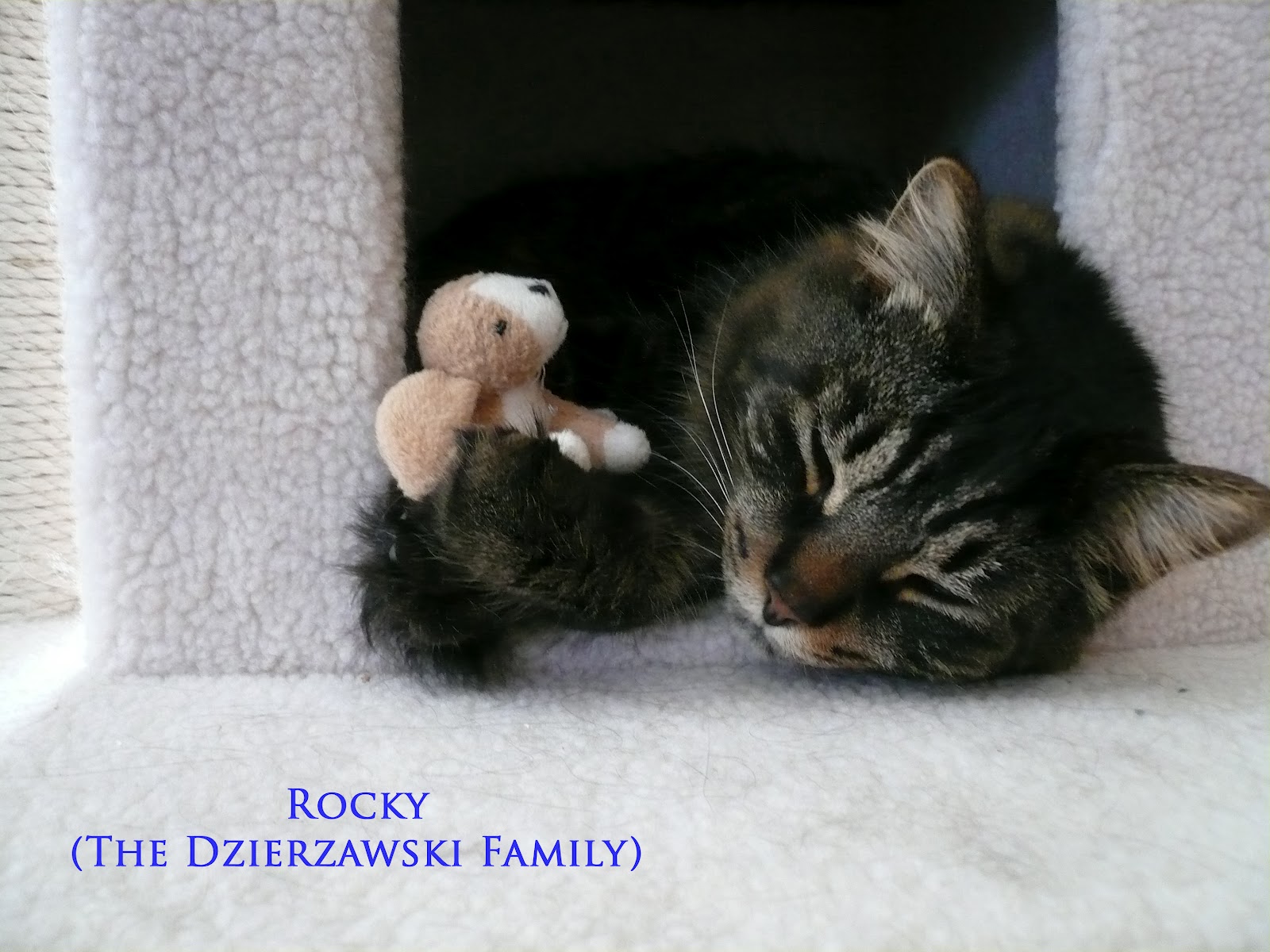
Brown tabby cat snuggling a toy

Rocky Dzierzawski
a/k/a:  Count Rocky from Catsylvania


Adoption Date:  2/25/10

Gender:  Male

Weight:  14.2 pounds - Good body condition

Going to the Vet:  I REALLY don’t like being put in a carrier!   I much prefer to have the harness and leash put on.  Car rides are so fun!  I love to sit on the console between the front seats so I can see everything going on.  I’m ok in the exam room but if I have to go in back or my human friend has to leave me well……. let’s just say….. they call me a “real pistol”. 

BFF (best furry friend):  Fluffy (a/k/a Prince Fluffy VonMeowser) 
I love to snuggle, clean and play with him.  He’s the best furry friend ever!  Sometimes he gets mad when I bite him, apparently he doesn’t like it.  That’s part of how I got the name Count Rocky.

Favorite Toys:  My stuffed puppy and a small red felt mouse.  My favorite thing to chew on is the cardboard rolls of paper on a wire called a Cat Dancer – it’s really fun to chase too.

Favorite Place:  Anywhere up high.  I have an awesome kitty condo where I can see everything going on in the house and outside.  The picture was taken of me while I was sleeping with my stuffed dog in the middle floor bedroom of it. 

Age:  The warden said I was about 2 when I was paroled but, at my first checkup, the Vet  thought I was a little older.

My 'Hisstory':
People thought I was a bit of a bad boy in my younger years and I was in kitty jail for a while.  I was moved from one maximum-security facility to another.  They were all the same, cold steel cage, solitary confinement, not a pretty place. 

One sunny, summer day my number finally came up for parole.  I saw many people walking by picking up other parolees.  Finally, late in the day, I saw this couple walking by.  I made eye contact with the guy – I had him at ‘Meow’.

I wasn’t feeling well that day, but was happy to be going home.  The guy thought it was really cute that I was forcing the cardboard carrier open to be petted by him, he didn’t realize how claustrophobic I am.  I was a very sick kitty and became very cranky the next day.  I was coughing and using biting and scratching as a way of conveying how sick I was.  That’s mainly how I got the name Count Rocky.   

Thanks to Exclusively Cats I was able to fully recover from my kennel cough. The doctors there also discovered and removed 3 stones from my bladder (which didn’t help my disposition).  Today I’m happy, healthy and feeling great!

I can be a bit feisty and may occasionally nip but I’ve gotten much friendlier and more affectionate thanks to the loving fur-ever home I now have.

Wednesday, August 15, 2012

Is my cat "hairy" or furry"?


Collage of 7 different cat coat colors
Various cat coat colors and textures
What’s the difference between fur and hair? Is a pet with hair better for allergies than a pet with fur? These are the questions that sparked this article. Based on the amount of discussion about this topic, both here in the hospital and through email with friends, colleagues and family members, this year has been a particularly bad year for allergies, and people are looking to do whatever they can to feel better!

In 2001, Scientific American magazine interviewed Nancy Simons, a mammalogist at the American Museum of Natural History in New York about the difference between hair and fur. Her answer? There isn’t. Hair and fur are the same thing.

Microscopic images of cat and dyed human hair
A cat hair (top) compared to several human hairs (bottom)
Really, hair versus fur is a matter of semantics – it’s ALL hair. Hair is a defining characteristic of mammals. Even whales and dolphins have hair (usually just a few on their snout as babies). “Fur” is just one type of hair.  Both human hair and animal fur is made of the same stuff that makes up rhinoceros horn and our toenails – a protein called keratin. Cats’ whiskers and porcupine quills are special kinds of hairs. Even the strange scales on the back of a pangolin are specially adapted hairs. Just like in humans, hairs with round shafts are straight, and curly hairs are flattened to various degrees.
When talking about pet hair and specific breeds of cats and dogs, “fur” is usually used to refer to a double coat of hair that covers the entire body. “Hair” is usually a finer, softer, longer, single coat and - as in the case of humans, the Sphynx, and the Devon and Cornish Rex breeds of cat - may not cover all of the body.

An often-repeated humorous quotation (author unknown) about hair versus fur is:
Dogs and cats: If it's where it belongs (on the animal), it's fur; if it's where it doesn't belong (on your black slacks), it's hair.
            Humans: If it's where it belongs (on the top of your head), it's hair; if it's where it  
            doesn't belong (on your back), it's fur.

Crafting with Cat Hair: Cute Handicrafts to Make with your Cat by Kaori TsutayaMany people consider “hair” to be less allergenic than fur, but hair is not the culprit when it comes to allergies. The real culprits that stimulate allergic reactions are a number of proteins in a cat’s saliva and other glands in the body. They are deposited on the surface of the cat as he grooms and secreted from the sebaceous glands in the skin. These allergens mix with the surface of the skin and coat, and are then shed into the environment, naturally. It is true that some breeds that shed less and have finer hair are less likely to build up allergens within the coat and less likely to spread as much allergenic material in the environment, but even Sphynx cats groom themselves and have sebaceous glands, so are not truly allergy-free! For more information about why people are allergic to cats, stay tuned for our next blog article!

Meanwhile, if you are overwhelmed by your cat's shedding, you could put the cat hair to use!
Check out this book about crafting with cat hair or take a look at Flora Davis' cat hair jewelry.

Wednesday, August 8, 2012

Why does dental care cost so much?!?


Closeup of black cat's teeth
Our own Mr. B is 10 months old. His teeth are pretty good, but he already has a tiny bit of buildup on his upper premolar.
Most people do not realize that the quality of dental care can vary from veterinary hospital to veterinary hospital. Contacting a veterinary hospital and asking what they charge for teeth cleaning may not give you the whole picture. Many veterinary hospitals will tell you that they cannot give you a good estimate for a dental procedure before examining your cat, and there is good reason. As a rule, until a veterinarian performs an exam under anesthesia, we do not have the whole picture of the cat’s oral health and can only offer a range of possibilities, not an exact quote. Often, the whole picture does not emerge until after dental x-rays are taken.

At Exclusively Cats Veterinary Hospital, we take pride in the quality of our care and are happy to discuss treatment plans with you, making sure that you have a clear understanding of exactly what fees and services you are paying for.

As an educated pet owner, there are questions that you should ask when getting a quote for dental services:

1. Are there any additional charges associated with a teeth cleaning, such as labwork, tooth extraction, x-rays, medications or other after-care? The estimate for treatment that we give you is comprehensive. We even try to anticipate all the extractions that may be needed. You may want to clarify whether an estimate for teeth cleaning that you receive elsewhere includes everything, or whether the clinic you called gave a minimum estimate over the phone and might add additional charges to the estimate once you are in the office.

Various Blood Tubes
Bloodwork is one of the best ways to get information about a cat's health


2. Will preanesthetic bloodwork be done? We check labwork on each pet prior to the dental procedure to highlight any health issues that could compromise the anesthetic procedure. The type and extent of labwork will vary based on the age and health of the patient, and also may depend on prior labwork that we have recently evaluated.


3. Will my pet be given IV fluids? An IV catheter allows instant access to the circulatory system if an emergency situation should arise. Anesthesia over time will decrease the blood pressure. Fluid therapy supports kidney function during anesthetic procedures and keeps the blood pressure in a safe range while your cat is asleep. Any time that a cat is having teeth extracted, we place an IV catheter. Also, patients of a certain age will routinely receive IV fluids. If at any time we feel that our dental patient may be a critical anesthetic risk, we will place an IV as well, for the safety of your pet.

Four Handed Dentistry - more than one person caring for your cat's teeth
Four-handed dentistry!


4. Who will be performing the procedure and what is their level of training? Any dental surgical procedure should include a minimum of 4 hands (a veterinarian and technician). Our most experienced and well-trained technicians assist the doctor during dental procedures and only our veterinarians perform extractions. In some cases with highly critical patients, a second or third technician may be required to ensure the safety of the cat.

Dogs and cats experience dental disease in markedly different ways. At a practice that sees both dogs and cats, it is common for the veterinarian’s experience to be primarily canine dentistries, whereas our veterinarians have 100% of their experience with feline dental procedures. Since Exclusively Cats Veterinary Hospital opened its doors, our staff members have performed over 5,000 feline dental cleanings and oral surgeries. There have been multiple instances in which veterinarians from other hospitals have called to consult with or ask advice from our doctors about complex or difficult feline dental cases.
Heska veterinary pulse oximeter
Pulse and oxygen monitor


5. What type of vital signs monitoring will be performed, and who will be performing the monitoring? Different veterinary hospitals monitor anesthesia different ways. Our patients’ heart rates, blood pressure and oxygen delivery are monitored throughout the procedure by a technician. In higher risk patients, an EKG and blood gas level are also monitored. The entire time that the veterinarian is working on your cat’s mouth, a technician is by their side, assisting and monitoring, and in critical risk patients, one or more additional technicians will be at hand to help ensure the safety of your pet.

Feline Skull Model
Dental models and x-rays are used to help explain what happened during the procedure


6. What kind of discharge information will you receive and from whom? If your cat has any kind of abnormality observed during the dentistry, the dental technician will discuss the dental x-rays and findings with you at the time of the discharge appointment.


7. What type of anesthesia will be used? We use isoflurane gas anesthesia for our dental patients. Isoflurane is an extremely safe anesthesia –the gas begins to leave the system as soon as the cat exhales for the first time after the gas is turned off. Some injectable anesthetics remain in the system for hours after use, with no way to counteract it if there is an emergency. Each patient has a breathing tube inserted into their trachea to keep water from entering the lungs during the dental procedure. Each cat is given a pre-surgical sedative to help decrease the amount of anesthesia needed and increase safety. We had a client report to us that they were changing veterinarians because their 4-year-old cat died under anesthesia while having a dental procedure performed elsewhere. At Exclusively Cats Veterinary Hospital, we have never lost a patient under anesthesia for dentistry.


8. Will my cat be sleeping on a heated blanket during the procedure? Low body temperature is a very high risk during dental procedures. Since anesthesia lowers body temperature and the water from the dental procedure can lower temperature even more, every dental patient at our hospital is placed between two warm circulating water blankets to keep their body temperature normal.

Feline dental x-ray with two normal teeth and one resorptive tooth
The tooth on the far right is missing above the gumline but there is still a root remaining


9. Will dental films be taken and reviewed by a veterinarian? Considering that 80% of pets over 3 years of age have some degree of dental disease, most of it below the gumline where it cannot be seen, estimating for dental care even after examining the mouth is difficult. The real dental exam happens while the cat is sleeping, once large amounts of tartar have been removed and each tooth has been probed and x-rayed. In some cases a tooth that looks healthy or is missing above the gumline may be developing problems at the root – if we only looked at the part of the tooth that could be seen above the gum, you might find your cat with a painful abscess within weeks to months after a thorough tooth cleaning. That is why x-rays are so important. Every dental procedure that we perform will have dental films taken.

In many cases, we have found areas where tooth remnants have been left behind by other hospitals where x-rays have not been taken. These remnants can cause pain, or become infected and cause more serious issues. In some cases, we have had other veterinarians refer patients to our office for a repeat dentistry within days of having a dental procedure performed elsewhere. In these cases, we do invite the referring veterinarian to sit in on the dentistry for educational purposes.

Feline Dental Chart
Feline Dental Chart


10. Will dental charting be done to record the health of the teeth for future knowledge? This allows us to track changes in each tooth’s health so that we can take action before there is irreversible disease and the tooth must be extracted.

Class II Feline Oral Resorprtive Lesion (Cat Cavity) - FORL
Cat "cavities" start below the gum instead of at the crown


11. Will nerve blocks be used if teeth are extracted? Just as your dentist uses novocaine prior to working on one of your teeth, we use numbing drugs to reduce post-operative pain in your cat.


12. Will pain medication be given? Anyone who has had a wisdom tooth extracted knows how painful a tooth extraction can be. We give 2 different pain medications (a short-acting and then a long-acting) to ease this burden for your cat.


13. How long will your cat be observed after the dental procedure? At our hospital, the post-surgical patients are housed in the main treatment area where they can be observed from the time they are finished with their procedure until they are discharged. There are a number of instances where we have been able to make a cat more comfortable after surgery because we have been monitoring the cat throughout the afternoon, where a cat in a separate kennel area may not have had the need for additional comfort noted.


14. Will an ultrasonic scaler be used to clean the teeth or manual scaling techniques or both? Hand scaling (picking off the buildup on the tooth by hand) is not as effective as ultrasonic scaling to remove buildup on the teeth, but using an ultrasonic scaler alone could cause tooth damage if large amounts of buildup are present. We manually remove large chunks of calculus (tartar) from the teeth first, and then remove the microscopic amounts with the ultrasonic scaler.


15. Will polish be applied to the teeth after cleaning? Scaling the teeth leaves behind tiny scratches that become an anchor for buildup to form. Polishing removes these scratches and smoothes the surface of the tooth so that it is harder for buildup to gain a foothold.
Box of Oravet sealant and applicators
Oravet Barrier Sealant


16. Will fluoride be applied to the teeth after polishing? Fluoride helps strengthen the enamel of the tooth as well as adhering to pores in the tooth that can be painful when exposed to air.


17. Will sealant be applied to the teeth after polishing? We apply Oravet sealant to the teeth after the procedure to seal the gumline and provide more resistance to future buildup.


Applying Oravet barrier sealant to an orange and white cat
Painting the teeth with a protective sealant
At Exclusively Cats Veterinary Hospital, we do all of these things. We have had many people report to us that their cats had a change in personality (for the better!) after we performed a dental treatment for their cat. Some previously antisocial cats have become more social; some quiet, older cats have had an increase in energy and a new interest in play.

We recently had a client who chose to take her cats elsewhere for a surgical procedure in order to save $100. After the procedure was over, she learned that she was not getting the services that she thought she was paying for and had to call our office several times in the weeks following the procedure to ask questions about post-surgical complications. She ended up spending that $100 and more (both at the other hospital and then later at ours) in order to make her cats feel better.

We take pride in the skill of our staff and the care and thoughtfulness that we can provide for each patient. It is always your prerogative to choose where you seek your veterinary care and decide what is best for your pets. Our ambition is to help you achieve your health goals for your cats however you allow us to do that.