Monday, April 15, 2013

Feline Arthritis Part 1: Three Approaches to Treatment


Lumbo-sacral spondylosis - OUCH!


 Have you noticed that your cat is having a hard time getting up and down the stairs? Maybe he’s not sleeping on the end of the bed anymore, or not hopping up into your lap as frequently? Perhaps your cat has a litterbox in the basement, but recently has started urinating upstairs where she spends most of her time? Is your cat’s coat looking scruffier than it has in the past – maybe because he or she is not spending as much time twisting around to groom? Is your cat grumpier than usual, or snappish when you pet certain areas? Maybe your cat just doesn’t like to play as much as in the past, or takes a long time to sit or lie down comfortably.

All of these things are clues to diagnosing feline arthritis. A 2002 study looking at x-rays of older cats showed that about 90% of cats over the age of 12 have evidence of degenerative joint disease (DJD), and a similar study determined that about 20% of those cats do not display any signs or symptoms of the arthritis changes to their bones. Rarely, if ever, do cats actually limp or cry out in pain when they have arthritis – it is usually much more subtle, and better discovered by cataloguing what the cat is NOT doing than by listing what the cat IS doing. Once you and your veterinarian have come to the conclusion that arthritis is a problem for your cat, there are several options for treatment.

Neutraceuticals

The first several options deal with rebuilding and protecting the joints. There are several products that help with this. 
  • Cosequin is a powder that can be mixed with canned food 1-2 times daily that supplies glucosamine and chondroitin to the cat. Glucosamine hydrochloride acts as a building block of cartilage by supplying a key nutrient that keeps cartilage cells healthy and functioning properly. The specific chondroitin sulfate, exclusive to Cosequin, is the most pure form available on the market. Manganese ascorbate is necessary to optimize the production of cartilage components. Glucosamine and chondroitin can take 6-8 weeks to reach full effect. 
  • Science Diet makes a therapeutic joint care diet called J/D that has shown definite benefits in studies – both for the treatment of arthritis and for the promotion of joint healing after orthopedic surgery in dogs and cats. This diet contains ingredients such as glucosamine and chondoitin and essential fatty acids that slow the degradation of cartilage, repair cartilage, and L-carnitine to encourage fat-burning while maintaining good muscle mass. J/D can take up to 28 days to show noticeable improvement.
     
  • The glycosaminoglycan Adequan is an injection that can be given at home weekly for 5 weeks and then once every other week for the rest of the cat’s life. Adequan shuts down enzymes which destroy collagen, joint proteins, and hyaluronic acid in degenerative joint disease and stimulate the production of protein, collagen, hyaluronic acid and other aspects of a fully functioning joint. While Adequan is marketed only to dogs, its use has safely been studied and tested in cats.
  •  Finally, omega-3 fatty acid supplements have been shown to help relieve joint inflammation, as well. Avoid fatty acid supplements that contain vitamin D, as they often contain a level of this vitamin that is higher than is safe for pets.


Pain Control

While cats cannot tolerate Tylenol as a medication, or most other non-steroidal anti-inflammatory (NSAIDS) medications that work so well in dogs, there are a few NSAIDS that can be used with care in cats, such as Metacam and Onsior. These medications aim to relieve joint inflammation to make the cat more comfortable. NSAIDS approved for cats do require close monitoring of the kidneys to ensure there are no contraindications – they should not be used in cats with chronic or acute renal disease, liver disease or used in debilitated or dehydrated cats. 
Other options for pain relief include Buprenorphine, Tramadol and Gabapentin.
  • Gabapentin is an anti-seizure medication that has been shown to provide pain relief, although the exact mechanism of action is not known. In humans, it has been used to treat restless leg syndrome, fibromyalgia and diabetic neuropathy. 
  • Tramadol is a mild opioid medication that acts similarly to codeine in relieving moderate to severe pain. 
  • Buprenorphine is another opioid drug that works well for relieving moderate chronic pain. Often, it is given orally into the cheek pouch rather than making the cat swallow the medication immediately, because it is absorbed better in the mouth than in the stomach.

Alternative Medicine

Finally, there are alternative medicine treatments that may help with arthritis. Our office carries a product called DevCor Mobility Pro that contains Corydalis Yanhuso Root, Devil’s Claw, and Boswellia serrata, which studies have shown to help support mobility and flexibility by decreasing inflammation. While neither laser therapy or acupuncture have had extensive effectiveness studies done, many people find that one 
treatment or the other help their pets. Laser therapy involves multiple ongoing treatments that help stimulate blood flow and cellular activity, interrupt transmission of pain impulses to the brain, and stimulates endorphin release. Acupuncture uses very thin needles to stimulate nerves and activate certain areas on the body to help relieve pain and decrease inflammation as well as stimulate healing. Hydrotherapy (swimming), if your cat will tolerate it, may also be beneficial, though it is more commonly used following orthopedic surgery or skeletal trauma. Some people have even reported positive response to chiropractic care or massage therapy.

Monday, April 1, 2013

Meet Mr. April!

Tabby colored cat sleeping and smiling

Age: 2 years
Weight: 18.1 pounds - a large-statured cat, mildly overweight
Birthday: July 26, 2010
Gender: Neutered Male
Breed: Domestic Shorthair
Demeanor at the veterinary office: Nice, cooperative boy
Feline Friends: Peetie (10m), Goldie (13y), Cloud (13y)


Favorite food: Tabbie's absolute favorite treat is Pumpkin!  He eats a teaspoon of pumpkin every day.
Favorite toy: Peetie (yep the new kitten we got from Exclusively Cats Veterinary Hospital)

Tabby colored kitten with teal harness
Tabbie as a baby
Tabbie was found at 7 weeks of age at the Howell farmers market. His owner was actually going to pick out a different kitten, but he walked over and stood on top of his brother and meowed until she took him.

Tabbie is a talker. He loves to chatter, and if you meow at him, he will go back and forth all day long.  He is also the biggest baby mush of all the cats in the house in addition to being the largest. He still curls up on his owner's lap and sucks on her shirt while purring.  He also sleeps with his tongue hanging out. He is a ham so his mom  makes sure he sees himself on the calendar every day.

Tabby colored cat sleeping with his tongue out
Tabbie sleeping with his tongue out

Friday, March 29, 2013

New Kitten FAQ


Cute blue eyed kitten
KITTENS: RECOMMENDATIONS FOR NEW OWNERS

We would like to congratulate you on the acquisition on your new kitten.  Owning a cat can be an extremely rewarding experience, but it also carries with it quite a bit of responsibility.  We hope this document will give you the information needed to make some good decisions regarding your kitten.

First let us say that we are grateful that you have chosen us to help you with your kitten's health care.  If you have questions concerning any subject related to your kitten's health, please feel free to call our hospital.  Either one of the technicians or one of the doctors will be happy to help you.

How should I introduce my new kitten to its new environment?

A cat is naturally inclined to investigate its new surroundings.  At first, you should limit the cat's area of exploration so that these natural tendencies do not create an unmanageable situation.  After confining the cat to one room for the first few days, you should slowly allow access to other areas of the home. 

What type of playing should I expect from a kitten?

Kitten getting tummy rubs
Kittens love to play with just about ANYTHING! 
Stimulating play is important during the first week.  Stalking and pouncing are important play behaviors in kittens and have an important role in proper muscular development.  If given a sufficient outlet for these behaviors with toys, your kitten will be less likely to use family members for these activities.  The best toys are light weight and movable.  These include wads of paper and small balls.  Kittens should always be supervised when playing with string or ribbons to avoid swallowing them.  Any other toy that is small enough to be swallowed should also be avoided. 

Can I discipline a kitten?

Disciplining a young kitten may be necessary if his or her behavior threatens people or property, but harsh punishment should be avoided.  Hand clapping and using shaker cans or horns can be intimidating enough to inhibit undesirable behavior.  However, remote punishment is preferred.  Remote punishment consists of using something that appears unconnected to the punisher to stop the problem behavior.  Examples include using spray bottles, throwing objects in the direction of the kitten to startle (but not hit) her,  and making loud noises.  Remote punishment is preferred because the kitten associates punishment with the undesirable act and not with you.

When should my kitten be vaccinated?

There are many diseases that are fatal to cats.  Fortunately, we have the ability to prevent many of these by the use of very effective vaccines.  In order to be effective, these vaccines must be given as a series of injections.  Ideally, they are given at about 6-8, 12, and 16 weeks of age, but this schedule may vary somewhat depending on several factors. 
The routine vaccination schedule will protect your kitten from five diseases: distemper, three respiratory organisms, and rabies.  The first four are included in a combination vaccine that is given at 6-8, 12, and 16 weeks old.  Rabies vaccine is given at 12 or 16 weeks of age.  Leukemia vaccine is necessary if your cat does or will go outside or if you have another cat that goes in and out since this deadly disease is transmitted by contact with other cats, especially when fighting occurs.  A vaccine is also available for protection against feline infectious peritonitis (FIP); this vaccine is probably not necessary for all cats and is recommended in selected situations.

Why does my kitten need more than one vaccination for feline distemper, upper respiratory infections, and leukemia?

Kittens receive a temporary form of immunity through their mother's milk while nursing.  This immunity is in the form of proteins called antibodies.  For about 24-48 hours after birth, the kitten's intestine allows absorption of these antibodies directly into the blood stream.  This immunity is of benefit during the first few weeks of the kitten's life, but, at some point, this immunity fails and the kitten must be able to make its own long-lasting immunity.  Vaccinations are used for this purpose.  As long as the mother's antibodies are present, vaccinations do not "take."  The mother's antibodies will neutralize the vaccine so the vaccine does not get a chance to stimulate the kitten's immune system.

Many factors determine when the kitten will be able to respond to the vaccines.  These include the level of immunity in the mother cat, how much of the antibody has been absorbed, and the number of vaccines given the kitten.  Since we do not know when an individual kitten will lose the short-term immunity, we give a series of vaccinations.  We hope that at least two of these will fall in the window of time when the kitten has lost the immunity from its mother but has not yet been exposed to disease.  A single vaccination, even if effective, is not likely to stimulate the long-term immunity which is so important. 

Rabies vaccine is an exception to this, since one injection given at the proper time is enough to produce long-term immunity.

Do all kittens have worms?

This is a type of roundworm
Intestinal parasites are common in kittens.  Kittens can become infected with parasites almost as soon as they are born.  For example, the most important source of roundworm infection in kittens is the mother's milk.  The microscopic examination of a stool sample will usually help us to determine the presence of intestinal parasites.  We recommend this exam for all kittens, if we can get a stool sample.  Please bring one at your earliest convenience.  Even if we do not get a stool sample, we recommend the use of a deworming product that is safe and effective against several of the common worms of the cat.  It is important that deworming be repeated in about 3-4 weeks, because the deworming medication only kills the adult worms.  Within 3-4 weeks the larval stages will have become adults and will need to be treated.  Cats remain susceptible to reinfection with hookworms and roundworms.  Periodic stool analysis and/or deworming throughout the cat's life may be recommended for cats that go outdoors.

Tapeworm segments in a cat's fur
Tapeworms are the most common intestinal parasite of cats.  Kittens become infected with them when they swallow fleas because the eggs of the tapeworm live inside the flea.  When the cat chews or licks its skin as a flea bites, the flea may be swallowed.  The flea is digested within the cat's intestine; the tapeworm hatches and then anchors itself to the intestinal lining.  Therefore, exposure to fleas may result in a new infection, which can occur in as little as two weeks.  Cats may also become infected with tapeworms if they hunt and eat mice.

A lungworm under the microscope

Cats infected with tapeworms will pass small segments of the worms in their stool.  The segments are white in color and look like grains of rice.  They are about 1/8 inch (3 mm) long and may be seen crawling on the surface of the stool.  They may also stick to the hair under the tail.  If this occurs, the segments will dry out, shrink to about half their size, and become golden in color. 


Tapeworm segments do not pass every day or in every stool sample; therefore, inspection of several consecutive bowel movements may be needed to find them.  We may examine a stool sample in our office and not find them, then you may find them the next day.  If you find them at any time, please notify us so we may provide the appropriate drug for treatment.
Giardia organisms


Depending on a kitten's history, other common parasites that we look for are lung worms, heartworms, and infections with single-celled organisms like Giardia or Coccidia.


There are lots of choices of cat foods.  What should I feed my kitten?

Diet is extremely important in the growing months of a cat's life, and there are two important criteria that should be met in selecting food for your kitten.  We recommend a name-brand food made by a national cat food company (not a generic or local brand), and a form of food made for kittens.  This should be fed until your kitten is about 12 months of age.  In the United States, we recommend that you only buy food which has the AAFCO certification.  Usually, you can find this information very easily on the label.  AAFCO is an organization which oversees the entire pet food industry.  It does not endorse any particular food, but it will certify that the food has met the minimum requirements for nutrition.  Most of the commercial pet foods will have the AAFCO label.  Generic brands often do not have approval.

Feeding a dry, canned, or semi-moist form of cat food is acceptable. At Exclusively Cats Veterinary Hospital, we recommend feeding a small amount of dry food and 3-6oz of canned food daily.  

Each type of food has advantages and disadvantages.  Dry food is definitely the most inexpensive.  It can be left in the cat's bowl at all times.  If given the choice, the average cat will eat a mouthful of food about 12-20 times per day.  The good brands of dry food are just as nutritious as the other forms. 

Semi-moist and canned foods are also acceptable.  However, both are considerably more expensive than dry food.  They often are more appealing to the cat's taste; however, they are not more nutritious.  If you feed a very tasty food, you are running the risk of creating a cat with a finicky appetite.  In addition, the semi-moist foods are high in sugar.

Table foods are not recommended.  Because the foods we eat are generally very tasty, cats will often begin to hold out for these and not eat their well-balanced cat food.  If you choose to give your kitten table food, be sure that at least 90% of its diet is good quality commercial kitten food.

We enjoy a variety of things to eat in our diet.  However, most cats actually prefer not to change from one food to another unless they are trained to do so by the way you feed them.  Do not feel guilty if your cat is happy to just eat one food day after day, week after week.

Commercials for cat food can be very misleading.  If you watch carefully you will notice that commercials promote cat food on one basis, TASTE.  Nutrition is rarely mentioned.  Most of the "gourmet" foods are marketed to appeal to owners who want the best for their cats; however, they do not offer the cat any nutritional advantage over a good quality dry food, and they are far more expensive.  If your cat eats a gourmet food very long, he will probably not be happy with other foods.  If he needs a special diet due to a health problem later in life, he will be very unlikely to accept it.  Therefore, we do not encourage feeding gourmet cat foods.

How do I ensure that my kitten is well socialized?

Mother siamese mix with kittens
The socialization period for cats is between 2 and 12 weeks of age.  During that time, the kitten is very impressionable to social influences.  If the kitten has good experiences with men, women, children, dogs, other cats, etc., she is likely to accept them throughout life.  If the experiences are absent or unpleasant, the kitten may become apprehensive or adverse to any of them.  Therefore, during the period of socialization, we encourage you to expose your cat to as many types of social events and influences as possible.

What can be done about fleas on my kitten?

Adult flea
Many of the flea control products that are safe on adult cats are not safe for kittens less than 4 months of age.  Fleas may not stay on your kitten all of the time.  Occasionally, they will jump off and seek another host.  Therefore, it is important to kill fleas on your new kitten before they become established in your house.  Be sure that any flea product you use is labeled safe for kittens.
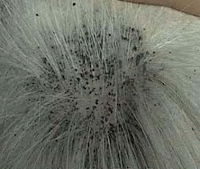
Flea dirt on a cat
This is "flea dirt" - a sure sign of fleas
Flea and tick dip is not recommended for kittens unless they are at least 4 months of age.  Remember, not all insecticides that can be used on dogs are safe for cats and kittens. 

In addition to flea treatments and preventives, it is important to control fleas in the environment by thoroughly vacuuming areas where the kitten spends time.

Can I trim my kitten's sharp toe nails?

Kittens have very sharp toe nails.  They can be trimmed with your regular finger nail clippers or with nail trimmers made for dogs and cats.  If you trim too much, you will cut into the quick of the nail which will bleed and be painful.  If this happens, neither you nor your cat will want to do this again.  Therefore, a few points are helpful:
Trimming cat nails


You can use normal human nail clippers to trim your cat's nails.1. If your cat has clear or white nails, you can see the pink of the quick through the nail so it is easy to avoid.

2. If your cat has black nails, you will not be able to see the quick so only cut 1/32" (1 mm) of the nail at a time until the cat begins to get sensitive.  The sensitivity will usually occur before you are into the blood vessel.  With black nails, it is likely that you will get too close on at least one nail.

3. If your cat has some clear and some black nails, use the average
     clear nail as a guide for cutting the black ones.

4. When cutting nails, use sharp trimmers.  Dull trimmers tend to crush the nail and cause pain even if you are not in the quick. 

5. You should always have styptic powder available.  This is sold in pet stores under several trade names, but it will be labeled for use in trimming nails.

What are ear mites?

Cat ear mite
Ear mite under the microscope
Ear mites are tiny insect-like parasites that live in the ear canal of cats (and dogs).  The most common sign of ear mite infection is scratching of the ears.  Sometimes the ears will appear dirty because of a black material in the ear canal; this material is sometimes shaken out.  The instrument we use for examining the ear canals, an otoscope, has the necessary magnification to allow us to see the mites.  Sometimes, we can find the mites by taking a small amount of the black material from the ear canal and examining it with a microscope.  Although they may leave the ear canals for short periods of time, they spend the vast majority of their lives within the protection of the ear canal.  Transmission generally requires direct ear-to-ear contact.  Ear mites are common in litters of kittens if their mother has ear mites.

Why should I have my female cat spayed?

Spaying or ovariohysterectomy is the removal of the uterus and the ovaries. It offers several advantages:

1.      The female's heat periods result in about 2-3 weeks of obnoxious behavior.  This can be quite annoying if your cat is kept indoors.  Male cats are attracted from blocks away and, in fact, seem to come out of the woodwork.  They seem to go over, around, and through many doors.  Your cat will have a heat period about every 2-3 weeks until she is bred.

2.      It has been proven that as the female dog gets older, there is a significant incidence of breast cancer and uterine infections if she has not been spayed.  Spaying before she has any heat periods will virtually eliminate the chances of either.  There is mounting evidence to believe that this is also true of cats.

3.      Spaying prevents unplanned litters of kittens.

4.      If you do not plan to breed your cat, we strongly recommend that she be spayed before her first heat period.  This can be done anytime after she is 5 months old.

Why should I have my male cat neutered?

Neutering or castration offers several advantages.  Male cats go through a significant personality change when they mature.  They become very possessive of their territory and mark it with their urine to ward off other cats.  The tom cat's urine develops a very strong odor that will be almost impossible to remove from your house.  They also try to constantly enlarge their territory which means one fight after another.  Fighting results in severe infections and abscesses and often engenders rage in your neighbors.  We strongly urge you to have your cat neutered at about 6 to 9 months of age.  If he should begin to spray his urine before that time, he should be neutered immediately.   The longer he sprays or fights, the less likely neutering will stop it.

If I choose to breed my cat, when should that be done?

If you plan to breed your cat, she should have at least one or two heat cycles first.  This allows her to mature physically and she will be a better mother without so much physical drain.  We do not recommend breeding after 5 years of age unless she has been bred prior to that.  Having her first litter after 5 years of age is more physically draining to her and increases the chances of her having problems during the pregnancy and/or delivery.  Once your cat has had her last litter, she should be spayed to prevent the female problems older cats have.

My kitten is already becoming destructive with her nails.  What can be done?

There are several options that can be considered: offering scratching posts, frequent nail clipping, nail shields, surgical declawing, and tendonectomy.

1.      Offering desirable scratching posts near the area where your kitten is scratching is an important tool in helping direct them to appropriate places to express this natural behavior. Many people make the mistake of sticking a scratching post in a far corner or offering scratching accessories that are too small or unstable. Cats need a post that allows them to stretch to their full length to scratch and sturdy enough not to fall over when they do so. You may need to experiment to learn if your cat is a vertical scratcher or a horizontal scratcher, and whether he or she prefers wood, sisal rope, carpet or cardboard as a scratching texture. There is a new product called FeliScratch that is a synthetic copy of the Feline Interdigital Pheromone that they excrete when they scratch. Applying this to a desirable scratching post will help your cat choose an acceptable place to scratch in your house. 

2.        The nails may be clipped according to the instructions above.  However, your cat's nails will regrow and become sharp again in about 4-7 days.  Therefore, to protect your property, it will  be necessary to clip them one to two times per week.

Soft nail caps protect the nails, but do keep them extended
3.      There are some commercially available products that are called nail caps.  These are generally made of smooth plastic and attach to the end of the nail with a special glue.  The nails are still present, but the caps prevent them from causing physical harm.  After 2-4 weeks the nails will grow enough that the caps will be shed.  At that time, you should be prepared to replace them. While soft nail caps protect your furniture from scratching, they do keep the nails in a state of extension, and can cause painful, severe problems if not changed regularly.

4.      Surgical declawing is the removal of the nail at its base.  This surgery is controversial, and you can read further about position of the AAFP on this surgery on their website. This is done under general anesthesia and with proper surgical techniques and adequate pain control, post-surgical discomfort should not exceed that of any other surgical procedure, especially when it is performed on a kitten. As with any surgical procedure, there can be complications and side effects. It should be noted that a declawed cat will not realize the claws are gone and will continue to "sharpen" the claws as normal on various objects, including scratching posts and furniture items. This surgery can be performed as early as 12 weeks of age or anytime thereafter.  It can also be done the same time as spaying or neutering.  Once declawed, your cat should always live indoors since the ability to defend itself is compromised.

5.      Tendonectomy is the surgical removal of a small part of the tendon on the bottom of each toe.  This tendon is needed to make the nail extend.  The cat retains its nails, but it cannot extend them for sharpening and scratching.  The disadvantage of this procedure is that the nails continue to grow and may grow into the pads.  Therefore, the nails should be clipped every 7 to 14 days.

You can also consider additional ways of modifying behavior, which may prevent the cat from scratching furniture in the house or being destructive.

This client information sheet is based on material written by Ernest E. Ward Jr., DVM.

Friday, March 15, 2013

Choosing Euthanasia: What happens next?


 The process of euthanasia

Once you have made the decision to euthanize your cat and called your veterinarian, the office staff will schedule a euthanasia appointment. Generally these appointments are open-ended, so that you can spend as much time as you need before or after the euthanasia to feel closure, and to feel composed enough to leave the hospital. It is best to bring someone with you, if possible, to drive you home, if needed. It is also best not to bring small children, if at all possible, or have them step out of the room while the euthanasia takes place, so that you are able to focus on your last moments with your cat.

Feral Cat Silhouuette by Blake Shaw
You have the option to be present with your pet during the euthanasia or to leave the room – either leaving your cat in the capable hands of your veterinary staff and exiting the building before the euthanasia takes place, or to come back into the room after the euthanasia solution has been administered to view your pet. There is no “right” way to do this, and most veterinary hospitals are very flexible about what can be done. The only thing that they may ask is that you allow a staff member to gently restrain your animal for the doctor, which might prevent you from having your cat in your arms or on your lap for the euthanasia, itself.

If your cat is distressed by the veterinary office, you may be offered a sedative either prior to travel to the hospital, or at the time of your appointment to relax your pet before the euthanasia takes place. Depending on the sedative, your cat may merely be calmer, or may actually fall asleep before the euthanasia.
During the euthanasia procedure, an overdose of an anesthetic medication is injected into one of your cat’s veins. Most cats do not react to the needle poke, though some may protest a little at having their leg held. This medication causes your cat to fall asleep first, and then the respirations and heart will stop. Many cats will heave a sigh, as though of relief, as they fall asleep and feelings of pain and discomfort subside. Sometimes, they may look around or look up as though they are having a moment of clarity, or are looking for your face, before they become unconscious. Usually, the cat’s heart has stopped before the veterinarian is finished giving the dose of the euthanasia medication. Most people are quite surprised at how peacefully and how quickly their pet is “gone”.

Some of the mechanical things that happen to the body as life passes can be uncomfortable to watch or disconcerting, especially if you are not expecting it. Unfortunately, cats do not close their eyes after euthanasia. Some cats will lick their lips – if this happens, their tongue may continue to stick out after euthanasia. Sometimes, a cat will urinate or defecate as their muscles relax. Rarely, several minutes after the cat is “gone”, electrical impulses in the body can trigger the diaphragm to move after the heart has stopped. It might look as though the cat is gasping for breath, but this is only a reflex.

After Care

At such a sad time, who wants to be faced with decisions? However, there is one last thing to decide – will you take your pet home to bury in the garden? You may need to check local ordinances in your area before doing this. Certain times of the year, this may be impractical – December in Michigan is a difficult time of year to try to bury anything! Most veterinary offices have other options available as well. There are a few places that provide a Pet Cemetery, where your pet can have a grave site that you can visit. There are also two cremation options - general or group cremation means that your cat will be taken to a special pet crematory facility and cremated along with several other pets. Their ashes will be combined with other ashes and buried on site. You cannot go visit them, however.  Private cremation means that only one pet is cremated at a time, and you can have the ashes returned to you – to bury, scatter in the garden, place in an urn or have turned into memorial jewelry or artwork. There are quite a few artists and businesses that will incorporate your pet’s ashes into a painting, drawing, glass bead or pendant.

Paw Prints are a lovely way to memorialize your cat
If you do not want your pet’s ashes returned, you have other options to memorialize your pet. Many people request that a small amount of fur be clipped and saved for them, others opt to have a clay pawprint made. Some people prefer to remember their cats through photos, and some people find it too painful to keep any memento of their cat and find themselves donating cat beds and toys to shelters and rescues. Some people go out right away to find a new cat to shelter and care for, while others may need to wait before welcoming in a new furry friend. Some may find that the thought of any other cat in their house is too painful. Again, there is no “right” way to deal with the loss of your cat. It hurts. You have to find the way that is best for your own self to heal that hurt. 

You may find that your other cats mourn the loss of their companion, just as you do. Your other cats may wander the house, investigating places where the missing cat used to sleep, or may call out as though looking for her. Your other cats may be more aloof or more clingy than previously, and may be either more agitated and restless or more sedentary and sleepy. Your cats may show less interest in eating – in fact, the ASPCA notes that 11% of cats that appear to be mourning will stop eating completely for a short period. If your cat goes on hunger strike for more than a couple days, however, it would be best to schedule a checkup with your veterinarian.

The process of choosing euthanasia for your cat, when laid out in black and white is a lot less scary and emotional than when you actually find yourself within the process. Remember, though, that while you must be the one to make the final decision, you don’t have to do it alone. We veterinary staff members are happy to answer your questions, let you voice your concerns and fears, and discuss treatment options to allow you and your cat to enjoy a long, healthy relationship and to help you make sense of these troubling, but important and compassionate decisions. Sometimes, we must choose to suffer, ourselves, so that our cat’s suffering can end.

Resources:
Association for Pet Loss and Bereavement
ASPCA Pet Loss Resources
Michigan Pet Loss Resources
Michigan State University College of Veterinary Medicine Pet Loss Support 
UP Pet Loss Support Group
Pet Loss Grief Support
Beyond the Pawprint Pet Loss Support Group, Farmington Hills, MI

Friday, March 1, 2013

Meet Mr. March!

Joey

Age: 6 years
Weight: 15.05 pounds
Demeanor at the Vet: Great cat!
Feline friends: Roger and Delilah

3 cats in the window, a black cat, gray and white cat and a black and white cat
Joey, Roger and Delilah
Six and a half years ago, as a wee kitten, I was found wandering the halls of a Catholic school in Plano, Texas. From there, after a short stay with a family where I may have intimidated two schnauzers, I went to a shelter where my mommy picked me up. She had first heard about me from work and knew she had to have me.

After a big move from Texas and two smaller moves in Michigan, I arrived at my new house in Waterford in April. This house is a lot of fun, with squirrels, chipmunks, and birds outside the window. When it's warm out, I get lots of smell-o-vision, but, lately, it's been very cold, so there's no smell, but still some vision.

This past July, my furry sister since I was a kitten, Nina, died.  Though she didn't have a maternal bone in her body, we tolerated each other well (well, almost) and though I never quite understood the circumstances, I became lonely and, if possible, even lazier than usual. 

In October, Mommy and Daddy brought home Roger and Delilah, two of Trisha's rescues. I met them on my stay-cation in the Exclusively Cats boarding condos, and they seemed pretty OK. They're still very shy around Mommy and Daddy, but we have great fun after the bipeds go to sleep. We chase each other, play with our toys, and have great fun.   Mommy and Daddy generally find remnants of our after-hours playtime the next morning - Delilah is quite skilled at vivisection. The three of us also like to have cuddle fests in front of the kitchen sink, right where the hot air comes out of the floor.  I tend to bogart the hot air with my butt, but the newbies don't seem to mind.

 window, a black cat, gray and white cat and a black and white cat
Beautiful, sleepy family


When I'm not grooming Delilah, prowling around the house with Roger or snuggling with the bipeds, I'm quite good at the art of nap...my favorite past time.
Black and white cat on a cat tree
Joey, King of the Cat Tower!

Friday, February 15, 2013

February is National Pet Dental Health Month!


Orange cat with fractured canine and gingivitis
Annual oral exams are important!
Many people think that as long as their cat is still eating, their dental health is great! Unfortunately, this is not often the case.

 The American Veterinary Dental College (AVDC) has this to say about the diagnosis and treatment of periodontal disease:
“Unfortunately, other than bad breath, there are few signs of the disease process evident to the owner, and professional dental cleaning and periodontal therapy often comes too late to prevent extensive disease or to save teeth. As a result, periodontal disease is usually under-treated, and may cause multiple problems in the oral cavity and may be associated with damage to internal organs in some patients as they age…. Studies in dogs have shown that periodontal disease is associated with microscopic changes in the heart, liver, and kidneys.”


Feline resorptive lesion on a canine tooth
Resorptive lesion has broken through the tooth from below
In cats and dogs, much dental disease occurs beneath the gum tissue where we can’t see it – so even if your cat’s teeth are pearly white, there may be problems eating away at the tissues that keep your cat’s teeth firmly rooted in their sockets. Most cat “cavities” or resorptive lesions start below the gumline as well, eroding the roots of the teeth first, before they start to affect the crown or visible portion of the tooth. These resorptive lesions are so painful that even while sleeping under anesthesia, cats will react strongly to gentle probing of the affected tooth! In the canine tooth pictured here, a small red defect in the tooth is visible, but if you look at the x-ray pictured below, most of the internal structure of the tooth is destroyed, and the root of the tooth has completely fused with the jaw. This cat had already lost the other lower canine to disease.

Because of this, it is generally a good idea to have your cat’s teethcleaned before visible disease appears. If we can clean the teeth before they are damaged, we can keep the periodontal ligament healthy and strong, and help prevent damage that may cause the loss of your cat’s teeth.

Radiograph of a diseased canine tooth
Tooth destruction
In addition to scheduling regular, routine dental cleanings as insurance against oral decay, you can supplement your cat’s diet with oral health diets such as Science Diet Oral Care or Royal Canin Oral Sensitive 30, or any diet that has a larger-sized kibble that cats have to actually crunch on. Most cats that eat regular maintenance diets end up swallowing the majority of their tiny dry kibble whole! The Veterinary Oral Health Council has compiled a list of foods, treats and oral health products that have been scientifically proven to improve oral health in cats and dogs.


Just imagine what your own mouth would feel like if you went for long periods of time without brushing your teeth! According to the AmericanAnimal Hospital Association, dental check-ups should begin when your patient is five months old. At Exclusively Cats Veterinary Hospital, we look in your cat’s mouth at every visit! We recommend a fluoride treatment around 6 months of age, and at that time, your cat gets a full oral exam under anesthesia with dental charting of his or her baseline oral health. We can also make sure that all of your cat’s baby teeth have fallen out and all the adult teeth have erupted appropriately. Just like some humans need orthodontic care because their bite is not correct, some cats have misaligned teeth that can eventually cause sores in the mouth, jaw pain or difficulty eating. Once we have recorded your cat’s baseline oral health, we can then make an individualized recommendation on when next to schedule an oral exam or cleaning. At minimum, your cat’s teeth should be examined once a year.

VOHC Greenies treats
Greenies treats - available in our office in 5 yummy flavors!
There are many reasons to take an active role in promoting good oral health in your cat. Periodontal disease is a very hard-to-detect infection that can not only cause pain when eating, but causes bone loss in the jaw and tooth loss, as well as heart, liver and kidney disease in the long run.  If such an infection were not hidden inside the mouth, but plainly evident on the bodies of our cats, it would be much more obvious the level of concern this matter should cause. Unfortunately, because our cats are often resistant to having their mouths examined, so oral health tends to be more “out of sight, out of mind”.

If it has been a while since your cat has had his or her teeth examined, celebrate National Pet Dental Health Month by calling your veterinary hospital and scheduling a checkup!

Friday, February 1, 2013

Meet Miss February!


 Annabelle

I am so excited to be the “February cat” for Exclusively Cats calendar. When my mom took my calendar picture she was not even sure I was going to survive as I was a very sick cat. I was between six and seven months old and only weighed 3.9lbs. Since she was submitting photos of all the family felines for the calendar contest, she felt she needed to submit my picture too.  I am glad to say that I am alive today and a healthy, happy kitty weighing 9.5lbs. What a difference five months of great vet care, good nutrition, lots of love and a warm, dry place to live can make for a scrawny sickly cat. See how good I look now!

Me in August around 6.5 months old
So here is my story according to my mom and dad. It started in mid August 2012….actually it really started in October 2011 when my mom’s first true feline love passed away. Her cat friends told her that another kitty would find her just like her angel kitty did many years ago. But my mom kept thinking that no cat could find her when her neighbor rescued all the kitties in the area. So she went in search of a new kitty and found two kittens, my brother Maksim and sister Aleksandra (Lexie).


Look at me now –I grew into my large paws
But little did my mom know a desperate kitty needing a good home would find her…….many miles from her home on a farm in Pennsylvania. I was waiting in a cornfield for just the right person to come along that day. There were many cars that arrived with lots of people but I waited for the last car. I knew it had my new mom and dad. When the car parked and the people got out I went running from the cornfield across the lane to my new humans. When my mom first saw me she thought I was one of the barn cats because her sister lived on a farm, but then I walked over to my dad meowing for help and let him scratch my head me so she knew that I was not already living on the farm because those cats don’t like to be touched.

I followed my mom and dad around all day during the family picnic except when I fell asleep next to Gryphon the dog and I filled my belly with cat food.   My mom and dad decided to bring me home to MI while they tried to locate my original owners. My mom told my dad she would find a good home for me if no one turned up in PA but my dad knew all along that she would never give me up unless she found my first owner. My mom’s sister put up signs around the farm in PA advertising that I was found and my mom called every rescue agency and vet’s office in the area. When a mean lady at a vet’s office laughed at my mom for trying to find my old family (no one bothers reporting a lost kitten around here) my mom called my dad and told him the kitten was staying. You see I am a very smart cat….I knew which car to wait for and that my mom needed to have another cat” find her” to help heal her broken heart……we both needed each other.

So off to Exclusively Cats I went. I first saw Dr. Brooks, then Dr Bailey and then Dr. Palen. They told my mom that I was between 6 and 7 months old even though I was so tiny. I was filthy dirty and even had tar on my paws and front leg.  I had worms and ear mites and possibly FIP. I came home from the vet with meds for the worms and mites but then began a journey over the next five weeks of multiple vet visits including a couple of days in the animal hospital. I had high fevers that came, went and came again. I had no appetite and would only eat when finger fed. I had no interest in my toys or the other kitties in the house.  I had an upper respiratory infection and severe diarrhea. They thought I might have ring worm but that was negative. I developed lameness in my front legs first then my back legs.  I was on many different meds but nothing worked. Finally…… they found the right medicine and the fevers and lameness went away.

WOW, I started eating and eating and eating, finally gaining some weight. My coat grew back soft, thick, shiny and full.  I was tired of being kept in a separate room and one night I climbed up and over two stacked baby gates….they were at least 5 feet tall. When my mom got up the next morning and found me sleeping on the chair in the hearth room she took the gates down and let me be with my brother and sister………I was so very happy.

Then my mom got a call from Dr. Palen.  She knew it couldn’t be good when Dr Palen was personally making the call. My second test for Feline Leukemia came back positive. Oh no….I had to go back in a separate room and get a special test. It was a looooooong week before my mom got good news……it was a false positive and I was negative for FeLV. I was HAPPY…. HAPPY …..HAPPY (and so was my mom) to be out of that room and back playing and sleeping with my best buddies Maks and Lexie. You can see how happy we are to be together.

Kitty Pile----Maks, Lexie and Annabelle
I got my name from my mom and dad’s granddaughter who saw me the day after I found them and told them that I looked like an Annabelle but they could call me Belle if they wanted. Mostly they call me Annie-belle although relatives still call me the “Cat of the Corn” and Corn Cat.

My favorite things really are my mom and dad. I follow them around all day getting lots of hugs and attention and my mom calls me a “talker”..…whatever that means…… and says I talk more than Maks which is supposed to be a lot. Maks is my favorite kitty to play with and Lexie is my favorite kitty to snuggle with. I love to chase the laser light and the wand toy with all the shiny strands. My other favorite wand toy is the katipide. 

I do have one bad habit….I like to chew things. I chew at all the plants, I chew the string on shoes, I chew the carpet on the cat tree. I chew the lid of the laptop. I chew on fingers,  I chew the bottom of the wood cabinet. My favorite thing to chew is rubber bands. If I find one I steal it and hide it away in my favorite hiding place (under the bed) so I can chew on it whenever I feel like it. If there is anything accidentally left on the floor I chew on it. My mom says that I am going to be the cat that ends up in the ER with some foreign objects in their stomach……she is not happy about this. But I say everyone is allowed one bad habit. It is not like my brother and sister don’t have any…….well my brother does….my sister doesn’t seem to have a bad habit. Maybe I should teach her one.

I am finally starting to trust people again. I will let my mom hold me on her shoulder and give me hugs and kisses and I sit on my dad’s lap while he works on the computer. I also just decided to really like belly rubs.

I will come when called (for treats of course) and also sit for them when my mom asks me to.

You see I am a very smart cat…..some say very lucky…. for on that hot day in August on a farm over 300 miles away I knew to wait for that last car and run to my mom and dad so I had a safe and warm place to sleep, a full belly each night and so my mom’s heart no longer feels broken. 

Thanks to everyone that voted for me.
Annabelle Hruska