Showing posts with label cat. Show all posts

Monday, July 10, 2017

Case Report: Cessna - His tail's not all it's cracked up to be...


Cessna

This handsome 8 year old came to see us for the first time in May, this year, with a particular tale to tell. His owners had found him on April 18th, with an injured tail and a trail of blood through the house, leading back to their daughter’s bedroom and under her bed, where he loved to sleep. His owners had no idea what could have happened to his tail.


Cessna's damaged tail bone
They rushed him to a veterinary hospital on emergency basis and they repaired the injury by amputating the injured tip of his tail. About a month later, he returned to the hospital, having traumatized it again. He had been wearing an Elizabethan collar all the time and still managed to injure himself.  In addition, he was hiding, no longer social and good natured. It was recommended that the rest of his tail be amputated. Cessna’s family was uncertain that was what they wanted to do, so they brought him to Exclusively Cats Veterinary Hospital for a second opinion.


On May 24th, there was no sign of infection, and the tail tip seemed to be healing well, so we re-bandaged it and attempted to manage his apparent chronic pain with a prescription for Tramadol. At this visit (and previously, at the other veterinary hospital), Cessna was notably quite grumpy and intolerant of much handling.


Cessna's new, short tail
Cessna’s hind end was very sensitive and his owners were not able to look at his tail at home, and was also very difficult to medicate. On May 30th he managed to remove his bandage and get at his tail, again. On June 16th, Cessna’s family found a tick on him and wanted to have us look at him. He had been doing well on the Tramadol, but still seemed bothered by his tail. At least, however, he was not attacking it anymore. On the ride into the hospital, he started attacking his tail again, and urinated and defecated on himself. His family was distraught because they felt that he was miserable and could not live with this issue. They wondered if he needed his entire tail amputated. We took x-rays of the tip of his tail, and it appeared that due to his attacks, he had either exposed a sliver of bone, or some nerve tissue or tendons. At this time, his owners opted to pursue another tail amputation, and another 2 inches of tail needed to be removed. The concern about amputating completely was that if the entire tail was removed and he was still painful, he might start attacking his hindquarters and cause irreparable damage to himself. We applied a pain patch, gave him a mild sedative, an epidural, and a cocktail of other pain medications. He recovered from surgery well, and we sent him home on phenobarbital for pain control, sedation, and suppression of hyperesthesia-like symptoms.
Abnormal bone-like material in one of the tail joints


He went home again, but went into hiding. He started attacking his tail again on the 18th. His appetite decreased and started trying to bite his mom when she medicated him. He hid under the bed and defecated on himself when his family members tried to get him out from under the bed.


Cessna was a little embarrassed by his Thundershirt, at first...


His family was beginning to lose hope. Cessna was miserable, and they wondered if it wouldn’t be kinder to euthanize him. He was no longer the loving cat they had known, and he seemed to be in constant pain and distress for no known reason. We examined his tail again and reviewed the x-rays from the previous hosptal and discovered an abnormal joint much closer to the base of the tail that did not flex as nicely as the rest. We x-rayed the area and discovered a very small round mineralized object located in the joint space between two tail vertebrae. This is likely abnormal bony growth due to arthritis. Because it is located between two vertebrae, it likely sends shooting pain down the length of the spine whenever he moves his tail. Since the pain was radiating down the length of the tail, Cessna was attacking the part of his tail that he could easily reach, and not the area that was causing the pain.


We amputated the tail behind the affected joint, leaving about 3-4 inches of tail for him to wave, and crossed our fingers. He received another pain patch, a local nerve block and was started on a medication regimen of gabapentin for neuropathic pain, phenobarbital again, and Onsior for inflammation. In addition, Cessna started wearing a Thundershirt. He stayed with us at the hospital for 18 days as we balanced his pain medications – little enough that he could walk around, eat, and use the litterbox, but enough that he would ignore his tail. Over the time that he was here, he grew continually more affectionate and well-mannered. He began asking for attention, rather than hiding. He was allowed some exercise time to sit in the office with the doctors while they worked on paperwork, and he sat on the cat tree with Mr. A.


Cessna became more outgoing after a while


At first, the Thundershirt was hard for him, because he wanted to curl up in a ball and not move with it on, but by the time he was discharged, he was jumping up into laps for cuddle time. Our entire staff enjoyed his antics as he became more adventurous and learned how to steal tuna fish from Dr. Demos, or snuck through the door to visit the receptionists. On July 6 th, we took his sutures out and for the rest of the morning, he was angry at his tail again, so we gave him an injection of Simbadol, which is a long-acting pain medication. We suspect that his tail was a little painful again, because we meddled with the tail and scrubbed it to clean the incision area.


On July 7, he went home to his family, and the purrs that rumbled out of his chest were so loud they could be heard across the room! We are hoping that he continues to improve over the next few weeks so that we can stop his medications and continue with just the Thundershirt. We’ll have him wear the Thundershirt for another couple weeks after that before we have his family try to take it off. At that time, we hope that his life can get back to normal – his long tale cut short for good reason!

Environmental enrichment (tuna in a cup) becomes Cessna's preferred method of keeping his tail safe

Monday, July 20, 2015

Fire Safety for Cats - After the Fire

You and your cat just had a traumatic experience - you lost your house in a fire and fire-fighters pulled your cat from the flames and gave him oxygen to help prevent carbon monoxide poisoning. The fire is out and everyone steps back for a moment to breathe - what next?

Even if your cat looks fine, you should probably take your cat to your veterinarian for an exam, as the negative effects of smoke inhalation may not show up for some time after the fire. Ensure that the attending firefighters or medical personnel at the scene administer at least 10-15 minutes of oxygen before you transport your cat, to help stabilize them for travel. If you are unable to transport your pet to the veterinarian quickly, placing your cat in a steamy room, near a humidifier or offering a nebulizer will help moisturize their heat-damaged lungs.

Your vet will check your cat for burns from the flames, caustic chemicals burns, and check your cat's mouth and lungs for signs of inhaled toxins. Smoke inhalation injury is caused heat injury to the upper airway, including the nasal passages, inhalation of particulates that settle in the lungs and airway, and oxygen deprivation (suffocation), since fires consume the oxygen in the immediate area. Additionally, traumatized lungs can develop fluid accumulation (pulmonary edema) that leads to pneumonia, and can spasm and constrict (bronchispasm and bronchoconstriction) which can cause asthma-like symptoms.

Some of the toxic chemicals that your cat may inhale in a fire are carbon monoxide, excessive levels of carbon dioxide and cyanide, acrolein, hydrogen chloride and aldehydes released as gases by the fire. Inhaling toxic fumes can cause trauma to the lungs, burns to the cat's airway, and death in extreme cases.  Signs to watch for after a fire are:
  • Inflamed, red eyes
  • Discharge from the eyes or nose
  • Coughing
  • Weakness/lethargy
  • Depression
  • Discolored mucous membranes (bright red, blue or pale pink/gray)
  • Singed or burnt hair
  • Respiratory distress and/or difficulty breathing (rapid breathing, increased effort to breathe)
  • Gagging and/or vomiting
  • Breathing with mouth open or panting, tongue hanging out
  • Raspy respiratory sounds when breathing or a change in voice
  • Foaming at the mouth
  • Seizures
  • Collapse
  • Squinting
  • Skin and/or burns on or around the eye
  • Respiratory or cardiac distress or arrest

Diagnosis of Smoke Inhalation in Cats

Once your veterinarian has examined your cat, he or she may recommend chest x-rays, to look for signs of lung injury or fluid buildup. Depending on the severity of lung injury, x-rays may need to be repeated over several days.


Blood gas measurements may be recommended to determine whether your cat needs additional oxygen support or determine the level of carbon monoxide toxicity.

A complete blood count (CBC) may be recommended to evaluate the level of inflammation or rule out infection, and blood chemistries may be recommended to check for other organ damage from heat injury or toxins, or evaluate your cat for shock.

A fluorescein stain may be recommended to check the surface of the eye (cornea) for damage from smoke exposure, heat damage or particulate injuries.

Treatment of Smoke Inhalation in Cats

 If your cat has inhaled smoke, treament options may include:

  • Oxygen therapy
  • IV fluids 
  • Bronchodilators to help relax the lungs and ease difficult breathing
  • Nebulization therapy
  • Pain medication for thermal injuries (burns)
  • Assisted respiration in cases of acute collapse and respiratory or cardiac arrest 
  • Physical therapy for the chest - coupage and positional changes to help prevent lung collapse and help prevent the buildup of fluids
  • Eye medications to treat damage to the cornea


 For more information, please read our other blog article on Fire Safety.

Monday, June 22, 2015

When your cat's eye just won't get better: Feline Temporary Partial Tarsorrhaphy


Feline Temporary Partial Tarsorrhaphy

Cats are prone to a number of eye problems, some of which are easy to overcome and others which are not. Kittens can suffer from chronic upper respiratory infections that may damage the eyes (corneal ulceration and corneal sequestrum). Cats of any age can scuffle and scrap with each other and injure an eye (corneal laceration), or stick their noses where they don't belong and get foreign objects in their eyes. Injury, illness or genetic defect can cause the eyelids to roll inwards (entropion), allowing the fur on the face to rub against the cornea and cause irritation.

Whatever the cause, sometimes eye drops or eye ointment are not sufficient to quickly and effectively treat an eye problem. In these cases, a special eye surgery called a temporary partial tarsorrhaphy can be performed to help protect the eye and aid in healing. In some cases a complete tarsorrhaphy is necessary.

This surgery involves suturing the eyelids together so that the cat cannot open its eye fully. The temporary closure of the eyelids allows the cornea to heal without allowing additional damage from irritants, self-trauma (rubbing at the eye or blinking excessively), or excessive drying.

This may sound distressing, but cats tolerate it quite well, because it relieves much of the pain and irritation associated with the affected eye. A partial closure allows a cat some visibility from the eye (and allows the veterinarian to continue to monitor healing), and medications can still be applied to the eye.
Pre-surgery, Ricky was squinting and uncomfortable

10 week old Ricky was one such kitten who needed additional help. He came to us from a rescue and was under the care of a veterinarian. He had been bottle raised, and had been battling upper respiratory infections since he had been found. Both eyes were treated with both an oral antibiotic and two different eye medications - an antibiotic drop and an antibiotic ointment. One eye recovered nicely, but unfortunately, his right eye just did not want to heal. Additionally, whether due to a birth defect or due to chronic illness, the eye was smaller in size than normal, so the eyelid was rolling inwards, allowing his fur to rub up against the surface of the eye every time he blinked and causing further irritation and inflammation.

Dr. Demos performed a temporary partial tarsorrhaphy on his right eyelids, closing part of the eye to prevent the eyelid from rolling in, and to relieve irritation to the cornea. Within minutes of recovering from anesthesia, little Ricky was bouncing around and playing and eating like nothing had happened. We started him on an oral antibiotic and a different topical antibiotic drop and we will check his healing in about 7 days.

 
Post-surgery, Ricky really got into his food


Monday, May 18, 2015

Feline Immunodeficiency Virus (FIV): Frequently Asked Questions

Blanco, a 15 year old FIV-positive cat


Is this the same virus that causes AIDS in people?

No. The Feline Immunodeficiency Virus (FIV) is also sometimes called the Feline AIDS Virus.  It is likened to the Human Immunodeficiency Virus (HIV) that affects people because of the similarities in the two diseases which result.  Fortunately, most viruses are species specific.  This is the case with HIV and FIV.  The Human Immunodeficiency Virus only affects humans, and the Feline Immunodeficiency Virus only affects cats.

FIV is a type of retrovirus called a "lentivirus" (slow virus) that attacks many of the cells of the
immune system, leaving the cat at risk for diseases that a healthy immune system can usually fight. Once infected, the virus takes up residence in a cat's lymph nodes and infects T-lymphocytes. Sometimes, the lymph nodes can become enlarged tempporarily as the virus spreads to other lymph nodes.


How do cats get FIV?

FIV is transmitted primarily by biting that usually accompanies cat fights.  Other interactions of cats,
such as sharing common food and water bowls or grooming each other, have not been shown to be significant in transmission. FIV affects up to 3% of the healthy cat population in any given area, and is much higher in populations of high-risk or ill cats. In some cases, isolated stray or feral colonies my have up to 100% of the population infected but apparently healthy. Male cats, especially intact males, are at highest risk for disease as they are more likely to fight and spread the virus.

How is it diagnosed?

Evidence of exposure to FIV can be detected by a simple blood test.  A positive test means the cat has been exposed to the virus and will likely be infected for the remainder of its life.  A negative may mean that the cat has not been exposed; however, false negatives occur in two situations:

1.         From the time of initial virus inoculation into the cat, it may take up to two years for the test to turn positive.  Therefore, for up to two years, the test may be negative even though the virus is present in the cat.

2.         When some cats become terminally ill with FIV, the test may again turn negative.  This occurs because antibodies (immune proteins) produced against the virus become attached and bound to the large amount of virus present.  Since the test detects antibodies which are free in circulation, the test may be falsely negative.   This is not the normal occurrence, but it does happen to some cats.


What does a positive test result mean in a kitten?

The vast majority of kittens under 4 months of age who test positive have not been exposed to the virus.  Instead, the test is detecting the immunity (antibodies) that were passed from the mother to the kitten.  These antibodies may persist until the kitten is about 6 months old.  Therefore, the kitten should be retested at about 6 months of age.  If it remains positive, the possibility of true infection is much greater.  If the kitten tests negative, there is nothing to worry about.


How can a kitten become infected?

If a kitten is bitten by an FIV infected cat, it can develop a true infection.  However, the test will usually not turn positive for many months.  If a mother cat is infected with the FIV at the time she is pregnant or nursing, she can pass large quantities of the virus to her kittens.  This means of transmission may result in a positive test result in just a few weeks. 


What type of disease does the FIV cause?

An FIV infected cat will generally go through a prolonged period of normal life with normal risk for health issues (viral dormancy) before it becomes ill.  This incubation period may last 6-8 years or more.  Thus, we generally do not diagnosis an FIV sick cat at an early age.

When illness occurs, we usually see a variety of severe chronic illnesses. This is because the cat's immune system becomes weakened and can no longer fight off the normal bacteria, viruses, fungi and protozoa that a healthy immune system would easily eliminate from the body. The most common illness is a severe infection affecting the gums.  Abscesses from fight wounds that should heal within a week or two may remain active for several months.  Respiratory infections may linger for weeks.  The cat may lose weight and go through periods of not eating well; the hair coat may become unkempt.  The cat may have episodes of treatment-resistant diarrhea.  Ultimately, widespread organ failure occurs, and the cat dies.

What are the signs of an active FIV infection?
IDEXX.com


  • Poor coat
  • Persistent fever
  • Poor appetite
  • Poor oral health - gingivitis, stomatitis, dental abscesses
  • Chronic, persistent or recurrent infections of the skin, respiratory system or bladder
  • Weight loss
  • Cancer and blood diseases
  • Reproductive failure
  • Seizures, behavior changes, neurological disorders

Is there a treatment for it?

There is no treatment that will rid the cat of FIV.  Sometimes, the disease state can be treated and the cat experiences a period of recovery and relatively good health.  However, the virus will still be in the cat and may become active at a later date.  Therefore, the long term prognosis is not good.


What should I do with a cat that is FIV positive but is not ill?

If you have a cat that tests FIV positive but is not ill, it is not necessary to euthanize it immediately.  As long as it does not fight with your other cats or those of your neighbors, transmission is not likely to occur.  However, if it is prone to fight or if another cat often instigates fights with it, transmission is likely.  In fairness to your neighbors, it is generally recommended to prevent an FIV positive cat from roaming the neighborhood. Owners of infected cats must be responsible so that the likelihood of transmission to someone else's cat is minimized. Additionally, living an indoor life will reduce the positive cat's exposure to communicable diseases, parasites and other infectious agents that are common in the outdoor environment.

Wellness visits should be scheduled every 6 months, and you should keep a close eye on your FIV positive cat's weight, since weight loss is often the first sign that a cat is feeling ill.

FIV is not a contraindication for spay and neuter surgeries. 

Cats that are FIV positive should not eat a raw diet or unpasteurized dairy.  Food borne illnesses or parasites that a healthy cat is likely able to fight off are a higher risk for immunosuppressed cats.

There is a growing body of research into anti-viral therapies, but so far, no therapy stands out as a conclusive benefit to the health and longevity of FIV positive cats.

If an FIV positive cat has spent a period of time in your house, you will want to use normal cleaning and disinfecting methods to sanitize the area where the cat lived. FIV does not last long outside the body of a cat, however any secondary infections - bacterial, viral, fungal or protozoal, may linger on food dishes, bedding, litter pans and toys. A dilute bleach solution should be sufficient to clean these items.

For a little more information about one of our patient who is currently a 15 year old FIV survivor, you can read about Blanco on our blog!

Is there a vaccine for FIV?

Unfortunately, there is not a recommended vaccine available for FIV. Vaccination with the currently available FIV vaccine will cause your cat to test positive on an FIV test.

When should FIV testing be performed?

As a general rule, it takes 8-12 weeks for antibodies to appear after infection, so a post-exposure test should be performed a minimum of 60 days after a known exposure, such as a bite wound from an unknown animal. The antibody test is the standard initial screening test, and can be performed in the veterinary office within a few minutes. However, if the test is positive, it is generally recommended to confirm the test using an alternate method. In the past, the Western Blot test has always been the gold standard of confirmation testing, however, PCR tests are extremely sensitive (possibly too sensitive at this time?) and are showing promise as a superior testing method. 
  • Sick cats
  • Untested cats, or cats with an uncertain history of testing
  • Newly adopted cats
  • After a possible exposure (escaping out of the house with or without an obvious bite wound, living in a house with cats with unknown FIV status or uncertain testing history)
  • After definite exposure (spending time in the vicinity of a positive cat with or without a bite wound) 
Additional Resources:

PetMD
Wikipedia
Oral Health-Retrovirus Connection

Monday, March 23, 2015

Heartworm infection in cats - it really is a worm, but it might not be in the heart!


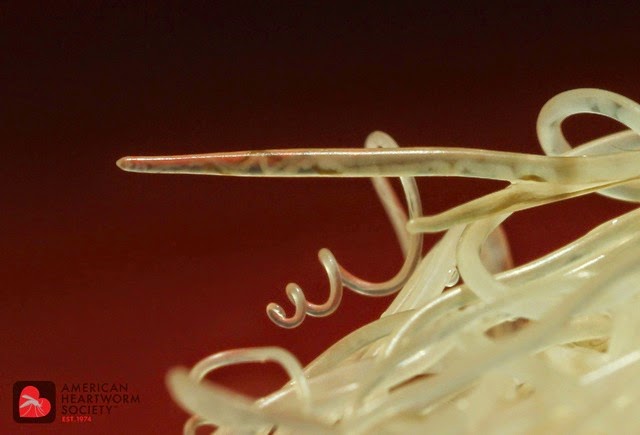
Heartworms are exactly what they sound like – worms in the heart!  They are 9-11 inches long and live either in the heart or in the arteries that supply blood to the lungs.  Although they occur commonly in dogs, most people do not consider them to be a problem in cats.   However, recent studies have shown heartworms to be far more prevalent than previously thought. 

Heartworm Transmission             

Heartworms are transmitted by mosquitoes.  When a mosquito carrying baby heartworms (larvae)
bites a cat, the larvae are deposited under the cat’s skin.  The larvae then begin a long migration through the tissues, eventually reaching the heart.  They mature into adult heartworms about 6 months from the time they enter the cat.  The life span of an adult heartworm in a cat is about 2-3 years (in dogs, the worms may live 7 years or so). Cats are infected with heartworms only when bitten by a mosquito that is carrying heartworm larvae.  Cats that spend time outdoors are more likely to be exposed, but mosquitoes that enter our homes can be just as dangerous to our indoor-only friends. At Exclusively Cats Veterinary Hospital, we have seen several indoor-only cats that have developed severe illness related to heartworm infection.

Clinical Signs of Heartworm Disease

 
One of the difficulties in diagnosing heartworm disease in cats is that there are no specific or consistent signs of disease.  The disease in cats is also very different in cats than in dogs. So much so, in fact, that it has been given the name "Feline Heartworm Associated Respiratory Disease" (or, H.A.R.D.). Immature heartworms in cause significant disease in the small arteries supplying the lungs in about 50% of cats that are infected - before any of the worms mature to adulthood. In some cases, the immature worms die 3-4 months after entering the arteries and cause a severe inflammatory reaction that may result in sudden death of the infected cat. If the worms and the cat survive past this initial phase, the worms act to suppress the cat's immune system.

For many months there may be little or no apparent changes in the cat.  However, as the worms mature, any heartworms that have reached the heart may begin to put strain on the heart muscle and cause a heart murmur, high blood pressure or increased heart rate (tachycardia). Infected cats may cough or have difficulty breathing, and they may be weak or lose weight. These signs of heartworm disease in cats may be easily mistaken for asthma, allergic bronchitis or other respiratory diseases.

Strangely, some cats with heartworms have a history of vomiting with no respiratory signs or signs of heart failure.  Some cats seem to be normal, then die suddenly.  This may occur due to the aforementioned reaction within the lungs to young heartworms or when the pumping action of the heart sends a worm or blood clot (thrombus) into the main arteries leading to the lungs (pulmonary arteries).  If these blood vessels become blocked, the cat will die suddenly.  Additionally, in cats, more so than dogs, the worms may migrate to unusual areas of the body, such as the abdominal cavity or the central nervous system.

The symptoms of heartworm associated respiratory disease are:

  • anorexia
  • coughing
  • difficulty breathing (increased respiratory rate or effort)
  • lethargy
  • weight loss 
  • vomiting
  • rapid heart rate
  • heart murmur
  • blindness
  • collapse
  • convulsions
  • diarrhea
  • fainting
  • sudden death

Diagnosis of Heartworm Disease      

There are two blood tests that are very helpful in diagnosing heartworm infections in cats, however neither test is conclusive on its own. 
                       
1)      Antibody test.  This test determines whether the cat’s immune system has been exposed to heartworms.  If a cat has ever been infected with heartworm disease in its lifetime, it will test positive, whether or not there are live worms in the cat's body at the time of testing. Therefore, a positive test result may indicate that an active infection is present, OR the cat has had heartworms in the past, but the heartworms have died.  This test is very sensitive, so it is used first. It will give a positive result as soon as 2 months after infection, but once the worm becomes an adult, the test may provide a false negative result, especially in cats with no clinical signs. If this antibody test is positive the next test is performed.

2)      Antigen test.  This test detects the presence of adult female worms.  It is very specific, and is considered the "gold standard" in dogs, but in cats, it is not as sensitive.  This test will not give a positive result in a cat until 5-8 months after infection. A positive antigen test means that heartworms are present, but a negative test does not mean that heartworms are absent.  Because the cat must have at least 2 adult female worms present to make this test positive, a negative antigen test may mean that the cat has only a small number of worms or that all of the worms present are male. A typical feline heartworm infection consists of 6 or fewer worms, with the majority of cats having only one or two worms in their body. This is still considered to be a "heavy" or "significant" infection. Approximately 1/3 of feline heartworm infections consist of only males or only females.

In summary, a diagnosis of heartworms is confirmed if both the antibody and antigen tests are positive.  However, a cat infected with heartworms can have a positive antibody test and a negative antigen test (if the heartworms are all male). 

Additional diagnostics may include the following:

3)      Eosinophil count.  Cats suspected of heartworm disease can be tested for their level of eosinophils.  Eosinophils are normal white blood cells that occur in increased numbers when certain parasites are present.  They are elevated in the presence of heartworms, but this elevation only occurs for a few months.  In addition, cats with intestinal parasites (“worms”) and allergies also commonly have increased eosinophil counts.

4)      Autopsy after sudden death.  Many cats show no clinical signs of illness before sudden death due to heartworm disease.

Radiographs               
Radiographs (x-rays) allow us to view the size and shape of the heart and measure the diameter of the pulmonary arteries.  Many cats with heartworms have an increased size of the pulmonary arteries.  Sometimes these arteries appear to come to a sudden stop (blunted) on their way to the lungs due to worms obstructing them, or the vessels may look twisted or "tortuous".  However, many cats with heartworms have no abnormalities on their radiographs, especially early in the infection. Additionally, cats with certain other parasites, such as Toxocara (roundworms) or Aleurostrongylus (lungworms) may have similar lung patterns.

Ultrasound                 
An ultrasound machine produces an image of internal organs and structures without the use of radiation.  With it, one is able to view the pulmonary arteries and internal structures of the heart.  In some cats the heartworms can be seen, but unfortunately most of the time they are not visible. This method of diagnosis is most accurate about 5 months after infection.

Treatment for Feline Heartworm Disease 

Dogs that have heartworms can be treated with a medication that kills the adult worms in the body.  Unfortunately, there is no such drug for cats.  Another problem is that when the heartworms die, they pass through the pulmonary arteries to the lungs.  This can result in sudden death.  So… we have a dilemma when a cat is diagnosed with heartworms.  One of the following choices must be made:
 
1)      Treat with the drug designed for dogs.  This is not advised as this drug is not approved for cats, the medication is toxic at very low doses and the chance of complications and side effects is high. To date, no study has found a medical treatment to significantly increase the survival rate of cats with heartworm disease.

2)      Treat the symptoms of heartworm disease and hope the cat outlives the worms.  Since heartworms live in a cat for about 2-3 years, prolonged treatment is often needed.  When cats are in crisis, they are treated with oxygen, corticosteroids (“cortisone”) to relieve the reaction occurring in the pulmonary arteries and lungs, and if needed, drugs to remove fluid from the lungs (diuretics).  When cats are stable (not showing any signs of disease), they are treated continuously or periodically with corticosteroids, although the threat of an acute crisis or sudden death always exists. 

3)      Attempt to surgically remove as many worms as possible from the heart itself.  This surgery is very delicate and is quite risky from an anesthetic standpoint, although it has been successful in a number of cats.  Medical therapy is needed in addition to the surgery. 

Prevention                 
It is strongly recommended that all dogs take medications to prevent heartworms, and some of these medications have been formulated for cats.  Prevention of heartworms in cats is safe and easy.  The
reasons a preventative should be considered in your cat are:

1)      Diagnosing heartworms in cats is not as easy as it is in dogs. 

2)      Although heartworms in cats are not as common as they are in dogs, they are probably more common than we realize.  As we look more aggressively for heartworms in cats with better and better tests, we expect to find that the incidence is greater than we thought in the past. 

3)      There is no good treatment for heartworm disease in cats.  Effective drugs are not available, and cats that seem to be doing well may suddenly die.  Heartworm disease in cats is risky, and not treating these cats is just as risky. Even if treatment is successful in relieving symptoms, and even if the worms die in 2-3 years without incident, the cat may experience lifelong respiratory issues that require treatment.

4)      Heartworm prevention medication is safe for cats and kittens as young as 6 weeks.  They only have to be given once each month and they are formulated so that (most) cats will eat them readily. If a cat will not take an oral medication, topical monthly heartworm medications are also available.

5)      Indoor cats can get heartworms!  Because contact with mosquitoes is required for transmission, outdoor cats are more likely to be exposed.  However, about 25% of cats diagnosed with heartworms are reported by their owners to be indoors only.  This simply means that mosquitoes that come in the house are just as dangerous as the ones outdoors.

It is important to continue treating with heartworm preventives for 30-90 days after the end of heartworm season, since prevention works retroactively by flushing the system of any immature heartworms that have been introduced into the cat. For cats in Michigan, this usually means that they should be given preventive medication April through November or December. However, year-round prevention is likely the safest option. April is right around the corner, so make sure you check to see if you need to pick up some heartworm preventive!

Heartworm infection in cats can be a very serious and potentially fatal disease.  Fortunately, prevention is very easy and safe.  Please feel free to discuss any questions or concerns you have about heartworm disease or any other topics with the staff at EXCLUSIVELY CATS.

Thank you for allowing us to help you care for your cat!


Resources:

The American Heartworm Society Feline Guidelines

Monday, January 5, 2015

Chronic Nasal Discharge in Cats


CHRONIC NASAL DISCHARGE

What is meant by the term "Chronic Nasal Discharge"?

When a cat has a discharge from its nose that lasts more than 2 months, it is considered chronic.  The discharge may be thin and clear like water (serous), thick and yellow or green like pus (purulent), bloody (sanguinous or hemorrhagic), or a combination. Clear fluid or mucousy discharge may be an indication of irritation or viral infection. Thick, yellow fluid or pus may be a sign of a bacterial infection. Reddish fluid can be a sign of intense or chronic irritation, destruction of the nasal mucous membranes or bones (turbinates). Trauma can also cause a bloody nasal discharge.

Foreign bodies only affect one nostril. Fungal infections and tumors may affect one or both nostrils, while viral infections most often affect both, though one side may be worse than the other.

What causes a chronic nasal discharge?

A view into the nasal canal and the papery turbinate bones
Chronic nasal discharge is not a diagnosis; rather, it is a term that describes the signs of disease in the nose and frontal sinuses.  Almost all disease conditions that occur in the nose will cause irritation and inflammation to the lacy bones in the nose, called turbinates.  The presence of disease in the nose is called rhinitis.  The turbinate bones are easily distorted and destroyed.  When that happens, bacteria that normally live in the nose grow rapidly, causing a secondary bacterial infection.

The frontal sinuses are hollow cavities in the skull and are located just above the eyes.  They are connected to the nasal cavity by a small canal.  Most diseases that occur in the nasal cavity have the ability to move through these canals into the frontal sinuses.  When the sinuses become involved and develop inflammation, this is called sinusitis.

Chronic nasal discharge may result from several disorders involving the sinuses and nasal cavity.  These include:

                Chronic viral infection
                Chronic bacterial infection
                Chronic fungal infection
                Dental disease
                Nasal foreign body (e.g. grass seed)
                Nasal tumor
                Inflammatory polyp
                Parasite infection

What tests should be done to make an accurate diagnosis?

There are several diagnostic tests that should be done for a cat with a chronic nasal discharge.  A blood profile will often detect underlying diseases that can contribute to a nasal disease.  Testing for the feline leukemia virus (FeLV) and the feline immunodeficiency virus (FIV) is important because these viruses have the ability to suppress the cat's immune system, making recovery from normally mild infections difficult (or even impossible). 
Nasal x-ray. One side of the nose has poor detail which suggests that the delicate bones of the nasal passages, the turbinate bones, are being destroyed.

It is very important to make radiographs (x-rays) of the skull.  Special positions are necessary to view the nasal cavity and frontal sinuses.  These require sedation or a short-acting anesthetic.  A nasal flush is a diagnostic procedure used to collect material from deep within the nasal cavity.  This material can be studied under the microscope (cytology) and can also be cultured.  Although it is not particularly traumatic to the cat, anesthesia is required, so this procedure is usually done in conjunction with radiographs.  This allows more than one procedure to be done while the cat is under anesthesia.

Anesthesia allows close inspection of the throat, the area above the soft palate, and the nasal canals. This cat had a large buildup of extremely thick mucus above the soft palate.

Some veterinarians have a specialized instrument called an endoscope which allows the veterinarian to actually look inside the nose, as well as to examine the back of the throat and the area around the soft palate.  In order to pass this small flexible tube into the area of interest, anesthesia is required.

There are some diseases that can only be diagnosed with a biopsy of material deep within the nasal cavity.  A biopsy requires recovery of an actual piece of tissue, so surgery is often required for this procedure.
Fungal organisms and a plaque of fungal growth inside the nose of a cat 

Foreign objects within the nasal passage can sometimes be detected with radiographs.  If a foreign body is suspected but not visualized, endoscopy may be helpful, depending on where the foreign body is located.  For some cases, exploratory surgery of the nasal cavity is needed.

As you can see, it may require several days or weeks of testing to determine the cause of a chronic nasal discharge.  When the diagnosis remains elusive, more sophisticated tests may be required.  Veterinarians unable to perform these tests often refer the cat to a specialist.

How is a chronic viral infection treated?

Respiratory viruses, which can infect the nose, may persist and lead to long term viral rhinitis/sinusitis.  No drugs are available to kill these viruses so this type of infection is often incurable but many cats respond to antiviral medications such as Famciclovir.

How is a chronic bacterial infection treated?

Administration of antibiotics alone is usually unsuccessful in curing bacterial infections of the nose and sinuses because the bacteria have become entrapped within the turbinates, and reinfections are frequent.  Although many cats improve while taking antibiotics, cortisone, or antihistamines, they may relapse when these drugs are discontinued.  The use of drugs that stimulate the immune system and the surgical removal of the turbinates have been successful in some cats.  However, others do not respond well.  Overall, the prognosis is guarded.

How is a chronic fungal infection treated?

The most common fungal infection in the nose is caused by Cryptococcus neoformans. Because some of the drugs used to treat this organism are quite expensive and will occasionally cause adverse effects, they are not used unless a firm diagnosis is made.  Fortunately, the newer antifungal drugs have fewer significant side effects and many cats with fungal diseases can be successfully treated.  If the cat is infected with the feline leukemia virus or feline immunodeficiency virus, the outcome will usually be less favorable.

The image below shows a cat named Parker who came to us with a severe swelling in her nose. Microscopic evaluation of samples collected from her nose showed the fungal organism Cryptococcus. Treatment was started and over time, her nose returned to normal.


How is dental disease treated? 

A cat's tooth roots are located very close to the sinus cavity, and if the tooth becomes infected, pus or fluid may drain from the nose. If the infected tooth becomes a severe enough problem, the cat may have facial swelling or swelling of the eye, the tongue may stick out, or the tooth may completely fall out, leaving an opening straight into the sinus cavity.

Disease of this type is treated with a thorough dental cleaning and extraction of the infected teeth, followed by a course of antibiotics. If the disease is bad enough, the cat may be prescribed antibiotics prior to dental care, too.

Read more about what is involved in feline dental care.


How is a nasal foreign body treated?

Nasal mites
When a piece of grass, a seed, parasites or other foreign material lodges in the nasal cavity, the membrane which lines the nose produces large amounts of mucus in response to the irritation.  In addition, affected cats will sneeze violently in an attempt to expel the foreign body. 

If the foreign body cannot be sneezed out, the veterinarian must take steps to remove it.  When a nasal foreign body is suspected but cannot be seen on radiographs or with an endoscope, exploratory surgery may be needed.  If it is found and removed, the prognosis is good.

The following video shows the removal of a Cuterebra larva that was lodged in a cat's nose. He had chronic nasal discharge and excessive sneezing that was not improved with antibiotic treatment. After the Cuterebra was removed, his nasal discharge went away and he stopped sneezing.


How is a tumor treated?

Most nasal tumors are malignant.  Complete surgical removal is very unlikely, so chemotherapy or radiation therapy must be considered.  Unfortunately, many nasal tumors do not respond to either treatment, so the prognosis is poor.  However, when surgery is performed to get tissue for biopsy, most surgeons remove as much of the tumor as possible.  Following this procedure, the cat may be greatly relieved of the nasal discharge and remain improved for several months.  However, in almost all cases, the tumor can be expected to recur. In some cases, however, chemotherapy and/or radiation treatment are successful and the cat will go into remission for as long as several years. It is notable that after a cat has been treated with radiation, the hair at the site of the treatment will likely change color.

This 12 year old cat has been having chronic nasal discharge and sneezing for 2 weeks. He has significant dental disease, but another likelihood at his age is that he may have a tumor. Dr. Brooks' plan for him is to extract his infected teeth and perform a surgical biopsy to determine the extent of his problem.
Several of this cat's teeth have already fallen out and another is almost ready to.

How is an inflammatory polyp treated?

Inflammatory polyps are non-cancerous masses of tissue that are composed of inflammatory cells. Surgery is often successful in removing much of the polyp, but there is a high probability of regrowth if all of the polyp cannot be removed.  Since polyps often begin in the internal ear and grow down the Eustachian tube into the back of the nose, their removal can require extensive surgery that may not be completely successful.  The prognosis for an inflammatory polyp is guarded because the entire polyp cannot be removed in some cases, however, if the entire polyp is successfully removed, the cat will completely recover.

The cat below had an extremely large nasopharyngeal polyp. Once it was removed, her sneezing and nasal discharge resolved completely!


Any time that your cat has discharge from the nose, it is a good idea to have the cat examined by a veterinarian, because the potential causes of chronic nasal discharge are extremely varied, and treatment for chronic nasal discharge is highly dependent on the cause.