Monday, March 30, 2015

Toxoplasmosis in cats: background and an unusual case


A Toxoplasmosis organism in fluid from the respiratory tract


What is toxoplasmosis?

Toxoplasmosis is a disease caused by a one-celled parasite called Toxoplasma gondii, hereafter called the "toxo organism."  In humans, it may affect many different organs of the body, causing many different types of clinical signs.  The respiratory system is commonly involved and pneumonia may result.  The most common finding is a mild, flu-like illness that lasts a few days.  Most people recover uneventfully.  Even if the patient sees a physician, the illness may still be attributed to the flu unless special blood tests are run. There have been some recent studies of populations with a high rate of Toxoplasmosis infection that suggests that infection with the toxo organism may cause humans to be more likely to develop "guilt prone" neuroses and that there may be a link between Toxo and certain mental disorders such as OCD and schizophrenia. Many of the stories about this study have strongly exaggerated the strength of this link, and while there appears to be a correlation between the two, there is no evident cause.

Dirty Carrots - Image courtesy of dragonariaes
Additionally, Toxoplasmosis infection is much more likely to occur in humans due to ingestion of undercooked meat or eating or drinking substances contaminated with Toxo organisms, gardening, or eating unwashed fruits or vegetables from a garden than from infection due to sharing a home with a
cat.

How does it relate to pregnant women?

If a pregnant woman contracts toxoplasmosis just before or during pregnancy, it is possible for the toxo organism to affect the unborn baby.  It is this form of the disease that has the most dire consequences because the baby may be affected for life. Infections with Toxoplasmosis earlier in life should not cause problems with pregnancy, but any concern about this matter should be discussed with an obstetrician.

Pregnant women should not clean the litterbox if at all possible, but if they must, should wear gloves and a mask. If the litterbox is kept clean daily, the risk is lower as the Toxoplasmosis oocysts do not become infective for 1-5 days after being passed in the stool. Avoid feeding your cat raw meats, and keep your cat indoors to minimize exposure. While you do not have to get rid of your cat because you are pregnant, pregnant women should not bring new cats into the home or handle stray cats or kittens. Outdoor sandboxes should be kept covered, and any gardening should be done while wearing gloves. Avoid undercooked meats.
  • From the CDC website, the definition of "cooked meats":
  • For Whole Cuts of Meat (excluding poultry)
    • Cook to at least 145° F (63° C) as measured with a food thermometer placed in the thickest part of the meat, then allow the meat to rest* for three minutes before carving or consuming.
  • For Ground Meat (excluding poultry)
    • Cook to at least 160° F (71° C); ground meats do not require a rest* time.
  • For All Poultry (whole cuts and ground)
    • Cook to at least 165° F (74° C), and for whole poultry allow the meat to rest* for three minutes before carving or consuming.

How common is toxoplasmosis in adults?  And how common in cats?

Labwork helps diagnose Toxoplasmosis in cats and people
Exposure to the toxo organism will result in the production of antibodies.  Antibodies are the defense   The presence of antibodies means that the person or cat has been exposed; it does not necessarily mean that any disease occurred.  There are some estimates that about 50% of domestic cats in the United States have been exposed to toxoplasmosis. This does not mean that 50% of cats have an active infection with Toxoplasma. The presence of antibodies only means that exposure to the toxo organism has occurred in the past. However, the Companion Animal Parasite Council reports that the  prevalence of oocysts (infective shedding) in cats in the United States at a rate of approximately 1% In six surveys from different states in which more than 10 cats were included in all studies, oocyst shedding ranged from 0.0 to 6.6% (mean of 0.7%). In a study of over 200 cats, approximately 50 cats were infected and none of them were actively shedding infective Toxoplasmosis organisms. Positive antibody titers in cats in the U.S. range anywhere from 14% to 100% - these cats have been exposed but are non-infective.
agents of the immune system and are produced in response to immune system stimulation.

The CDC estimates that about
22.5% of the U.S. population 12 years and older have been infected with Toxoplasma. The Companion Animal Parasite Council reports that 11% of the U.S. population between the ages of 6 and 49 are seropositive (have antibodies to Toxoplasmosis). In France and Germany, approximately 80% of the population have been infected with Toxoplasmosis. In some regions of the world, particularly where the climate is hot and humid, up to 95% of the population has been infected with Toxoplasma.

How common is it in babies?

The disease toxoplasmosis occurs in about 400 to 4000 births per year in the US. About 4 million babies are born, each year - a rate of 0.01% (as few as 1-10 births out of 10,000 will be infected). Although this is indeed a real disease with dire consequences, it should be noted that its incidence is very small, especially in light of how many people have Toxoplasma antibodies.

How is it transmitted?

Although several species may develop the disease toxoplasmosis, including humans and dogs, the organism can only complete its life cycle in the domestic cat.  This means that the cat may be infected with the toxo organism and transmit it to other cats or to other species, including humans.  However, in order for this to occur the following must happen:
Toxoplasmosis life cycle

1.        The cat must be infected with the toxo organism, and most cats are not.  In order for this to occur, the cat must eat something infected with it.  It is most commonly available to the cat by ingestion of infected mice or infected raw or undercooked meats, especially pork or mutton.

2.        The cat must be shedding the toxo organism in its feces.  This occurs for only about a 10 day period.  It usually only occurs once in the cat's lifetime.  (In a few situations, the cat may shed the organism again; however, if that occurs, the number of organisms that are shed are so small that transmission is very unlikely.)


3.        The toxo organism must "incubate" in the cat's feces for 1-5 days before it is infective to humans.  This "incubation" must occur after the feces leaves the cat's body and have access to oxygen (i.e. in the litter box or in soil).

4.        The toxo organism must be swallowed by the person being infected.  It is not spread to humans through the air.

Raw or undercooked meat is a common source of Toxoplasmosis infection
The toxo organism may also be transmitted to humans by eating raw or undercooked meats, especially pork or mutton.  Since many hamburgers from fast-food restaurants are made of beef diluted with pork, most authorities feel that human infection occurs much more frequently by this method than by association with cats.  The incidence of toxo antibodies in U.S. veterinarians is not different than that of the rest of the population. None of our staff members who have been tested for Toxoplasmosis have tested positive, and we probably clean more litterboxes than all of our clients, combined!

What is involved in testing for toxoplasmosis?

We are frequently asked to test a cat that belongs to a pregnant woman for toxoplasmosis.  Pregnant women should know the following concerning toxoplasmosis testing.

1.         A screening test for toxo antibodies can be performed on both the pregnant woman and the cat.  A negative result means that the woman (and/or the cat) has not been exposed to the toxo organism.  However, it does not infer that either the woman or the cat has any immunity to toxoplasmosis in the event of a future exposure.  In fact, it means just the opposite.  Both are susceptible to infection.

2.        A single antibody titer that is positive, performed on the woman and/or the cat, means that there has been exposure to the toxo organism in the past or that there is an active infection of toxoplasmosis in progress.  In order to know which situation exists, a second test must be run 2-4 weeks later. 

a.        If the two tests give similar results, there has been an infection in the past and a certain degree of immunity exists. 

b.       If the second test is significantly higher that the first, there is a strong possibility that an active case of toxoplasmosis is in progress. 

c.        It is very important that both tests be performed by the same testing laboratory in order to properly compare results.

3. The direct means of documenting the possibility of transmission of toxoplasmosis requires that we microscopically examine a fecal sample from the cat looking for the oocysts (eggs) of the toxo organism.  Because these oocysts are very tiny (even under a microscope) and because the cat may not be shedding oocysts today but may do so in the future, multiple examinations must be done during the course of pregnancy, preferably once weekly.  This is not a very high yield procedure, meaning that it can be difficult to detect the parasites, and they can be missed by this diagnostic technique.

An unusual case of Toxoplasmosis

 In most cases of Toxoplasmosis, the cat is mildly ill and may not even produce symptoms worrisome enough for an owner to call the veterinarian. A few years ago, however, we saw a very unusual case involving Toxoplasmosis. A previously healthy, 4 year old male cat came to see us 9 months after he had a wellness exam with no concerns. He was an indoor-outdoor cat, and had previously had roundworms, so his owners brought in stool samples for checking very regularly. Most of the time, they were negative. In November, they brought T.C. to us as an emergency. He had been eating poorly and had been lethargic for a few days, but they had just found him collapsed and struggling to breathe. When they arrived at the hospital, he was unable to stand and his color was blue-gray instead of a healthy pink. His chest sounded as though it were full of fluid. He was immediately placed in an oxygen cage. He recovered enough for us to take him to the x-ray room and take one x-ray before he needed to return to the oxygen cage. His x-ray showed fluid in the chest, an enlarged heart and
Toxoplasmosis organisms inside a cell
other signs similar to congestive heart failure. Since his breathing was so labored, we were limited as to what we could do to him - he was too critical to remove from the oxygen cage for very long, even when offered an oxygen mask. Placing an oxygen mask caused him to struggle and breathe with even more difficulty. We gave him medications to try to ease his breathing and eliminate the fluid from his chest, however despite treatment, two hours after he entered the hospital, he stopped breathing and could not be resuscitated. Upon post-mortem examination, we found that he had Toxoplasmosis organisms infesting many of his major organs - heart, lungs, and kidneys. His stool sample was negative for Toxoplasmosis.

How can toxoplasmosis be prevented?

There are several practical means of preventing the transmission of toxoplasmosis. To review:

1.         Do not allow your cat to eat mice or poorly-cooked meat.  Feeding a commercial cat food and not allowing your cat outdoors virtually eliminates any possibility of the cat becoming infected.

2.         Clean all feces from your cat's litter box daily.  Even if the cat's feces is infected with toxo oocysts, they must incubate for 1-5 days before becoming infectious.  To be extra safe, do not let a pregnant woman clean the litter box.

3.         When working in soil (flower beds) that cats might use for defecation, wear gloves to keep from getting oocysts on your hands.

4.         Avoid eating raw or poorly-cooked meats.  Be especially careful of fast-food hamburgers.  Since this is probably more of a threat to your baby than your cat, special attention should be paid here.

5.         Keep children's sandboxes covered.  Outdoor cats will frequently use the sandbox for defecation.  Even if the feces are scooped out, the sandbox may remain contaminated with parasites.

SUMMARY

1.        Toxoplasmosis that affects babies is quite rare. (Incidence in the United States is 0.028% of all births.)   It is frequently referred to as "A Ladies Home Journal Disease."   (This magazine was the first widely-read publication to link toxoplasmosis and cats.)

2.        Feeding commercial cat food and keeping your cat indoors so it cannot catch mice will prevent spread of toxoplasmosis by your cat.

3.        Having someone other than a pregnant woman clean out the litter box daily will prevent spread of toxoplasmosis by your cat.

4.        Transmission from your cat to you requires that you swallow the toxo oocysts that have incubated in your cat's feces for 1-5 days.  Reasonable personal hygiene should be adequate to prevent that from occurring.

5.        Toxoplasmosis is transmitted more commonly in the United States via poorly cooked meat than by cats.

6.        Testing your cat's blood for toxoplasma antibodies is only meaningful if a positive test is followed 2-4 weeks later with another test.

Weekly testing of your cat's feces will more directly detect a cat that is capable of transmitting toxoplasmosis.

Additional resources:
Cat Parasite Affects Human Culture 
Latent Toxoplasmosis and Human 
Prevalence of Toxoplasma gondii Infection in Feral Cats in Seoul, Korea 
Companion Animal Parasite Council Recommendations for Toxoplasma  
Toxoplasmosis in the Fetus and Newborn
CDC information on Toxoplasmosis and Pregnancy
Preventing Congenital Toxoplasmosis
Cornell Feline Health Center Information on Toxoplasmosis

International Cat Care Information on Toxoplasmosi

Monday, March 23, 2015

Heartworm infection in cats - it really is a worm, but it might not be in the heart!


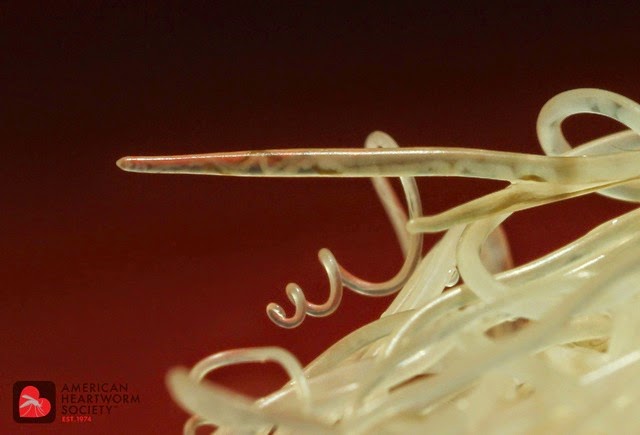
Heartworms are exactly what they sound like – worms in the heart!  They are 9-11 inches long and live either in the heart or in the arteries that supply blood to the lungs.  Although they occur commonly in dogs, most people do not consider them to be a problem in cats.   However, recent studies have shown heartworms to be far more prevalent than previously thought. 

Heartworm Transmission             

Heartworms are transmitted by mosquitoes.  When a mosquito carrying baby heartworms (larvae)
bites a cat, the larvae are deposited under the cat’s skin.  The larvae then begin a long migration through the tissues, eventually reaching the heart.  They mature into adult heartworms about 6 months from the time they enter the cat.  The life span of an adult heartworm in a cat is about 2-3 years (in dogs, the worms may live 7 years or so). Cats are infected with heartworms only when bitten by a mosquito that is carrying heartworm larvae.  Cats that spend time outdoors are more likely to be exposed, but mosquitoes that enter our homes can be just as dangerous to our indoor-only friends. At Exclusively Cats Veterinary Hospital, we have seen several indoor-only cats that have developed severe illness related to heartworm infection.

Clinical Signs of Heartworm Disease

 
One of the difficulties in diagnosing heartworm disease in cats is that there are no specific or consistent signs of disease.  The disease in cats is also very different in cats than in dogs. So much so, in fact, that it has been given the name "Feline Heartworm Associated Respiratory Disease" (or, H.A.R.D.). Immature heartworms in cause significant disease in the small arteries supplying the lungs in about 50% of cats that are infected - before any of the worms mature to adulthood. In some cases, the immature worms die 3-4 months after entering the arteries and cause a severe inflammatory reaction that may result in sudden death of the infected cat. If the worms and the cat survive past this initial phase, the worms act to suppress the cat's immune system.

For many months there may be little or no apparent changes in the cat.  However, as the worms mature, any heartworms that have reached the heart may begin to put strain on the heart muscle and cause a heart murmur, high blood pressure or increased heart rate (tachycardia). Infected cats may cough or have difficulty breathing, and they may be weak or lose weight. These signs of heartworm disease in cats may be easily mistaken for asthma, allergic bronchitis or other respiratory diseases.

Strangely, some cats with heartworms have a history of vomiting with no respiratory signs or signs of heart failure.  Some cats seem to be normal, then die suddenly.  This may occur due to the aforementioned reaction within the lungs to young heartworms or when the pumping action of the heart sends a worm or blood clot (thrombus) into the main arteries leading to the lungs (pulmonary arteries).  If these blood vessels become blocked, the cat will die suddenly.  Additionally, in cats, more so than dogs, the worms may migrate to unusual areas of the body, such as the abdominal cavity or the central nervous system.

The symptoms of heartworm associated respiratory disease are:

  • anorexia
  • coughing
  • difficulty breathing (increased respiratory rate or effort)
  • lethargy
  • weight loss 
  • vomiting
  • rapid heart rate
  • heart murmur
  • blindness
  • collapse
  • convulsions
  • diarrhea
  • fainting
  • sudden death

Diagnosis of Heartworm Disease      

There are two blood tests that are very helpful in diagnosing heartworm infections in cats, however neither test is conclusive on its own. 
                       
1)      Antibody test.  This test determines whether the cat’s immune system has been exposed to heartworms.  If a cat has ever been infected with heartworm disease in its lifetime, it will test positive, whether or not there are live worms in the cat's body at the time of testing. Therefore, a positive test result may indicate that an active infection is present, OR the cat has had heartworms in the past, but the heartworms have died.  This test is very sensitive, so it is used first. It will give a positive result as soon as 2 months after infection, but once the worm becomes an adult, the test may provide a false negative result, especially in cats with no clinical signs. If this antibody test is positive the next test is performed.

2)      Antigen test.  This test detects the presence of adult female worms.  It is very specific, and is considered the "gold standard" in dogs, but in cats, it is not as sensitive.  This test will not give a positive result in a cat until 5-8 months after infection. A positive antigen test means that heartworms are present, but a negative test does not mean that heartworms are absent.  Because the cat must have at least 2 adult female worms present to make this test positive, a negative antigen test may mean that the cat has only a small number of worms or that all of the worms present are male. A typical feline heartworm infection consists of 6 or fewer worms, with the majority of cats having only one or two worms in their body. This is still considered to be a "heavy" or "significant" infection. Approximately 1/3 of feline heartworm infections consist of only males or only females.

In summary, a diagnosis of heartworms is confirmed if both the antibody and antigen tests are positive.  However, a cat infected with heartworms can have a positive antibody test and a negative antigen test (if the heartworms are all male). 

Additional diagnostics may include the following:

3)      Eosinophil count.  Cats suspected of heartworm disease can be tested for their level of eosinophils.  Eosinophils are normal white blood cells that occur in increased numbers when certain parasites are present.  They are elevated in the presence of heartworms, but this elevation only occurs for a few months.  In addition, cats with intestinal parasites (“worms”) and allergies also commonly have increased eosinophil counts.

4)      Autopsy after sudden death.  Many cats show no clinical signs of illness before sudden death due to heartworm disease.

Radiographs               
Radiographs (x-rays) allow us to view the size and shape of the heart and measure the diameter of the pulmonary arteries.  Many cats with heartworms have an increased size of the pulmonary arteries.  Sometimes these arteries appear to come to a sudden stop (blunted) on their way to the lungs due to worms obstructing them, or the vessels may look twisted or "tortuous".  However, many cats with heartworms have no abnormalities on their radiographs, especially early in the infection. Additionally, cats with certain other parasites, such as Toxocara (roundworms) or Aleurostrongylus (lungworms) may have similar lung patterns.

Ultrasound                 
An ultrasound machine produces an image of internal organs and structures without the use of radiation.  With it, one is able to view the pulmonary arteries and internal structures of the heart.  In some cats the heartworms can be seen, but unfortunately most of the time they are not visible. This method of diagnosis is most accurate about 5 months after infection.

Treatment for Feline Heartworm Disease 

Dogs that have heartworms can be treated with a medication that kills the adult worms in the body.  Unfortunately, there is no such drug for cats.  Another problem is that when the heartworms die, they pass through the pulmonary arteries to the lungs.  This can result in sudden death.  So… we have a dilemma when a cat is diagnosed with heartworms.  One of the following choices must be made:
 
1)      Treat with the drug designed for dogs.  This is not advised as this drug is not approved for cats, the medication is toxic at very low doses and the chance of complications and side effects is high. To date, no study has found a medical treatment to significantly increase the survival rate of cats with heartworm disease.

2)      Treat the symptoms of heartworm disease and hope the cat outlives the worms.  Since heartworms live in a cat for about 2-3 years, prolonged treatment is often needed.  When cats are in crisis, they are treated with oxygen, corticosteroids (“cortisone”) to relieve the reaction occurring in the pulmonary arteries and lungs, and if needed, drugs to remove fluid from the lungs (diuretics).  When cats are stable (not showing any signs of disease), they are treated continuously or periodically with corticosteroids, although the threat of an acute crisis or sudden death always exists. 

3)      Attempt to surgically remove as many worms as possible from the heart itself.  This surgery is very delicate and is quite risky from an anesthetic standpoint, although it has been successful in a number of cats.  Medical therapy is needed in addition to the surgery. 

Prevention                 
It is strongly recommended that all dogs take medications to prevent heartworms, and some of these medications have been formulated for cats.  Prevention of heartworms in cats is safe and easy.  The
reasons a preventative should be considered in your cat are:

1)      Diagnosing heartworms in cats is not as easy as it is in dogs. 

2)      Although heartworms in cats are not as common as they are in dogs, they are probably more common than we realize.  As we look more aggressively for heartworms in cats with better and better tests, we expect to find that the incidence is greater than we thought in the past. 

3)      There is no good treatment for heartworm disease in cats.  Effective drugs are not available, and cats that seem to be doing well may suddenly die.  Heartworm disease in cats is risky, and not treating these cats is just as risky. Even if treatment is successful in relieving symptoms, and even if the worms die in 2-3 years without incident, the cat may experience lifelong respiratory issues that require treatment.

4)      Heartworm prevention medication is safe for cats and kittens as young as 6 weeks.  They only have to be given once each month and they are formulated so that (most) cats will eat them readily. If a cat will not take an oral medication, topical monthly heartworm medications are also available.

5)      Indoor cats can get heartworms!  Because contact with mosquitoes is required for transmission, outdoor cats are more likely to be exposed.  However, about 25% of cats diagnosed with heartworms are reported by their owners to be indoors only.  This simply means that mosquitoes that come in the house are just as dangerous as the ones outdoors.

It is important to continue treating with heartworm preventives for 30-90 days after the end of heartworm season, since prevention works retroactively by flushing the system of any immature heartworms that have been introduced into the cat. For cats in Michigan, this usually means that they should be given preventive medication April through November or December. However, year-round prevention is likely the safest option. April is right around the corner, so make sure you check to see if you need to pick up some heartworm preventive!

Heartworm infection in cats can be a very serious and potentially fatal disease.  Fortunately, prevention is very easy and safe.  Please feel free to discuss any questions or concerns you have about heartworm disease or any other topics with the staff at EXCLUSIVELY CATS.

Thank you for allowing us to help you care for your cat!


Resources:

The American Heartworm Society Feline Guidelines

Monday, March 16, 2015

10 Poison Prevention Week Tips for your Cat

March 15-21 is National Poison Prevention Week. While cats are more likely to eat non-toxic items, such as ribbons and ear plugs (that are still a medical problem), there are still some cats that will eat other items that can be a problem due to a toxicity. To help prevent a poisoning incident, consider the following tips:

  • If your cat takes medication regularly, keep the bottles hidden in a cupboard rather than out
    Pills are fun to catch, "kill" and eat.
    where the medication is accessible. If you need to have the medication out where you can see it to help remind you to give it, use a small weekly pill container, so that only a few pills are out and accessible, and make sure that the weekly pill holder is in an area that the cat cannot access. Keep the rest of the prescription behind closed doors.
  • Be especially careful to keep chewable medications and vitamins out of reach (for humans or pets).
  • Store human medications in a separate location from human medications to avoid confusing who gets which pill. Human prescription medications are the number one reason people call the Animal Poison Control Center, and over the counter human medications are the third most common reason. We have had phone calls from clients who have accidentally taken their pets' medication and calls from people who have accidentally given their own medication to their cat! If you drop a human medication on the floor, make sure to pick it up, immediately. Better yet, take your human medications over a counter or plate so that the medication never falls on the floor. We have had a few patients who have swooped in and stolen a toxic pill from the floor as their owner was reaching down to pick it up.
  • Keep your purse, backpack or laptop bag out of reach of your cat. Many people carry
    Cats LOVE to get into bags, which can get them into trouble.
    medications, coins, batteries, various snacks, etc. in bags they carry around with them daily. If a pet can get into the bag, they have access to a wide array of things they should not eat! Additionally, we have had people who take their bags with them into homes with fleas bring fleas home to their own house and pets afterwards!
  • Don't leave people food out where cats  can eat it! Many human foods are safe, but a number of foods that we can eat can be toxic to your cat. Chocolate is a toxin many people know of,
    Cats sometimes have strange ideas about what foods they want to eat
    however foods from the onion family, such as garlic, leeks, and scallions are also a concern for cat. Just like people can have adverse effects from drinking too much alcohol, cats can also suffer from intoxication and even coma and death from an alcoholic overdose.
  • Keep flower arrangements and indoor plants out of reach of your cat. Some flowers are more toxic than others, and the beautiful members of the lily family are the most toxic of all. Even a small amount of pollen that a cat grooms off of its coat may be enough to cause kidney failure.
  • If your cat goes outside, be sure to check with your neighbors to see if they use rodenticides. Additionally, find out if they use any insecticide sprays on their lawn, and on what schedule, so that you can make sure to keep your cat confined after a treatment has been applied. Also make sure to keep dog and cat parasite preventives separate - a number of products that are safe for dogs are toxic to cats. Only 11% of the 180,000 calls per year to the ASPCA Poison Control Center involve insecticides (that's about 20,000 cases of insecticide poisoning), but more than half of those cases involve cats. Many fertilizers may contain blood or bone meal or poultry manure, which can all be a cause for concern for your pets, as well.
  • Keep your pet emergency phone numbers handy! Even better, take a minute right now and program the phone number of Exclusively Cats (248-666-5287), the ASPCA Poison Control Center (888-426-4435) and your favorite animal emergency hospital into your phone for easy access, if they are not there, already.
  • Download the ASPCA Animal Poison Control's free app.
Want to know if the rumor you heard about a poisonous substance for pets is true? Check out the Animal Poison Control Center's "Okay or No Way!" list.

Here is some further information about poison prevention in cats:
Summer safety tips
Gardening with Cats
Lily Toxicity
Christmas Safety Tips

Monday, March 9, 2015

Meet Mr. March, 2015!

Devo
Age: 11 years
Breed: Domestic Shorthair
Gender: Neutered male
Weight: 12.2 pounds
Demeanor at the Veterinary Office: Cranky, but cooperative
Other feline friends: his sister, Sadie, an 11 year old black and white domestic shorthair

 Devo's mother says:
 Devo came into my life when he was just a few months old. He and and his sister Sadie were adopted from a local pet store. Devo has mainly been a laid back, silly, goofy, easy to care for boy. He has moved with me 5 times and has gone through many trials and tribulations with me! He is my best little buddy that I will love forever! His favorite things to do are lay and have his belly rubbed, sleeping on my lap and finding the most impossible places to rest (like the top of the China cabinets and above the refrigerator). His favorite treat is tuna fish on rare occasions. He likes looking out windows and the fresh air in the spring and summer.

Devo was just screened for the high blood pressure study that we are participating in as the 653rd cat screened since we started the study!

Monday, February 23, 2015

What is that bump? - Cutaneous mast cell tumors in cats


Just like any cat that comes through our front doors, Mr. A and Mr. B get wellness exams periodically. On February 7, one of our technician discovered a small, raised bump on Mr. B's hock.

Since new bumps on a cat should be looked at to ensure that they are not cancerous, we had Dr. Demos give Mr. B a thorough exam and take a sample from the mass with a needle. This is called a Fine Needle Aspirate (FNA), and can often give us a good preliminary idea of the kind of lump we are dealing with.

Once we had a sample of the mass, the images we saw under the microscope showed this:

 Very dark-staining cells filled with small granules and lots of small granules in the background. These are mast cells.
Mast cells
 Mast cells can easily be compared to other abnormal cells, like these white blood cells, called lymphocytes, that are abnormal due to the presence of a cancer called lymphoma.
Lymphoma
 Since we were suspicious of a mast cell tumor, we scheduled Mr. B for surgery to remove the mass. He fasted prior to surgery, and then was given preliminary pain medications. We anesthetized him and shaved and scrubbed the surgical site. Even though the lump was quite small, the surgery was very delicate, because the hock is an area with prominent blood vessels and tendons, and has very little fat.

Once the mass was removed, we placed it in formalin to send to a pathologist for analysis. Even though we have a good idea what the mass is before we remove it, we like to confirm it with the experts, and also have the mass checked to ensure that we removed all of it. This is done by measuring the "margins" around the edge of the abnormal tissue.

"Clean margins" (a ring of completely normal tissue around the mass) mean that the mass is less likely to recur. If the margin of normal tissue around the mass is too small, there increased risk of the mass re-occurring. The need to have clean margins around the mass is also the reason that you may notice the area where a mass was removed is often quite a bit larger than the mass was, originally. In some areas, such as the leg, face and tail or the top of the head, where there is not a lot of extra skin, it may be very difficult to create good margins for a mass without risking the integrity of other parts of the body. This is why it is a good

After surgery, we placed Mr. B in a cage, to ensure that he was fully recovered before we let him run around. Usually recovery from a short surgical procedure like a skin mass removal takes just a few minutes from the time that the anesthetic gas is turned off. In Mr. B's case, he was sitting up and asking for post-surgical treats within about 10 minutes.

First, Mr. B fasted for his surgery. He was not very excited about that.
Next, we set up for surgery.
We placed Mr. B under anesthesia, intubated him and shaved and prepped his surgical site.
Post-surgery, we cleaned the sutured incision site, and let Mr. B recover on his warm water blanket.
Mr. B completed his recovery in a cage, and then enjoyed a post-surgical meal. His eyes are very dilated from the pain medication we used. It made him VERY happy.

What is a Mast Cell? Mast cells are a normal cell type found in the body that is involved in various functions including the immune system, wound healing, allergies and inflammation. The granules that they contain are really little sacs that carry important chemicals such as heparin, histamines and antimicrobial chemicals.They are developed in the bone marrow and disperse throughout the body to the skin, connective tissues and the lining of the abdominal organs such as the stomach and intestines.

Despite their beneficial activities in the body, sometimes, mast cells go bad. Mast cells play a big role in anaphylactic reactions (the kind of serious allergic reaction many people experience due to bee stings). Also, in addition to forming mast cell tumors, they can also be involved in autoimmune diseases. In humans, mast cells have been implicated in rheumatoid arthritis.


About 20% of all skin tumors in cats are mast cell tumors, and these types of tumors occur less frequently in cats than in dogs. About 90% of cutaneous mast cell tumors in cats are benign, and excision (surgical removal) is the cure. Mast cell tumors in the internal organs are a different matter.

Once we had sent in Mr. B's mass for biopsy, we received the following report from the pathologist a few days later:
Microscopic Description
  • Small left hock skin mass contains a dermal solid proliferation of
    minimally pleomorphic small neoplastic mast cells. Mast cells efface
    adnexal structures. One mitotic figure per 10 high power fields is
    seen. Tumor free margins measure approximately 1 mm.
     
Microscopic Interpretation (Biopsy)

  • Cutaneous mast cell tumor
     
Comments:
  • Histologic features of this skin tumor are consistent with a benign
    dermal mast cell tumor.  Cutaneous mast cell disease accounts for
    approximately 21% of all feline skin tumors. Grading scheme similar to
    canine mast cell tumors has not been developed for feline neoplasms. 
    Mitotic count (over 5/10 HPF) is the only criteria that has prognostic
    significance in determining benign from malignant (Vet. Pathol 2010;
    47(4); 643-653). Neoplasms with high mitotic rate may have concomitant
    increase in mast cell pleomorphism.  
Now we can be confident that the tumor was removed entirely, and that it was benign.

Mr. B is now strutting his stuff as usual, with lots of commentary on his healing progress. In 10-14 days, he can have his sutures out and in 6-8 weeks, his hair will have regrown, and no one will even see his scar!
We wonder whether Mr. B is asking for a matching shaved spot on his other legs.

Monday, February 16, 2015

Cat Friendly Practices - How Does this Help my Cat?

George, summer 2014


Semi-Feral Handling

Meet handsome George. He is a young cat that has lived outside for all or most of his formative years. He avoids direct human approach. But, he sort-of wants a home. Two lovely people took him under their wings and tried trapping him. After about 8 months of evading the trap, they finally caught him and brought him to us.

Having had minimal handling, he climbed the walls and bit and scratched out of fear and anxiety when the owners first tried to put him in a carrier to bring him in for neutering and vaccination.

After his first experience with us, which was a short stay in a boarding cage after his surgery, and minimal, gentle handling, his second visit went as follows:

First, he was allowed to acclimate to the sounds and smells of the hospital. We have Feliway diffusers throughout the hospital to help reduce anxiety.

Next, we approached with slow but deliberate motions. Making many small, unnecessary motions around a nervous cat can cause increased anxiety, since a fluttering hand may resemble the motions of a bigger predator or fluttering prey. Many times, when handling stressed, anxious or shy cats, "less is more".

Next, we undid the clasps on the carrier, and held a towel over the front of the carrier while we opened the door, removed it, and then simultaneously slid the top of the carrier off and slid the towel over George. Most of his exam was performed while he was under the towel, sitting in the bottom half of the carrier. This allowed him to feel comfortable and protected. The restraint used for him was gentle pressure on both sides of the body, just enough to keep him from darting out of the carrier, but no more.
Once as much of the exam was completed as could be done while he sat in the carrier, the technician tested his response by gently lifting up his front end. When he did not panic, she lifted his entire body from the carrier and placed him on the counter. The exam continued, and we were able to vaccinate him, as well. Additionally, once the exam was complete, we were able to brush out the fur on his back for a few minutes, until we could feel his muscles begin to tense. It may not look like the technician in this picture is paying attention to the cat, but often, staring at a cat can cause the cat to become anxious or feel threatened, so often, technicians rely more on the information the cat gives them through touch - tensing of muscles, small movements that project the cat's intentions. That way, the cat, who is already being closely inspected by the doctor, does not feel overwhelmed.

We placed him back into the bottom half of his carrier and he relaxed a bit, and we were able to comb him for another minute or two before he tensed again, signaling that he was thinking about fleeing. We carefully replaced the top of his carrier and the door, and gradually removed the towel, completing our work with this semi-feral cat without undue stress, and without anesthesia. We placed treats in his carrier to end the visit on a positive note. Our hope is that with each successive visit, he will become more and more tolerant of handling.

George, winter 2014
He badly bit one of his owners in his panic over being placed in the carrier to come to the hospital, that day, so it is our concern that he become used to the practice of traveling in the carrier to avoid future harm to his owners as they try to provide him with good medical care. We recommended leaving the bottom half of the carrier out in the house, possibly with intermittent food in it during the day and a blanket at night, so that he will become more accustomed to the sight and smell of the carrier. If the food is in the carrier all the time, he will likely still run when his owners approach the carrier. If the food only appears in small amounts when the owners walk over to the carrier, he may begin to run to the carrier in anticipation of special treats! We discussed placing a towel over him while placing him into the bottom half of the carrier, and then "re-building" the carrier around him instead of trying to to force him in through the doorway. Additionally, placing a mild sedative in his food prior to the exam may allow him to relax enough to be placed in the carrier.

Stay tuned to see how things go next month, when George will need a blood sample collected!

Monday, February 9, 2015

Inflammatory Bowel Disease vs. Irritable Bowel Syndrome: Which is affecting my cat?


INFLAMMATORY BOWEL DISEASE

What is Inflammatory Bowel Disease and what causes it?


Inflammatory Bowel Disease (IBD) is a chronic disease of the intestinal tract. In fact, IBD is not a single disease, but several conditions that result in the accumulation of inflammatory cells in the intestinal tract. These inflammatory cells are normal cells that occur in the body, but problems within the body cause these cells to congregate in the stomach or intestinal tract, causing thickening of the linings of these organs and decreasing the organs' ability to perform their normal activities: digesting food and absorbing nutrients.The thickened lining also decreases the body's ability to protect itself from harmful invaders like bacteria and viruses. The lining of the intestinal tract normally functions similarly to the skin in providing a protective layer between harmful infections and the rest of the body's vulnerable cells.


Normal intestinal anatomy - the villi absorb nutrients and pass them into the bloodstream for distribution throughout the body

Most of the time, the primary cause of IBD is unknown or "idiopathic", but chronic inflammation may be caused by diet, environment, parasite infection, immune health or the relationship between the body's immune system and the bacteria that inhabit the digestive tract. While food allergy may not be a primary cause of  IBD, it may be a contributing factor to the severity of the disease.

What are the signs of Inflammatory Bowel Disease?

Inflammatory bowel disease is generally a problem found in cats of middle age and older, but can affect cats of any age. Most affected cats have a history of recurrent or chronic vomiting and/or diarrhea.  During periods of vomiting or diarrhea, the cat may lose weight but is generally normal in other ways. As a rule, most affected cats eat well (or even have an increased appetite) and appear normal, though some cats may have decreased appetite.

Depending on which part of the digestive tract is affected, the cat may be more likely to vomit (stomach, duodenum) or have diarrhea or bloody stools (colon). Mucousy stools may also be a sign of IBD. However, a cat that vomits due to IBD may vomit after every meal, or only once or twice a month. Vomiting may be intermittent or cyclical. The cat may be more prone to hairballs that disrupt the digestive tract - either vomiting hairballs frequently, or by having his digestive tract become obstructed by a hairball. If the whole digestive tract is affected, the symptoms may not necessarily directly correspond to the areas most affected.

How is IBD diagnosed?

Ultrasound examination of a cat
Diagnosis of IBD can be complex, because the common signs (vomiting and/or diarrhea) are symptoms that can be associated with many diseases. Because IBD often is idiopathic in nature, your veterinarian will recommend diagnostics that will rule out more specific diseases, first, such as parasites, viral or bacterial infections, metabolic diseases and cancer. This may involve various blood tests, a stool examination and abdominal radiographs or ultrasound examination. The veterinarian may palpate or feel thickened intestines during the physical exam, or may see evidence of intestinal thickening on x-ray or ultrasound studies.

For most cats with IBD, bloodwork chemistries may be normal. If the liver and pancreas are involved (triaditis), then elevations of pancreatic or liver enzymes would be expected. In cases where the cat is having bouts of severe vomiting or diarrhea, electrolyte imbalances would be a common finding. Additionally, long-standing IBD may result in "protein-losing enteropathy". In a normal cat, a small amount of protein leaks into the intestine as nutrients are absorbed into the bloodstream. These proteins are normally digested in the intestine and then reabsorbed. When the intestinal tract is damaged, as in IBD, more protein leaks out than the body is able to reabsorb.

The only way to definitively diagnose IBD is to collect surgical biopsies of the digestive tract and submit them for pathologist review. The types of cells seen by the pathologist will determine whether IBD is present, and categorize whether the IBD is lymphocytic-plasmacytic (the most common), eosinophilic, neutrophilic or granulomatous in nature. 
Here is what the lining of a normal intestine looks like under the microscope. The areas within the boxes are what we are looking at, below.


The images towards the left show normal intestinal anatomy, while the images to the right show progressively more severe Inflammatory Bowel Disease (human). There is a decrease in the size and surface area of the villi, the thickness of the intestinal lining , and a general degeneration of intestinal anatomy.  Loss of structure = loss of function

Surgical biopsies can be collected via endoscopy or via exploratory surgery. Endoscopic biopsies are less invasive, but are limited because only the upper end of the GI tract can be sampled, and only superficial samples can be collected. Surgical exploration to collect biopsy samples allows full-thickness biopsies of multiple sites throughout the digestive tract to be collected. Additionally, since many cats that have IBD may also have pancreatitis or hepatitis (inflammation in the pancreas or liver), samples of these organs and abdominal lymph nodes can also be collected to ensure that there are no additional complicating factors to the disease.

The first method is a biopsy of the affected part of the stomach or intestine.  The preferred technique to to use a flexible endoscope which allows access to the lining of the stomach, small intestine, and colon.  If the site of inflammation involves any of these locations, a confirmed diagnosis is achieved.  Sometimes, the small intestine may be difficult to enter because of the cat’s small size; in these cases, surgical biopsy may be needed.  Fortunately, this is rarely necessary. The second method of diagnosis is a therapeutic trial involving administration of particular drugs, along with certain dietary changes.  Since not all cats respond to the same drugs, the trial may involve a series of a number of drugs and may take several weeks.  Also, different diets may be tried, depending on which part of the bowel appears most involved.  These diets include hypoallergenic, low residue, or high fiber foods.  The cat is monitored during the therapeutic trial for a decrease in clinical signs and, in some cases, weight gain.

Is IBD treatable?

Treatment for IBD is focused on controlling symptoms such as vomiting and diarrhea and promoting appetite and weight gain. Any complicating factors such as pancreatitis, parasite infection or other diseases should be treated accordingly. Treatment may involve a special diet, anti-vomiting or anti-diarrheal medications, steroids, pre- or pro-biotics, dewormers, omega-3 fatty acids, and B12 supplementation.

What is the prognosis?
Once the appropriate drugs or diet are determined, many cats are maintained on these for life, although dosages of the drugs may eventually be decreased.  Occasionally, a cat will be able to stop drug therapy at some point. Most cats do well for many years; others require alterations in therapy every few months.  Unfortunately, a few cats will ultimately become totally resistant to treatment.

There is a correlation between IBD and gastrointestinal lymphoma in cats. It is not completely clear whether IBD causes or progresses to lymphoma (
the most common type of cancer in cats) over time, or whether the same problems that lead to IBD also cause GI lymphoma. Either way, untreated IBD in cats can cause malnutrition and eventual gastrointestinal ulceration and possible perforation of the bowel. Perforation of the bowel allows partially digested food and intestinal bacteria to leak into the abdomen causing severe systemic infection, sepsis and death.

IBD vs. IBS

Irritable Bowel Syndrome (IBS) is not the same as Inflammatory Bowel Disease (IBD). Irritable bowel syndrome is a psychosomatic response that causes hypermotility in the intestinal tract (things move through too quickly). The most common reason for this to happen is excessive stress or anxiety - a trip to the veterinary hospital, the addition of a new cat or new baby to the household, etc. A biopsy of the intestinal tract would look normal, because the problem is not with the intestinal tract itself, but with the nerve signals sent to the intestine that tell it what to do. Treatment of chronic irritable bowel syndrome is aimed at increasing fiber in the diet and controlling the cat's anxiety through environmental management and behavioral therapy. One-time bouts of IBS resulting from travel, visits to the veterinary hospital or other planned events can be averted by acclimating the cat to the carrier, using calming products, such as Feliway or anti-anxiety medications prior to travel or veterinary visits, or by choosing a veterinary office that is a certified Cat Friendly Practice. These hospitals generally have staff experienced with handling stressed cats, have separate waiting rooms, cages and exam rooms for cats and dogs, and may be better equipped to soothe your anxious kitty, preventing the onset of an IBS episode.

Additional Resources
Merck Veterinary Manual: Disease Profile: Inflammatory Bowel Disease 

All Feline Hospital: Inflammatory Bowel Disease 

Cornell Feline Health Center: Inflammatory Bowel Disease

WebMD: Inflammatory Bowel Disease

Wild Rose Cat Clinic Case Study: Tigger, and is it IBD or Lymphoma?

World Journal of Gastroenterology: Inflammatory Bowel Disease in the Dog: Similarities and Differences with Humans