Showing posts with label bloody urine. Show all posts

Monday, June 15, 2015

Bladder stones: A Technician's Perspective


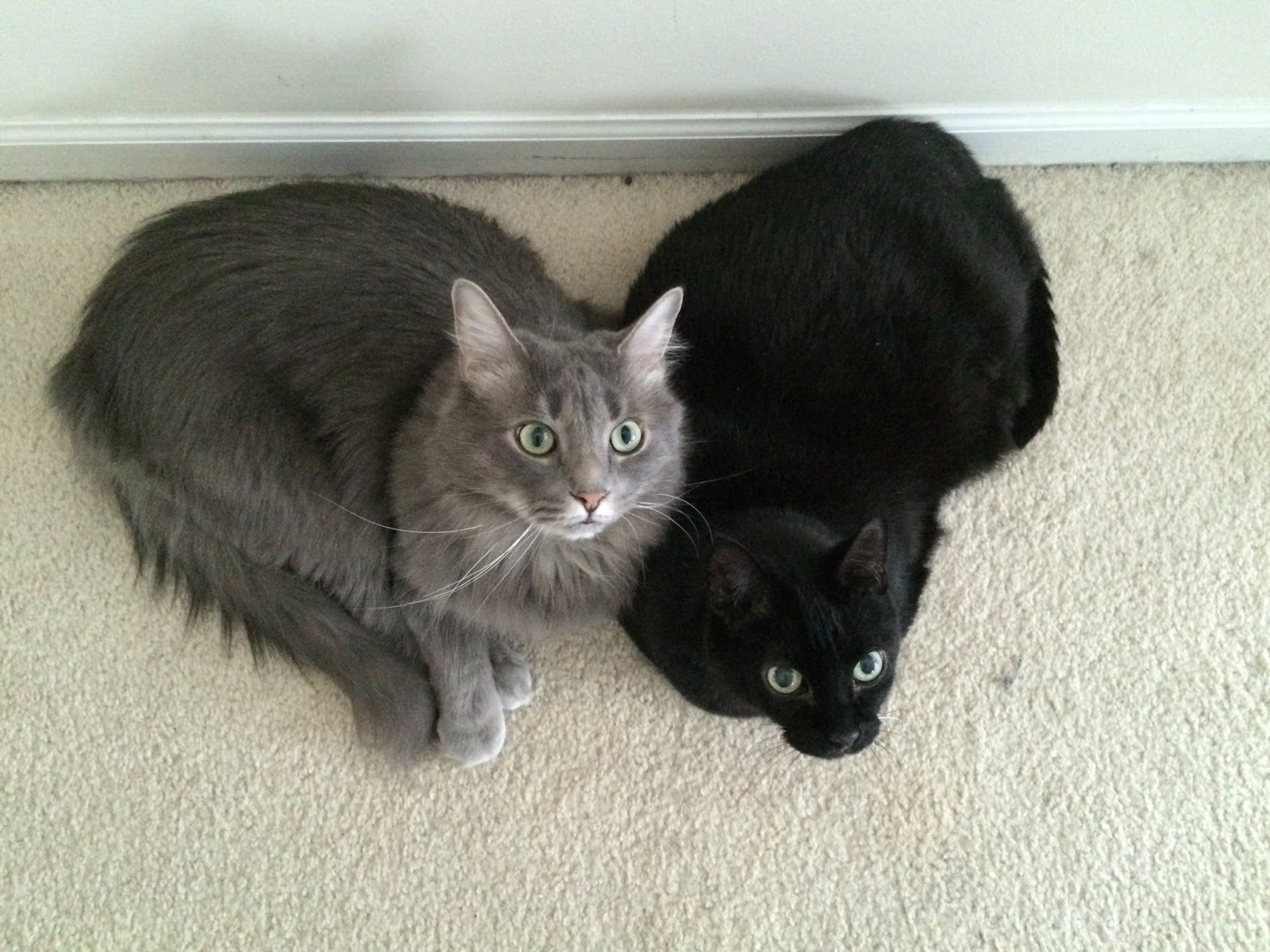
Can you tell which cat has bladder stones?


In light of the numerous cases of bladder stones, crystals and inappropriate urination issues we have seen in the last month, I thought that I would share my own experience with bladder stones, in the hopes that others will take away the same lessons that I learned.

Marley
For over a decade, I shared my life with two lovely cats who were brother and sister. Mina, the sister, is still with me, but I lost Marley to lung cancer in 2013. Both cats came from a rescue group in East Lansing, siblings from a litter of hand-raised kittens whose mother had died when they were 10 days old. Both cats were fairly healthy during their younger years - Marley had a congenital cataract, Mina had some foul diarrhea. Marley had chronic skin allergies. Both cats went through a period of time when they had adverse vaccine reactions. Mina occasionally has bouts of bronchitis. Together, they
kept my hands full!

In September of 2009, I noticed that Marley had stopped squatting to urinate. I was annoyed by the habit, because he would stand in the litterbox and a big stream of urine would splatter out onto the floor in front of the box. I watched this go on for two weeks, because he didn't seem to be in pain - he didn't vocalize or strain when he urinated, he didn't seem to be going all that frequently - maybe 2-3 times daily. He didn't seem to be drinking more water than usual, and the urine wasn't bloody. I wondered if he had developed some arthritis in his hips - after all he was 9 years old at the time. I brought him in to work with me and after a thorough exam, we took hip x-rays. Dr. Brooks looked at the x-ray and said, "Well, his hips are fine, but he has bladder stones." I thought she was teasing me. I couldn't believe it. I looked for myself. Sure enough, there they were - 7 stones (I would share the x-ray, but it is in attic storage, now, and I don't like attics). A few weeks later, I scheduled him for surgery - I forget now, why I waited. It might have been a busy surgery schedule. I might have been saving up money. Anyway, it was a dumb idea to wait, because I was on pins and needles the whole time, worrying that he might become obstructed with a stone. This was a little silly, not because it wasn't possible, but because it takes weeks to months for stones to form, so he could have become obstructed at any time prior to his diagnosis, and I had not been worried, before. Worrying wasn't going to help him. Surgery was the only option.

Calcium oxalate stones
Surgery went smoothly, and 7 large stones (and two smaller stones that were not visible on the x-ray) were removed. We sent off the stones for analysis at the Minnesota Urolith Center and the report stated that they were 70% Calcium Oxalate Monohydrate and 30% Ammonium Acid Urate stones. After surgery, Marley didn't like using the clay litter we use here in the hospital, so he urinated bloody urine on the floor and towel until we switched him back to scoopable clumping litter. At home, he resumed urinating in the box normally, squatting like a good boy.

After that, he switched to a canned stone-prevention diet. Calcium oxalate stones do not dissolve with a dietary change, but they can be prevented from re-forming in many cases. Marley had bladder radiographs and urine rechecks every 6 months until 2012. I had a baby and went on maternity leave around the time that he was due for a recheck. In retrospect, I should have brought him in for a recheck early, but I was caught up in my own medical issues at the end of my pregnancy, and I figured a few months' delay was not that important.

But it was. In May of 2012, four months after the birth of my daughter, I was scheduling Marley for a
One large stone that required surgery to remove, and the many smaller stones we expressed.
repeat cystotomy. He had a bladder full of stones again. They were smaller, this time, but one stone was large enough that it could not be expressed. Marley recovered well from his second cystotomy and continued to do well until July 2013, when cancer took its toll.

Mina
Shortly after I lost Marley, his biological sister, Mina, started vomiting. She has had occasional bouts of acute vomiting, and was empirically
diagnosed with inflammatory bowel disease in 2005. In August 2012, she had a bout of vomiting that lasted about a week, and I brought her in for abdominal x-rays. At that time, she was having no issues urinating in the litterbox. She did not have any intestinal abnormalities, but there was a shadow in her bladder, which turned out to be a "puddle" of small stones. Fortunately, since she is a female, we were able to express all the small stones out of her bladder, and surgery was avoided. We sent in the stones to the Minnesota Urolith Center and they were 100% Calcium Oxalate stones. She has also been eating a crystal prevention diet and so far, she has had no further sign of stones on any of her followup xrays or urine samples.

If I had taken my own advice, many years ago, and fed canned food to my cats more often, I might

Sometimes, a lot of small stones look like one large stone
never have had to deal with this issue, as their urine might have been more dilute and less likely to form stones. I was very fortunate that neither of my cats decided to start urinating outside the litterbox due to discomfort - in fact, they are both very good examples of the fact that cats hide their problems from their owners. As a technician, I should be more attuned to signs and symptoms of illness, and I was unaware of the issues my own cats had. They are also a good testament to the importance of follow-up. Even if your cat seems fine after a treatment or procedure, it is important to follow-up on schedule. If I had brought Marley back 3 months earlier for a recheck, he might have been able to avoid the second cystotomy surgery. It may be that Mina will be one of the lucky few cats that never re-forms stones after a cystotomy, but you can be sure that I will continue to check her every 6 months!
Mina would rather nap than have a bladder recheck

Monday, June 8, 2015

Bladder stones and stone removal surgery (cystotomy), a cat-owner's guide to what to expect

Two stones in the bladder of a cat


What is a bladder stone?


A bladder stone is a rock-like accumulation of minerals that forms in the bladder. Some stones stay small and others can become quite large. Sometimes, a cat may have a few stones of varying sizes, or a large number of stones that appear to be like gravel. Sometimes, a cat may have urinary crystals or a bladder infection that precedes the formation of the stone. Other times, a bladder stone may be a "silent problem" and be diagnosed incidentally when the cat is being examined for other issues.


Bladder stones are also called "urinary calculi" or "uroliths", and the condition of having bladder stones is called "urolithiasis". In addition to forming stones in the bladder, a cat may form stones in the kidneys or the ureters (the tubes that connect the kidneys to the bladder). If a stone passes out of the bladder and becomes lodged in the urethra (the tube that connects the bladder to the outside of the cat), the urine flow may become obstructed and develop into a life-threatening emergency.

Bladder stones usually take weeks or months to form.


There are a number of types of stones that can form in the bladder of cats, but the two most common types are struvite stones (also known as magnesium-ammonium-phosphate stones, or "triple phosphate stones") and calcium oxalate stones.  According to the Minnesota Urolith Center, in 2006, 50% of the stones found in cats were struvite and 39% were calcium oxalate. The remaining 11% were a variety of other stones.

What causes bladder stones in cats?

Stones come in many colors, shapes and sizes!
 No single cause of bladder stones has been identified in cats. Stone formation appears to be related to a variety of factors, including environment, inter-cat relations, diet, eating habits, age, breed, water intake, genetics, litterbox husbandry, and current medications.

When the urine has a lot of "stuff" in it (body waste products, proteins, salts, etc.), that "stuff" settles out of solution and begins to bond together. Even a normal urine sample begins to form crystals when it is allowed to sit for long periods. As the water portion of the urine evaporates, more and more of the "stuff" is left behind, and the urine becomes more concentrated, this is called supersaturation, and is considered to be the leading factor in bladder stone and crystal formation (ThePrecipitation-Crystallization theory). This can happen for a variety of reasons:

  • insufficient water intake
  • infrequent visits to the litter to empty the bladder
  • increased intake or body production of the components that make up urinary stones and crystals (such as magnesium, ammonia, phosphate, calcium...)

Of cats that have had calcium oxalate stones, there is a possible breed pre-disposition among Burmese, Himalayan and Persian cats.  Neutered males of all breeds are at 1.5 times higher risk for calcium oxalate stone formation than females.

Breeds at higher risk for feline struvite urolithiasis as reported by the Minnesota Urolith Center include the Foreign Shorthair, Ragdoll, Chartreux, Oriental Shorthair, Domestic Shorthair and Himalayan. The Rex, Burmese, Abyssinian, Russian Blue, Birman, Siamese and mixed-breed cats had a significantly lower risk of developing struvite uroliths. At the California laboratory, Himalayan and Persian cats had a higher risk for struvite stones compared with their expected breed frequency.

In dogs and humans, struvite stone formation is usually associated with a urinary tract infection, however in cats, 80-95% of cat with struvite stones have sterile urine (no bacterial growth).

Urine pH appears to have a significant effect on stone formation. Oxalate stones form in neutral to acid urine (pH of 7 or less), struvites form in neutral to alkaline urine (pH of 7 or more).

Cats that form struvite stones tend to be younger cats.
Cats that form oxalate stones tend to be middle-aged to older cats.

About one-third of cats with calcium oxalate bladder stones have elevated blood calcium (hypercalcemia).  Calcium oxalate formation may be related to hyperparathyroidism or idiopathic hypercalcemia.

What are the symptoms of bladder stones?

               Changes in litterbox behavior including:
  • straining to urinate
  • urinating small amounts
  • vocalizing while urinating
  • inability to produce urine
  • frequenting the litterbox (with or without producing urine)
  • eliminating outside the litterbox
  • change in posture in the litterbox

Other signs:
  • blood in the urine
  • licking at the lower abdomen frequently (with or without hair loss)
  • licking genitals frequently
  • painful abdomen
Many of these signs are general signs of any urinary disease or condition. About 25% of cats with signs of urinary tract disease have stones, so it is good practice to check any cat that presents with urinary complaints, to avoid missing a stone and leave the cat at risk for obstruction.

How are bladder stones diagnosed?

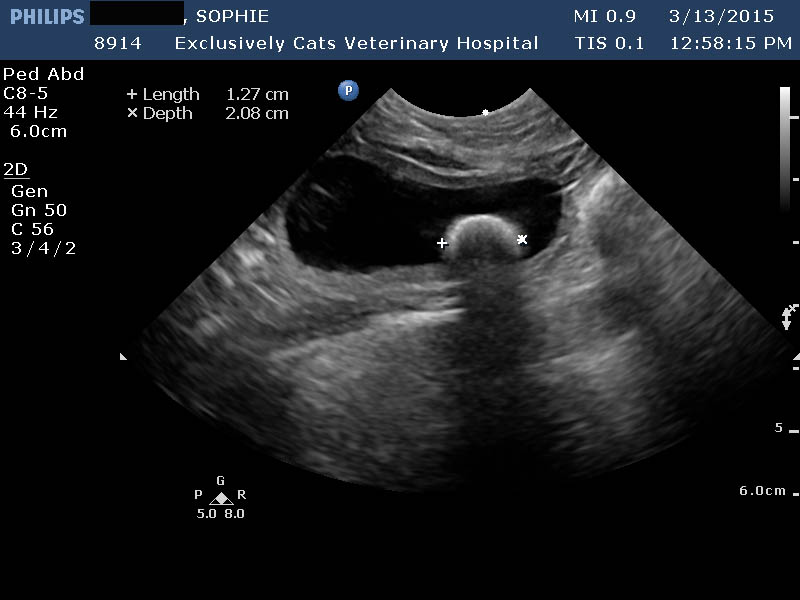
         Radiography or ultrasound studies are the most effective way to diagnose a bladder stone. In
Ultrasound image: One large stone in a cat bladder
some cases, we identify bladder stones when taking an x-ray for an entirely different reason. Some
stones are more likely to be seen on an x-ray than others. Calcium oxalate stones are much more visible on x-ray than struvite stones (about 80% of cases involving oxalate stones can be seen on x-ray). Struvite visibility is dependent on how much calcium phosphate is contained in the stone. Urate stones are poorly visible on x-ray, and urohemoliths (stones that form from blood) are not visible on x-ray or ultrasound at all. In some cases, a special dye may be passed into the bladder through a catheter in order to try to visualize radiolucent stones (stones that do not show up on x-ray). This technique is called double-contrast cystography.

How are bladder stones treated?

Dietary change

Special crystal and stone-dissolving diets, and crystal/stone prevention diets can be fed to attempt to dissolve the stones, however, once formed stones made of calcium oxalate will not dissolve. If this course of treatment is chosen, the cat must not eat any other food but the dissolving diet, or it will slow the dissolution of the stone. It may take several months to dissolve struvite stones. Typically, if a stone-dissolving diet is being fed, x-rays should be taken every 3-4 weeks to ensure that the stone is getting smaller. If the stone does not appear to be dissolving, then surgical removal would be the next step. It is not advisable to feed a diet that simply restricts magnesium or phosphorous intake, as magnesium is an inhibitor of Calcium Oxalate stone formation, and decreased phosphorous may cause the body to absorb more calcium, placing the cat at higher risk for calcium oxalate stones.Urine pH appears to be a more important factor in stone formation than mineral content of food.

Dietary supplements or other medications

 If dietary change is not effective, oral supplements may be given to assist in changing the urine pH enough to prevent the formation of the offending stones. These supplements include thiazide diuretics, Vitamin B-6,  potassium citrate for oxalate stones and methionine and ammonium chloride for struvite stones.

Surgery (cystotomy)

Under general anesthesia, an incision is made into the abdomen and then into the bladder to remove the stones. The bladder is flushed with sterile saline to ensure the removal of all stones and debris. The abdomen is closed and a post-surgical x-ray or ultrasound is performed (depending on how the stones were diagnosed) to ensure that all stones have been removed. The stones are then sent to a reference laboratory for analysis. Bladder stones of similar makeup can look different, so it is important to identify the stones to determine the correct treatment. Recovery is usually 24 hours, but some cats may be uncomfortable post-surgery and have blood in the urine or may continue to strain in the litterbox until the bladder is healed.

Retrieval of the stones through manual expression  

The veterinarian gently compresses the bladder while the cat is under anesthesia, and the stream of urine carries the stones with it. This can only be done if the stones are small - <5mm in females and <1mm in males. This is called "urohydropropulsion". If this is performed on a cat with larger stones, the stones can become lodged in the urethra and cause an obstruction. At that point, steps must be taken to un-obstruct the cat, and then surgical removal of the stones should be performed so that the cat does not re-obstruct while trying to urinate.

Cystoscopy retrieval


If the urethra is large enough in a female cat, the stones can be "fished up" in a special instrument and crushed to allow them to be expressed. This procedure is generally only performed at university veterinary hospitals as it requires special expertise. 

Encourage water intake

 Offer fresh water in multiple locations in the home. Water fountains may be more attractive than a plain dish. Additionally, feeding only canned food (no dry kibble) will add moisture to the diet, as canned foods contain 70-80% moisture. Increased water content dilutes the urine, preventing the urine from becoming supersaturated. Cats with idiopathic urinary tract disease that ate a high-mosture-containing diet (wet food) had a recurrence rate that was 1/2 that of cats eating a dry food diet.

Lithotripsy

This procedure involves shock waves generated either within the bladder or outside of the body to break up the stones. This requires special equipment and expertise, so is not generally available. This treatment is only available for female cats as it involves the use of a cystoscope which is too large to place in a male cat's urethra. This procedure is offered at the following universities: The University of California Veterinary School in Davis, The University of Minnesota Veterinary School , Minnesota Urolith Center, the Veterinary School at Purdue University, the Cummings School of Veterinary Medicine at Tufts. It is also performed at the veterinary school in Montreal and Guelph, the Animal Medical Center (AMC) in New York, and the University of Tennessee. Cost for this type of procedure is $1500-7000.

Antibiotics


If stones are present along with a urinary tract infection, antibiotics should be given to treat the infection. Sometimes, a stone can be a source of infection, if bacteria are embedded within, so an infection that is not responsive to an appropriate antibiotic (determined by performing a culture and sensitivity test) may require that the stone be removed before completing antibiotic treatment.


What is the prognosis for my cat after treatment?
Three reports from Minnesota Urolith Center: It has been a busy month for bladder stones!


Many cats that develop stones will be at a high risk for recurrent issues, even with preventive care. This is why is is important to follow-up with your veterinarian on a regular schedule.

>20% recurrence of struvite stones
25-48% recurrence of calcium oxalate stones

What if I choose not to treat my cat for bladder stones?

Chronic inappropriate urination, urinary obstruction which results in an emergency situation that could become fatal. Signs of a urinary blockage include - poor appetite, vomiting, nausea, firm, painful and distended abdomen, and other signs similar to the presence of urinary stones.


How can I prevent bladder stones?


  • If your cat has elevated calcium levels, followup should be done to identify whether it is idiopathic hypercalcemia or hyperparathyroid disease, and treatment should be performed.
  • Feed canned food daily (3-6oz)  - Canned food is 80% water and will increase a cat's hydration level, encouraging urine output, encouraging more freuqent trips to the litterbox, preventing urine from remaining in the bladder for long periods of time.
  • Encourage water consumption -this results in more dilute urine which prevents crystals and stones from forming. We aim for a urine concentration below 1.030. http://www.peteducation.com/article.cfm?c=21+1276&aid=1061
  • Offer a sufficient number of litterboxes for your cat population and clean them at least once daily (Read more about litterboxes) - Even if a cat is not urinating outside the litterbox, if the cat is not fully satisfied with the box, he may choose to urinate less frequently. This allows urine to sit in the bladder for longer, allowing more time for minerals to settle out of the urine and bond together into crystals and stones.
  • Your vet will likely recommend periodic rechecks - urinalysis, x-ray or ultrasound, depending on how the stones were diagnosed. It is highly recommended to abide by these recommendations, so that you can take steps to treat your cat before it becomes necessary for surgical stone removal (cystotomy).
  • If your cat is prone to calcium oxalate stones, medications such as prednisolone, lasix, dexamethasone, and Vitamin C should be used with caution.

Are bladder stones a sign of a larger problem?


In some cases, yes.

Hyperthyroid disease and diabetes place cats at higher risk for urinary tract infections which, in turn, can be associated with stone formation. If your cat is in a risk category for these diseases and develops a stone, your vet may recommend blood testing to rule out other diseases.

Cats with high levels of calcium may have no known cause ("idiopathic hypercalcemia"), or may have an underlying disorder such as hyperparathyroidism, Cushing's disease or certain types of cancer.

Cats that form urate stones may have a congenital portal-systemic shunt.

Monday, May 21, 2012

Saving Smoke


Smoke while urethra is obstructed
Smoke, Day 1
On Thursday, last week, a new client came into our hospital with a very sick little cat. Smoke is a two-year-old male cat that suffering from a urinary obstruction. He was very sick, and his kidneys were in danger of shutting down. Smoke's owner was not able to bear the financial burden of the hospitalization, IV fluid therapy, and the long-term cost of monitoring Smoke and feeding special diets to keep him from having a urinary obstruction in the future. His owner was devastated at the thought of having to euthanize his buddy.

Some of our soft-hearted employees were able to pool their resources and champion Smoke, and his current medical expenses are being met. Smoke’s owner relinquished him to our care because, even if we can fix his problem, he will not be able to care for Smoke’s special needs. We are hoping that, once he is back to 100%, we can find a new home for Smoke with a family that is prepared to manage his special situation with prescription diet and regular checkups.

We started IV fluids and then unblocked his bladder. We removed almost ½ cup of urine from his bladder – which would be like removing almost 1 and ½ quarts from a human bladder! His urine was bloody and filled with crystals, which is what had caused the blockage. We flushed as many of the crystals out of his bladder as we could, and then placed a urinary catheter. We gave him pain medication, antibiotics and also treated his fleas.

While he immediately felt better, he still didn’t feel well enough to eat for a while. He gave us quite a scare on Friday, because instead of improving, his kidney values became worse. We were nervous that we might lose him. We continued to give him lots of fluid therapy to help his kidneys, and continued his pain medication and antibiotics.

Blood Clot in Urinary Bladder
Blood clot in Smoke's bladder
On Saturday, his kidney values were better, but now that his bladder was healing, he had developed a large blood clot in his bladder – about the size of a ping pong ball! Since he was feeling better, he did want to eat, but he was not interested in the prescription diets that will help dissolve the crystals. Eventually, we were able to fool him into eating the prescription diets by mixing them with Fancy Feast Fish and Shrimp.

On Sunday, his kidneys were even better – back to normal! By Sunday night, he was eating his prescription food without having to mix it with something else. Today, we stopped his IV fluids and removed his urinary catheter. We checked with the ultrasound and determined that the blood clot is getting smaller. Since he is doing better, we neutered him as well.
Smoke after relieving urinary obstruction
Day 5: Loving on the catnip toy

Smoke feels so much better, he was playing with a catnip toy during his exercise time, today. He was rolling on his back, asking for belly rubs, too! He has licked his catnip toy so much that both he and his toy have turned green! 

Smoke after relieving urinary obstruction
Investigating the fluid pump
Once he is no longer at risk, he will need to eat a special diet and get regular urine rechecks to ensure that he does not block again. Sometimes, even with meticulous care, cats with this problem will suffer another obstruction. We would like to ensure that his new caretaker is willing and able to manage his special circumstances so that he can live a long and happy life. If you are considering adopting this happy little fellow once he is ready for a new home, please contact our office at 248-666-5287 or ecvh@exclusivelycats.com with any questions or for more information.

Friday, December 9, 2011

Feline Inappropriate Elimination: Kidneys and Crystals and Stones, oh my!

Struvite crystals
Struvite crystals in urine - the most common type we see
Even if your cat is currently using the litterbox and not eliminating elsewhere, he or she may be visiting the litterbox less frequently than necessary, which can lead to urination issues down the road. We strongly recommend making your cat's litterbox situation as ideal as you can to help prevent urination issues.

Why is it a bad idea to urinate infrequently? If a cat holds his urine in his bladder for a long period of time, the urine becomes more concentrated. Concentrated urine has more “stuff” in it – more cells, more protein, more body by-products, etc. and the more stuff that is in the urine, the more likely it is to stick together and form crystals and stones. Urinary crystals and stones are uncomfortable and can lead to some of the medical reasons why cats avoid the litterbox.

This is one of the reasons that, even if we suspect a medical issue, we will discuss ways in which you can make your litterboxes more pleasant for your cats. Many of the elimination problems we see are complex and may have several contributing issues that need addressing. Treating the medical condition in conjunction with making changes to the litterbox will often speed your cat's recovery, and encourage them to return to the litterbox sooner.

**NOTE: many times, a cat will not 100% stop using the litterbox - they are fastidious about their environment and instinctively want to use the box. Most cats will use the box sometimes and eliminate elsewhere other times, so just because your cat is still going in the box sometimes doesn't mean that there isn't a medical problem. Also, just because your cat has always used the litterbox before doesn't mean that there isn't something about the box they don't like. Again, cats want to use the box, so are often very tolerant about litterbox situations that they consider to be sub-par - they just go less frequently, or they tolerate the box as-is until something else in their life changes.**


There are a number of medical reasons why a cat will stop using the litterbox:

Urinary crystals look like sand
Once removed from the bladder and dried, crystals look like sand.
--Urinary crystals or stones: Crystals and stones can be found in any part of the urinary system – the kidneys, the ureters, the bladder or the urethra. In male cats, these situations can quickly become an emergency, as clumps of crystals or small stones can become lodged in the tiny tube that leads from the bladder to the outside of the body (the urethra). This blocks the passage of urine, which means that the urine has nowhere to go, except to backup towards the kidneys. This causes the kidneys to start to shut down, since they can’t pump out any more urine. We call these cats “blocked cats”. Their bladders feel hard and firm, their bellies are tender, and the bladder can be in danger of breaking, like an over-inflated balloon. These kitties may be straining in the litterbox and not producing anything, or may just dribble a few drops of urine in the box. They are painful and may not eat, or may vomit near the litterbox. Again, this is an emergency, and a cat in this situation should be seen by a veterinarian as soon as possible!

Urinary crystals tend to show up well with an ultrasound but not on x-ray. Urinary stones will often show up questionably on ultrasound but will show up better on x-ray. There are a rare few stones that will not show up on x-ray, however (we call these "non-radiodense" or "non-radio-opaque" stones). Because of this, if the presence of a stone is suspected, it may be recommended or necessary to do both an x-ray and an ultrasound to confirm its presence. Because of the size of urinary stones, it is not likely that they can be diagnosed with just a urinalysis because they will not pass out of the bladder.

X-ray of a urinary bladder with stones
A urinary bladder full of stones.
Sometimes, a cat may show no real indication of bladder stones or bladder discomfort.  One of our technicians, Jennifer, has a cat named Marley whose only indication that he had stones in his bladder was that he stopped squatting in the litterbox.She was frustrated because he was standing in the box and urinating a good stream of normal-looking urine over the edge of the box. She thought that he was having problems with hip arthritis, but when the x-rays were taken, the hips looked normal and there were 9 stones visible in the bladder! A quick urinalysis indicated that there was microscopic blood in his urine but no crystals or infection. Shortly after that, he had surgery to remove the stones from his bladder (a cystotomy) and after he recovered from surgery, he started squatting to urinate again. He must have felt so much better!

For females, the situation is less dire, but the symptoms are similar – straining in the box, you may see bloody urine, dribbling, crying in the litterbox, or inappropriate elimination.

X-ray of a cat with kidney stones
Dr. Bailey's cat, Tic Tic, has kidney stones in both kidneys.
If the stone is in the kidney, it is less treatable. In some cases, the stone may pass out of the kidney and become stuck in the tube that goes from the kidney to the bladder (the ureter). In this case, the kidney may stop working. In other cases, the stones are so big they will not pass, but surgical removal involves the risk of damaging the kidney's delicate filtration structures. In some situations, a change in diet can help dissolve the stones, or if the stones are limited to one kidney, the kidney can be removed.

These problems are one of the reasons that we recommend that cats eat 6-9 oz canned food daily. Canned food helps dilute the urine and helps prevent the formation of crystals and stones.

X-ray of a constipated cat
This x-ray is of a cat that is severely constipated.
--Constipation: Cats that cannot pass stool are uncomfortable, and may strain unproductively in the litterbox, only to defecate elsewhere later. They also may vomit near the litterbox. They may pass small amounts of diarrhea around a solid stool that they cannot pass. Some of these symptoms may be easily confused with straining to urinate, or a blocked cat, so don't feel bad if you call for an appointment for straining to urinate and discover your cat is constipated, and don't assume that your straining cat is constipated only to find out later when your cat is very ill that he was blocked.

Cats with a history of urinary crystals or stones should have a urine sample and/or x-rays checked every 6-12 months for the rest of their lives in order to prevent recurrence. They should also eat canned food only to help keep their urine dilute and the pH more neutral to help prevent recurrence. If your cat absolutely will not eat canned food and has a history of urinary crystals or stones, a prescription-grade dry diet may be necessary.

For these reasons, it is good to occasionally monitor your cat's behavior in the litterbox and become familiar with what is normal for your cat, so that if something changes and you become concerned, you can describe it accurately to the veterinarian.

--Diabetes: Cats with undiagnosed or uncontrolled diabetes drink large amounts of water and also urinate large volumes. These cats may not be able to get to the litterbox in time to urinate, or they may object to a flooded litterbox that has not yet been scooped. They may also just not feel well and choose to urinate elsewhere because they feel poorly. Cats with diabetes also tend to eat well but lose weight. Long-term, uncontrolled diabetes can lead to a life-threatening situation called Diabetic Ketoacidosis (DKA), which usually requires hospitalization and intensive care.

--Hyperthyroid disease: Cats with overactive thyroid glands also drink a lot and urinate a lot. These cats have an overactive metabolism – high heart rate, increased hunger, weight loss, and often high blood pressure. Just like diabetics, they may not be able to get to the litterbox in time to urinate, may flood the box and then not want to use it again, or may just feel poorly and choose to urinate elsewhere as a result. Sometimes, these cats also have soft stools, and may defecate outside the litterbox. They also tend to have high energy levels and may “talk” a lot, especially at night (we call this "inappropriate vocalization"!).

--Kidney Disease: Cats can lose up to 75% of their kidney function before they start to show signs of illness. Like diabetics and hyperthyroid cats, these cats will usually drink more and urinate more, but they are more likely to feel poorly and eat less. Because their kidneys are not filtering the toxins from their bodies normally, the waste products of normal life tend to build up in the blood stream and cause them to feel nauseous and lackluster. Just like diabetics, they may not be able to get to the litterbox in time to urinate, may flood the box and then not want to use it again, or may just feel poorly and choose not to urinate in the box.

Bacterial culture growing bacteria
Bacterial culture is a very good way to help I.D. bacteria in the urine.
--Urinary tract infection: Occasionally, cats will develop a bacterial infection in their bladders. This could be due to poor grooming around the rear end, often due to weight issues. Some cats are naturally susceptible to urinary tract infections, or may become more susceptible due to a medical issue, such as diabetes. Normal urine is sterile while in the bladder. It isn't until the urine passes out of the body that it picks up bacteria. Because of this, the best way to collect the sterile urine is with a needle inserted into the bladder. Any urine that passes through the urethra will have bacterial contaminant from the external genitalia and fur.

Sterile urine collected directly from the bladder will not grow bacteria on a culture plate. Urine that has an infection will grow in little dots and lines called "colonies" - usually in less than 24 hours. These colonies can then be easily classified by looking at them under the microscope and noting their patterns of growth, as well as the color and smell of the colonies. Some antibiotics work better for some types of bacteria than others, and the doctors can make better decisions about which medication will best treat the infection. In some recurrent cases where the cat is hard to medicate or has not been fully treated in the past, the culture plate may need to be sent in to a reference laboratory for more specific testing (called a "culture and sensitivity") that includes testing for antibiotic sensitivity or resistance.

It is also because of antibiotic resistance that antibiotics should be given regularly for the entire course of the prescription, and not stopped when the symptoms of the infection go away. A few individual bacteria that linger can become a whole new infection that is stronger and more resistant. Some cats that have chronic recurrent urinary tract infections may really have one infection that never gets fully treated because the course of antibiotics is not long enough, the antibiotics are stopped too soon, or a urine culture is never rechecked after treatment to show that the infection has fully resolved.

In the case of a bacterial infection, white blood cells to fill the bladder to combat the bacteria, inflammation of the lining of the bladder may lead to blood in the urine, and there is also usually a change to the pH level of the urine (changes the acidity). These changes can make it quite painful to urinate, and the cat, not knowing that it is sick, may link the litterbox to the pain and decide to go elsewhere, in search of a comforting surface to urinate on.

Because of these issues, it is important to check a urine sample, bloodwork, and/or x-rays when a cat is urinating or defecating outside the box in addition to making changes in litterbox husbandry.

More information about inappropriate elimination:
Lovin' the Litterbox: Husbandry Reasons Why Your Cat May Not Use the Litterbox
Acting Out All Over the House: Behavioral Reasons Why Your Cat May Not Use the Litterbox
Breaking the Cycle of Smell: How to Stop Habitual Elimination Problems