Showing posts with label outside the litterbox. Show all posts

Monday, June 15, 2015

Bladder stones: A Technician's Perspective


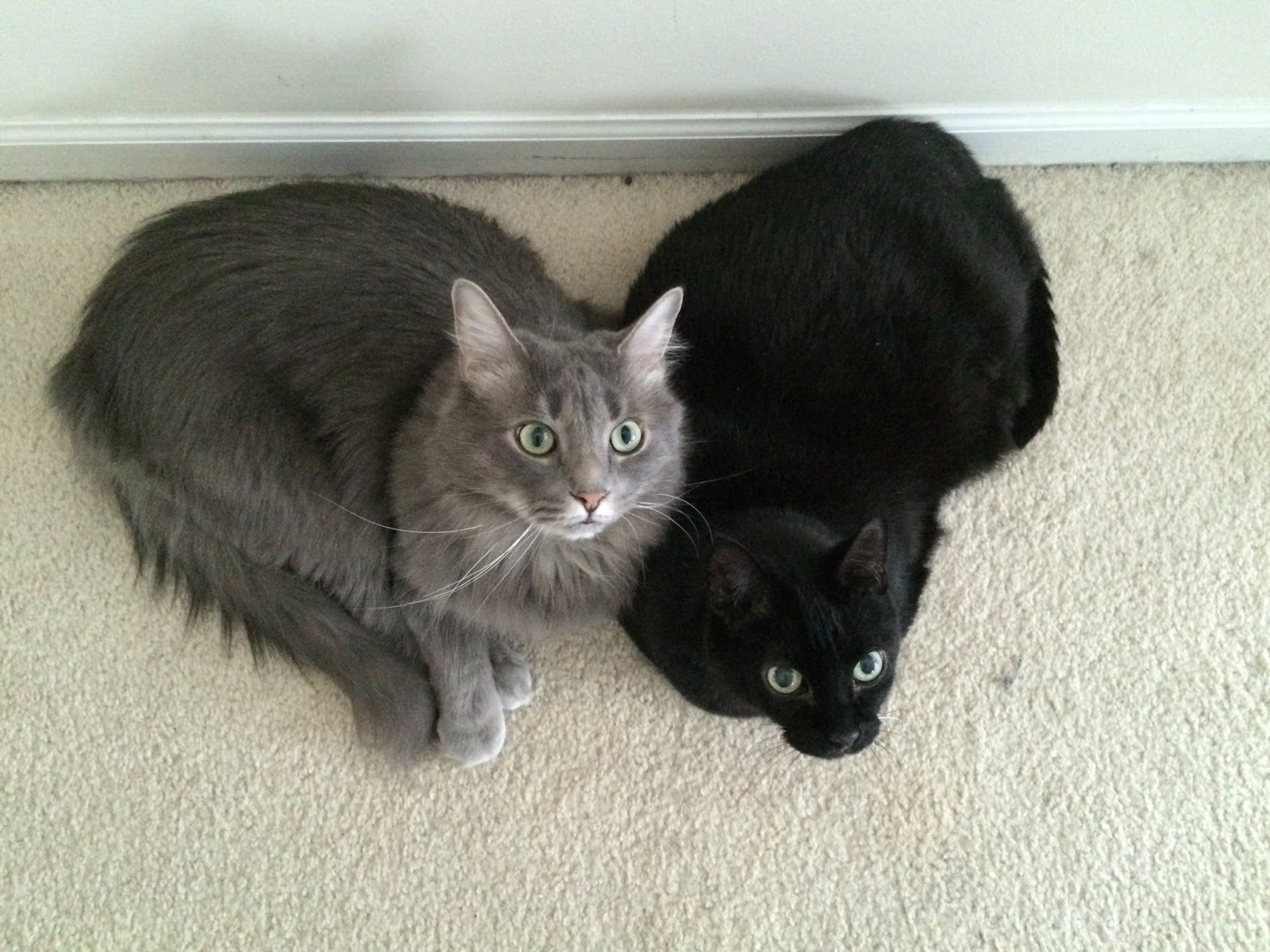
Can you tell which cat has bladder stones?


In light of the numerous cases of bladder stones, crystals and inappropriate urination issues we have seen in the last month, I thought that I would share my own experience with bladder stones, in the hopes that others will take away the same lessons that I learned.

Marley
For over a decade, I shared my life with two lovely cats who were brother and sister. Mina, the sister, is still with me, but I lost Marley to lung cancer in 2013. Both cats came from a rescue group in East Lansing, siblings from a litter of hand-raised kittens whose mother had died when they were 10 days old. Both cats were fairly healthy during their younger years - Marley had a congenital cataract, Mina had some foul diarrhea. Marley had chronic skin allergies. Both cats went through a period of time when they had adverse vaccine reactions. Mina occasionally has bouts of bronchitis. Together, they
kept my hands full!

In September of 2009, I noticed that Marley had stopped squatting to urinate. I was annoyed by the habit, because he would stand in the litterbox and a big stream of urine would splatter out onto the floor in front of the box. I watched this go on for two weeks, because he didn't seem to be in pain - he didn't vocalize or strain when he urinated, he didn't seem to be going all that frequently - maybe 2-3 times daily. He didn't seem to be drinking more water than usual, and the urine wasn't bloody. I wondered if he had developed some arthritis in his hips - after all he was 9 years old at the time. I brought him in to work with me and after a thorough exam, we took hip x-rays. Dr. Brooks looked at the x-ray and said, "Well, his hips are fine, but he has bladder stones." I thought she was teasing me. I couldn't believe it. I looked for myself. Sure enough, there they were - 7 stones (I would share the x-ray, but it is in attic storage, now, and I don't like attics). A few weeks later, I scheduled him for surgery - I forget now, why I waited. It might have been a busy surgery schedule. I might have been saving up money. Anyway, it was a dumb idea to wait, because I was on pins and needles the whole time, worrying that he might become obstructed with a stone. This was a little silly, not because it wasn't possible, but because it takes weeks to months for stones to form, so he could have become obstructed at any time prior to his diagnosis, and I had not been worried, before. Worrying wasn't going to help him. Surgery was the only option.

Calcium oxalate stones
Surgery went smoothly, and 7 large stones (and two smaller stones that were not visible on the x-ray) were removed. We sent off the stones for analysis at the Minnesota Urolith Center and the report stated that they were 70% Calcium Oxalate Monohydrate and 30% Ammonium Acid Urate stones. After surgery, Marley didn't like using the clay litter we use here in the hospital, so he urinated bloody urine on the floor and towel until we switched him back to scoopable clumping litter. At home, he resumed urinating in the box normally, squatting like a good boy.

After that, he switched to a canned stone-prevention diet. Calcium oxalate stones do not dissolve with a dietary change, but they can be prevented from re-forming in many cases. Marley had bladder radiographs and urine rechecks every 6 months until 2012. I had a baby and went on maternity leave around the time that he was due for a recheck. In retrospect, I should have brought him in for a recheck early, but I was caught up in my own medical issues at the end of my pregnancy, and I figured a few months' delay was not that important.

But it was. In May of 2012, four months after the birth of my daughter, I was scheduling Marley for a
One large stone that required surgery to remove, and the many smaller stones we expressed.
repeat cystotomy. He had a bladder full of stones again. They were smaller, this time, but one stone was large enough that it could not be expressed. Marley recovered well from his second cystotomy and continued to do well until July 2013, when cancer took its toll.

Mina
Shortly after I lost Marley, his biological sister, Mina, started vomiting. She has had occasional bouts of acute vomiting, and was empirically
diagnosed with inflammatory bowel disease in 2005. In August 2012, she had a bout of vomiting that lasted about a week, and I brought her in for abdominal x-rays. At that time, she was having no issues urinating in the litterbox. She did not have any intestinal abnormalities, but there was a shadow in her bladder, which turned out to be a "puddle" of small stones. Fortunately, since she is a female, we were able to express all the small stones out of her bladder, and surgery was avoided. We sent in the stones to the Minnesota Urolith Center and they were 100% Calcium Oxalate stones. She has also been eating a crystal prevention diet and so far, she has had no further sign of stones on any of her followup xrays or urine samples.

If I had taken my own advice, many years ago, and fed canned food to my cats more often, I might

Sometimes, a lot of small stones look like one large stone
never have had to deal with this issue, as their urine might have been more dilute and less likely to form stones. I was very fortunate that neither of my cats decided to start urinating outside the litterbox due to discomfort - in fact, they are both very good examples of the fact that cats hide their problems from their owners. As a technician, I should be more attuned to signs and symptoms of illness, and I was unaware of the issues my own cats had. They are also a good testament to the importance of follow-up. Even if your cat seems fine after a treatment or procedure, it is important to follow-up on schedule. If I had brought Marley back 3 months earlier for a recheck, he might have been able to avoid the second cystotomy surgery. It may be that Mina will be one of the lucky few cats that never re-forms stones after a cystotomy, but you can be sure that I will continue to check her every 6 months!
Mina would rather nap than have a bladder recheck

Monday, June 8, 2015

Bladder stones and stone removal surgery (cystotomy), a cat-owner's guide to what to expect

Two stones in the bladder of a cat


What is a bladder stone?


A bladder stone is a rock-like accumulation of minerals that forms in the bladder. Some stones stay small and others can become quite large. Sometimes, a cat may have a few stones of varying sizes, or a large number of stones that appear to be like gravel. Sometimes, a cat may have urinary crystals or a bladder infection that precedes the formation of the stone. Other times, a bladder stone may be a "silent problem" and be diagnosed incidentally when the cat is being examined for other issues.


Bladder stones are also called "urinary calculi" or "uroliths", and the condition of having bladder stones is called "urolithiasis". In addition to forming stones in the bladder, a cat may form stones in the kidneys or the ureters (the tubes that connect the kidneys to the bladder). If a stone passes out of the bladder and becomes lodged in the urethra (the tube that connects the bladder to the outside of the cat), the urine flow may become obstructed and develop into a life-threatening emergency.

Bladder stones usually take weeks or months to form.


There are a number of types of stones that can form in the bladder of cats, but the two most common types are struvite stones (also known as magnesium-ammonium-phosphate stones, or "triple phosphate stones") and calcium oxalate stones.  According to the Minnesota Urolith Center, in 2006, 50% of the stones found in cats were struvite and 39% were calcium oxalate. The remaining 11% were a variety of other stones.

What causes bladder stones in cats?

Stones come in many colors, shapes and sizes!
 No single cause of bladder stones has been identified in cats. Stone formation appears to be related to a variety of factors, including environment, inter-cat relations, diet, eating habits, age, breed, water intake, genetics, litterbox husbandry, and current medications.

When the urine has a lot of "stuff" in it (body waste products, proteins, salts, etc.), that "stuff" settles out of solution and begins to bond together. Even a normal urine sample begins to form crystals when it is allowed to sit for long periods. As the water portion of the urine evaporates, more and more of the "stuff" is left behind, and the urine becomes more concentrated, this is called supersaturation, and is considered to be the leading factor in bladder stone and crystal formation (ThePrecipitation-Crystallization theory). This can happen for a variety of reasons:

  • insufficient water intake
  • infrequent visits to the litter to empty the bladder
  • increased intake or body production of the components that make up urinary stones and crystals (such as magnesium, ammonia, phosphate, calcium...)

Of cats that have had calcium oxalate stones, there is a possible breed pre-disposition among Burmese, Himalayan and Persian cats.  Neutered males of all breeds are at 1.5 times higher risk for calcium oxalate stone formation than females.

Breeds at higher risk for feline struvite urolithiasis as reported by the Minnesota Urolith Center include the Foreign Shorthair, Ragdoll, Chartreux, Oriental Shorthair, Domestic Shorthair and Himalayan. The Rex, Burmese, Abyssinian, Russian Blue, Birman, Siamese and mixed-breed cats had a significantly lower risk of developing struvite uroliths. At the California laboratory, Himalayan and Persian cats had a higher risk for struvite stones compared with their expected breed frequency.

In dogs and humans, struvite stone formation is usually associated with a urinary tract infection, however in cats, 80-95% of cat with struvite stones have sterile urine (no bacterial growth).

Urine pH appears to have a significant effect on stone formation. Oxalate stones form in neutral to acid urine (pH of 7 or less), struvites form in neutral to alkaline urine (pH of 7 or more).

Cats that form struvite stones tend to be younger cats.
Cats that form oxalate stones tend to be middle-aged to older cats.

About one-third of cats with calcium oxalate bladder stones have elevated blood calcium (hypercalcemia).  Calcium oxalate formation may be related to hyperparathyroidism or idiopathic hypercalcemia.

What are the symptoms of bladder stones?

               Changes in litterbox behavior including:
  • straining to urinate
  • urinating small amounts
  • vocalizing while urinating
  • inability to produce urine
  • frequenting the litterbox (with or without producing urine)
  • eliminating outside the litterbox
  • change in posture in the litterbox

Other signs:
  • blood in the urine
  • licking at the lower abdomen frequently (with or without hair loss)
  • licking genitals frequently
  • painful abdomen
Many of these signs are general signs of any urinary disease or condition. About 25% of cats with signs of urinary tract disease have stones, so it is good practice to check any cat that presents with urinary complaints, to avoid missing a stone and leave the cat at risk for obstruction.

How are bladder stones diagnosed?

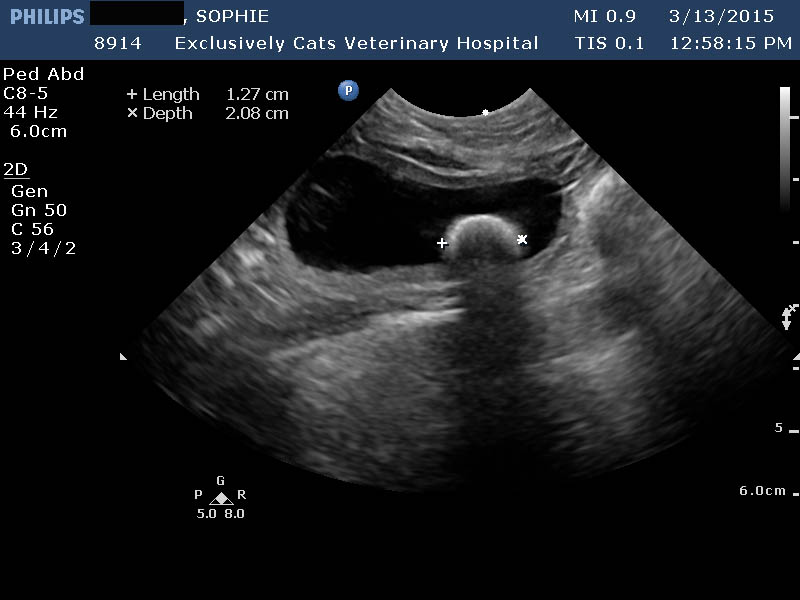
         Radiography or ultrasound studies are the most effective way to diagnose a bladder stone. In
Ultrasound image: One large stone in a cat bladder
some cases, we identify bladder stones when taking an x-ray for an entirely different reason. Some
stones are more likely to be seen on an x-ray than others. Calcium oxalate stones are much more visible on x-ray than struvite stones (about 80% of cases involving oxalate stones can be seen on x-ray). Struvite visibility is dependent on how much calcium phosphate is contained in the stone. Urate stones are poorly visible on x-ray, and urohemoliths (stones that form from blood) are not visible on x-ray or ultrasound at all. In some cases, a special dye may be passed into the bladder through a catheter in order to try to visualize radiolucent stones (stones that do not show up on x-ray). This technique is called double-contrast cystography.

How are bladder stones treated?

Dietary change

Special crystal and stone-dissolving diets, and crystal/stone prevention diets can be fed to attempt to dissolve the stones, however, once formed stones made of calcium oxalate will not dissolve. If this course of treatment is chosen, the cat must not eat any other food but the dissolving diet, or it will slow the dissolution of the stone. It may take several months to dissolve struvite stones. Typically, if a stone-dissolving diet is being fed, x-rays should be taken every 3-4 weeks to ensure that the stone is getting smaller. If the stone does not appear to be dissolving, then surgical removal would be the next step. It is not advisable to feed a diet that simply restricts magnesium or phosphorous intake, as magnesium is an inhibitor of Calcium Oxalate stone formation, and decreased phosphorous may cause the body to absorb more calcium, placing the cat at higher risk for calcium oxalate stones.Urine pH appears to be a more important factor in stone formation than mineral content of food.

Dietary supplements or other medications

 If dietary change is not effective, oral supplements may be given to assist in changing the urine pH enough to prevent the formation of the offending stones. These supplements include thiazide diuretics, Vitamin B-6,  potassium citrate for oxalate stones and methionine and ammonium chloride for struvite stones.

Surgery (cystotomy)

Under general anesthesia, an incision is made into the abdomen and then into the bladder to remove the stones. The bladder is flushed with sterile saline to ensure the removal of all stones and debris. The abdomen is closed and a post-surgical x-ray or ultrasound is performed (depending on how the stones were diagnosed) to ensure that all stones have been removed. The stones are then sent to a reference laboratory for analysis. Bladder stones of similar makeup can look different, so it is important to identify the stones to determine the correct treatment. Recovery is usually 24 hours, but some cats may be uncomfortable post-surgery and have blood in the urine or may continue to strain in the litterbox until the bladder is healed.

Retrieval of the stones through manual expression  

The veterinarian gently compresses the bladder while the cat is under anesthesia, and the stream of urine carries the stones with it. This can only be done if the stones are small - <5mm in females and <1mm in males. This is called "urohydropropulsion". If this is performed on a cat with larger stones, the stones can become lodged in the urethra and cause an obstruction. At that point, steps must be taken to un-obstruct the cat, and then surgical removal of the stones should be performed so that the cat does not re-obstruct while trying to urinate.

Cystoscopy retrieval


If the urethra is large enough in a female cat, the stones can be "fished up" in a special instrument and crushed to allow them to be expressed. This procedure is generally only performed at university veterinary hospitals as it requires special expertise. 

Encourage water intake

 Offer fresh water in multiple locations in the home. Water fountains may be more attractive than a plain dish. Additionally, feeding only canned food (no dry kibble) will add moisture to the diet, as canned foods contain 70-80% moisture. Increased water content dilutes the urine, preventing the urine from becoming supersaturated. Cats with idiopathic urinary tract disease that ate a high-mosture-containing diet (wet food) had a recurrence rate that was 1/2 that of cats eating a dry food diet.

Lithotripsy

This procedure involves shock waves generated either within the bladder or outside of the body to break up the stones. This requires special equipment and expertise, so is not generally available. This treatment is only available for female cats as it involves the use of a cystoscope which is too large to place in a male cat's urethra. This procedure is offered at the following universities: The University of California Veterinary School in Davis, The University of Minnesota Veterinary School , Minnesota Urolith Center, the Veterinary School at Purdue University, the Cummings School of Veterinary Medicine at Tufts. It is also performed at the veterinary school in Montreal and Guelph, the Animal Medical Center (AMC) in New York, and the University of Tennessee. Cost for this type of procedure is $1500-7000.

Antibiotics


If stones are present along with a urinary tract infection, antibiotics should be given to treat the infection. Sometimes, a stone can be a source of infection, if bacteria are embedded within, so an infection that is not responsive to an appropriate antibiotic (determined by performing a culture and sensitivity test) may require that the stone be removed before completing antibiotic treatment.


What is the prognosis for my cat after treatment?
Three reports from Minnesota Urolith Center: It has been a busy month for bladder stones!


Many cats that develop stones will be at a high risk for recurrent issues, even with preventive care. This is why is is important to follow-up with your veterinarian on a regular schedule.

>20% recurrence of struvite stones
25-48% recurrence of calcium oxalate stones

What if I choose not to treat my cat for bladder stones?

Chronic inappropriate urination, urinary obstruction which results in an emergency situation that could become fatal. Signs of a urinary blockage include - poor appetite, vomiting, nausea, firm, painful and distended abdomen, and other signs similar to the presence of urinary stones.


How can I prevent bladder stones?


  • If your cat has elevated calcium levels, followup should be done to identify whether it is idiopathic hypercalcemia or hyperparathyroid disease, and treatment should be performed.
  • Feed canned food daily (3-6oz)  - Canned food is 80% water and will increase a cat's hydration level, encouraging urine output, encouraging more freuqent trips to the litterbox, preventing urine from remaining in the bladder for long periods of time.
  • Encourage water consumption -this results in more dilute urine which prevents crystals and stones from forming. We aim for a urine concentration below 1.030. http://www.peteducation.com/article.cfm?c=21+1276&aid=1061
  • Offer a sufficient number of litterboxes for your cat population and clean them at least once daily (Read more about litterboxes) - Even if a cat is not urinating outside the litterbox, if the cat is not fully satisfied with the box, he may choose to urinate less frequently. This allows urine to sit in the bladder for longer, allowing more time for minerals to settle out of the urine and bond together into crystals and stones.
  • Your vet will likely recommend periodic rechecks - urinalysis, x-ray or ultrasound, depending on how the stones were diagnosed. It is highly recommended to abide by these recommendations, so that you can take steps to treat your cat before it becomes necessary for surgical stone removal (cystotomy).
  • If your cat is prone to calcium oxalate stones, medications such as prednisolone, lasix, dexamethasone, and Vitamin C should be used with caution.

Are bladder stones a sign of a larger problem?


In some cases, yes.

Hyperthyroid disease and diabetes place cats at higher risk for urinary tract infections which, in turn, can be associated with stone formation. If your cat is in a risk category for these diseases and develops a stone, your vet may recommend blood testing to rule out other diseases.

Cats with high levels of calcium may have no known cause ("idiopathic hypercalcemia"), or may have an underlying disorder such as hyperparathyroidism, Cushing's disease or certain types of cancer.

Cats that form urate stones may have a congenital portal-systemic shunt.

Monday, June 30, 2014

Why are my cats fighting? Part 3: Finding solutions - the 5 "R"s


Gray tabby cat and orange tabby cat fighting | Exclusively Cats Veterinary Hospital Waterford, MI

If you have read part 1 and part 2 of this series, you now may have a good idea what reasons may be behind your cat's aggression and you have a list of behaviors and locations that clarify the aggression. However, what you really want is a solution, right?

Some forms of mild territorial aggression, such as conflict that occurs after the introduction of a new cat to the household, will resolve themselves over a period of 4 months. Temporary aggression issues, such as conflict after a veterinary visit or other traumatic event, may resolve in 24-48 hours.

Gray cat being petted on the cheek | Exclusively Cats Veterinary Hospital Waterford, MI
Rub cats around the cheeks and face to transfer scents
Re-Scent: If your cats only have problems after one of them visits the veterinarian (non-recognition aggression), try to schedule vet visits at the same time, or segregate the cat that went to the vet in one room with food, water and litter, to let him regain the familiar smell of the household and de-stress before re-introducing him to your other cats. You could speed the process by rubbing the cats with the same towel around their ears and cheeks - the areas that cats use to mark their territory and rub other cats - and then across their bodies.


Re-Introduce: For troubles with a new cat in the house, or long-standing territorial issues, try re-introduction of the cats. Generally, the aggressor cat is the one that should be treated as the "new" cat and the victim should be treated as the "existing" cat. Use rewards to reinforce desired behaviors, but do not physically punish fighting. It will NEVER help the situation, and may make the situation worse. Patience is a big key to working with remodeling your cat's relationships - your goal in cases of aggression is not to make your cats into best buddies, but to give them the ability to tolerate each others' presence without fighting.

Poolga image by mckibillo | Exclusively Cats Veterinary Hospital Waterford, MI
Method of exercising cats by mckibillo on Poolga
Redirect: Don't punish aggressive behavior, because that will cause stress, which may increase aggression. Don't reward aggressive behavior by trying to distract the aggressor with treats or attention, either. Instead, try to distract the aggressor before a fight occurs by redirecting his attention with an interactive wand toy, a game of fetch, or a laser pointer or flashlight and try to lure him away from the impending fight. Reward the cat when you catch him acting neutrally towards the victim.

Resource management: Increase the desirable space in your house by adding vertical territory, such as cat trees, perching shelves, or giving cats access to upper levels of existing shelving with ramps and stairs. Make sure that there are plenty of feeding and watering stations, so that essential resources can't be completely blocked, and make sure that you have at least one more litter box than the number of cats in your home, preferably at least one box on each level of your house, as well. This will help prevent inappropriate elimination related to resource blocking or stress.

Remedies:
Medications: If aggression issues are significant, your veterinarian may recommend the introduction of calming medications or anti-anxiety drugs to aid your efforts to train your cats to tolerate each other. These medications will help take the edge off the bully's attacks, or decrease the victim's reaction to aggressive posturing from the aggressor cat. Drugs are generally not the cure for the problem, but can be a useful tool to aid in implementing behavioral conditioning. Sometimes only one cat needs to be medicated, but sometimes the problem is significant enough that both cats need to receive drug therapy in addition to behavioral therapy. Medications such as fluoxetine, buspirone, alprazolam, clomipramine and elavil are prescribed based on the information that a cat owner provides about the types of aggressive incidents that occur. Because the dosages are different for humans and cats, and because the recommendation for medication is based on the behavior of the cat, it is only recommended to start behavioral drug therapy with the guidance of a veterinarian.

In addition to prescription medications, some of the other products that we often incorporate into behavioral solutions are pheromone products, wraps and treats.

Feliway | Exclusively Cats Veterinary Hospital Waterford, MI
Feliway
Pheromone products: Calming pheromones help decrease the stress levels in the household and lower the intensity levels of the aggressive encounters. Products such as Feliway and NurtureCalm contain pheromones associated with marking "happy places" and the chemical a mother cat produces to calm and reassure her kittens.

Wraps: The Thundershirt is a product based on information from studies of autistic children and adults indicating that pressure therapy, massage, and the use of a hugging machine can relieve anxiety. In addition, swaddling of infants has been shown to calm them. While research and controlledstudies are still in the works for this therapy, it is not harmful to employ them in an effort to calm hyper-anxious pets as a part of a behavioral plan.
Black cat in Thundershirt | Exclusively Cats Veterinary Hospital Waterford, MI
Mr. B wears a Thundershirt to help him deal with all the cats in the hospital
 
Treats and Supplements: The pill Anxitane and Composure treats contain L-Theanine, (Gamma-ethylamino-L-glutamic acid) which is derived from the mushroom Boletus badius and Camellia sinensis tea leaves. L-Theanine causes a calming effect without drowsiness.

You will probably need to resign yourself to the fact that your cats will never be best friends. If aggression is a significant issue between your cats, the best you may be able to hope for is tolerance of the other cat's presence, and that can take months of baby steps forward (and a few steps back) to accomplish. However, if you are patient, and if you let the cats tell you when you can move forward, you will hopefully eventually be rewarded with a peaceful (if not amicable) household.

Monday, June 17, 2013

Five reasons to spay or neuter your cat

At Exclusively Cats Veterinary Hospital, we are often asked why people should spay or neuter their cats. Here are some of the reasons why it is a good idea:

1.      Population control
Every year 3-4 million unwanted pets are euthanized by various animal control organizations (nearly 10,000 every day). This equals about 70% of the cats that enter shelters each year. Even more are abandoned for various reasons – to the outdoors, in abandoned houses, or dropped alongside highways, Dumpsters, in
JAVMA kitten statistics
parking lots or worse.
It is currently estimated that about 25% of pets are un-spayed. That equates over 40 million un-spayed and un-neutered cats and dogs. Seventy million dogs and cats are born every day in the US – that’s nearly 50 born every minute3!
One female cat can produce an average of 2-3 litters per year and 1-8 kittens in each litter, usually an average of 4 kittens. That equates to 2-16 kittens yearly per female cat. Some estimated figure that a pair of intact, breeding cats can produce as many as 420,000 offspring in seven years2. The Journal of the American Veterinary Medical Association (JAVMA) estimates more conservatively at 32,768 kittens after 7 years, but then points out that cats are living longer, healthier lives, so could conceivably reproduce for longer, producing up to 2,097,152 offspring in 10 years. 

2.      Health
Spayed and neutered cats tend to be healthier. While there is a slight risk for weight gain following ovariohysterectomy (spay) and orchidectomy (neuter) surgeries, monitoring your cat’s diet and weight closely can help prevent this. 
Conversely, the health benefits of spaying and neutering a cat are vast. For females, the risk of cancer is decreased by 25% overall1. If spayed before the first heat cycle, the risk decreases even more – to virtually nothing. These cancers are fatal 90% of the time in cats. In addition, spayed females have a decreased risk
Mammary cyst in un-spayed 11 year old calico cat
Mammary Cyst in un-spayed 11 year old cat
for urinary tract infections and hormonal changes. Spaying also completely e
liminates the risk of potentially fatal uterine infections (pyometra) or other complications of the uterus (read Debbie’s Story).
Male cats that are neutered tend to live 40% longer than un-neutered males.

Many people think that they must wait until 6 months of age or until their cat has had one heat cycle before having a spay surgery performed, however that is not entirely true. Younger kittens tend to bounce back more quickly and with advancements in surgical techniques, anesthesia protocols and surgical protocols, it is just as safe at 3 months as it is at 6 months. 


3.      Prevent inappropriate urination and marking
Most people know that un-neutered males will spray very stinky smelling urine to mark their territory and ward off other males. However, what many people do not know is that females that are not spayed will also mark territory with urine. They will urinate in front of males in order to attract attention, or may urinate near doors and windows as a signal to outdoor cats or in frustration that they cannot escape outside to find a mate. More information about inappropriate elimination behavior can be found in our blog article Feline Inappropriate Urination: Acting out all over the house!

4.      Prevent unwanted behaviors and side effects
Did you know that 70% of people that acquire animals end up giving them away, abandoning them or taking them to shelters? Of the 6 to 8 million pets a year that enter animal shelters, only about 10% have been spayed or neutered.3

Some of the reasons that un-altered pets are turned over to shelters include behaviors that stem from the fact that they are not spayed or neutered. The single most pressing desire of an un-altered pet is the desire to find a mate. Un-neutered males and un-spayed females will try all the tricks in their books to escape out open doors and windows. If they already go outside, they may roam farther than normal. If trapped inside, they hay howl at night or become excessively moody, aggressive, needy or simply unpredictable. Often, un-neutered males have rough, thin or otherwise poor hair coats and develop a sticky “goo” at the base of their tail called “stud tail”. Un-neutered males tend to be more aggressive and develop very odorous urine.

5.      Overall happiness – for all!
Spayed and neutered cats are more relaxed, less-single-mindedly interested in trying to get outside or frustrated at being trapped inside. Altered pets are less unpredictable, calmer and more social. They tend to get along with other pets better, too! As an added benefit, happy pets make for happy pet parents!

The cost of spaying or neutering a pet is far less than the cost of dealing with the complications of pregnancy or the cost of raising and caring for a litter of kittens. It is also far less than the cost of treating uterine infections, mammary cancer, or the cleanup involved after your cat has sprayed around the house. Never mind the frustration!


1.Data on file at IDEXX Laboratories, Inc. Westbrook, Maine USA.
2.Top 10 Reasons to Spay or Neuter Your Pets. American Society for the Prevention of Cruelty to Animals website. http://www.aspca.org/pet-care/spayneuter/spay-neuter-top-ten.aspx Accessed March 25, 2013.
3. Oxford-Lafayette Humane Society http://www.oxfordpets.com/index.php?option=com_content&view=article&id=61
4. Floyd, Lynya, 5 Ways to Add Years to Your Pet’s Life, http://www.familycircle.com/family-fun/pets/ways-to-add-years-to-your-pets-life/

Monday, May 27, 2013

What is a pyometra?

Zjayla

Meet Zjayla, a 4 year old female who visited the emergency room after three days of eating poorly and hiding. She started vomiting earlier in the day and her owners became concerned. She was mildly dehydrated and had a mild fever. At the ER, the doctor noted that she had a large amount of pus coming from her vulva. Without any further diagnostics, the doctor was able to tell the owners that Zjayla had a dangerous infection in her uterus called a "pyometra". She needed emergency surgery in order to save her life.

Zjayla arrived at Exclusively Cats Veterinary Hospital as a transfer patient for surgery. She had been given some fluids to rehydrate her and an antibiotic to start treatment for the infection. Once at our hospital, she had an IV catheter placed and after some pre-surgical bloodwork, she was prepped for surgery.

Patients with this type of infection can be very fragile and unstable. One of the reasons that we recommend spaying cats is that we hope that the spay surgery can be performed when the cat is young and healthy so that the surgery is safer, the incision smaller and the recovery quicker. While Zjayla was under anesthesia, her blood pressure dropped dramatically, despite the presurgical medications given to help stabilize her, and a healthy dose of pain medications. We had to quickly administer additional supportive fluids to help support
Culture plate with bacterial growth from a uterine infection or pyometra
The bacteria growing on this culture plate are from Zjayla's infection
her blood pressure. Fortunately, she responded well to the additional medication and her blood pressure returned to normal. The rest of her surgery was fairly "routine" for an emergency surgery. Dr. Bailey carefully removed the infected uterus, making sure that no pus or bacteria entered the abdomen, and closed the incision. Because she was older, and because of the complicated surgery, Zjayla's incision was larger than it would have been if she was just being spayed. This cute little girl recovered well from surgery and was able to go home the next day. We did have to administer a tube feeding of a high calorie diet by placing her under anesthesia for a short period, placing a tube down her esophagus into her stomach and squirting a small meal into her stomach. She had not eaten in over 4 days, and needed the nutrition to kick-start her recovery. She went home with some strong antibiotics and recovered quickly.

Her owners felt terrible. They thought that since she was such a shy cat, they were saving her from being traumatized by not bringing her in to a veterinary hospital have a spay surgery done. However, in the end, she was more traumatized by her serious illness and emergency surgery than she would have been by the spay surgery. Many people don't realize that a pyometra or serious uterine infection can be a consequence of having a female cat that is un-spayed and un-bred.

Incidentally, Zjayla had also been urinating around the house off and on for several years. This probably coincided with her heat cycles. It takes about 6 weeks after a spay surgery for the hormones to stop circulating in the body, so we will have to wait a little longer to see if this behavior resolves. At her appointment for her suture removal, her owners reported that she was doing great! She was active and happy and much more chatty than she had been in the past.  Fortunately for Zjayla, this story has a happy ending!

Monday, May 21, 2012

Saving Smoke


Smoke while urethra is obstructed
Smoke, Day 1
On Thursday, last week, a new client came into our hospital with a very sick little cat. Smoke is a two-year-old male cat that suffering from a urinary obstruction. He was very sick, and his kidneys were in danger of shutting down. Smoke's owner was not able to bear the financial burden of the hospitalization, IV fluid therapy, and the long-term cost of monitoring Smoke and feeding special diets to keep him from having a urinary obstruction in the future. His owner was devastated at the thought of having to euthanize his buddy.

Some of our soft-hearted employees were able to pool their resources and champion Smoke, and his current medical expenses are being met. Smoke’s owner relinquished him to our care because, even if we can fix his problem, he will not be able to care for Smoke’s special needs. We are hoping that, once he is back to 100%, we can find a new home for Smoke with a family that is prepared to manage his special situation with prescription diet and regular checkups.

We started IV fluids and then unblocked his bladder. We removed almost ½ cup of urine from his bladder – which would be like removing almost 1 and ½ quarts from a human bladder! His urine was bloody and filled with crystals, which is what had caused the blockage. We flushed as many of the crystals out of his bladder as we could, and then placed a urinary catheter. We gave him pain medication, antibiotics and also treated his fleas.

While he immediately felt better, he still didn’t feel well enough to eat for a while. He gave us quite a scare on Friday, because instead of improving, his kidney values became worse. We were nervous that we might lose him. We continued to give him lots of fluid therapy to help his kidneys, and continued his pain medication and antibiotics.

Blood Clot in Urinary Bladder
Blood clot in Smoke's bladder
On Saturday, his kidney values were better, but now that his bladder was healing, he had developed a large blood clot in his bladder – about the size of a ping pong ball! Since he was feeling better, he did want to eat, but he was not interested in the prescription diets that will help dissolve the crystals. Eventually, we were able to fool him into eating the prescription diets by mixing them with Fancy Feast Fish and Shrimp.

On Sunday, his kidneys were even better – back to normal! By Sunday night, he was eating his prescription food without having to mix it with something else. Today, we stopped his IV fluids and removed his urinary catheter. We checked with the ultrasound and determined that the blood clot is getting smaller. Since he is doing better, we neutered him as well.
Smoke after relieving urinary obstruction
Day 5: Loving on the catnip toy

Smoke feels so much better, he was playing with a catnip toy during his exercise time, today. He was rolling on his back, asking for belly rubs, too! He has licked his catnip toy so much that both he and his toy have turned green! 

Smoke after relieving urinary obstruction
Investigating the fluid pump
Once he is no longer at risk, he will need to eat a special diet and get regular urine rechecks to ensure that he does not block again. Sometimes, even with meticulous care, cats with this problem will suffer another obstruction. We would like to ensure that his new caretaker is willing and able to manage his special circumstances so that he can live a long and happy life. If you are considering adopting this happy little fellow once he is ready for a new home, please contact our office at 248-666-5287 or ecvh@exclusivelycats.com with any questions or for more information.

Wednesday, May 16, 2012

Feline Inappropriate Elimination: Breaking the Cycle of Smell

Cats will return to and reuse areas where they have previously urinated. Because of this, cleaning up the areas and items where your cat has urinated or defecated is a crucial step to breaking the cycle, as well as preventing damage to the item. Because it is much easier to eliminate odors in recently-soiled areas, clean them as soon as possible. If you’re not sure of the extent of the soiled spot, a black light will easily illuminate urine and fecal matter on items. The black light will also help identify areas that you may not know were being soiled - check the walls and floor for several feet in every direction from the spot being soiled. It may help to use chalk to outline the urine spots for easy cleaning. Check the underside of chair and couch cushions and pillows to see if the urine has penetrated all the way through - if so, then your enzymatic cleaner will have to penetrate fully, too. Black lights work best in a darkened room. If you have the plug-in variety of black light, use an extension cord so that you have freedom to move around the room without having to constantly move the plug from outlet to outlet. Otherwise, there are a variety of hand-held, flashlight-type options.


Outlined spots for easy treating.
The rule of thumb when treating carpet or other absorbent surfaces for urine spots is to use twice as much cleaner as the size of the spot that you are treating. Urine will disperse down through the carpet and into the padding beneath, and may even absorb into the floorboards below that.
A cat's sense of smell is 200 times stronger than ours; therefore odors must be neutralized, not just deodorized. It is also best to avoid cleaning products containing ammonia or vinegar—they smell like urine and can be irritating. In order to neutralize the odor, use an enzyme-based cleaner such as Urine-Away, Nature’s Miracle, Simple Solution or Nok-Out. These cleaners break down the odor molecules rather than just covering up the smell. Sometimes, if the problem has been going on for a long period of time, it may be necessary to replace urine-saturated flooring.


  •   Sheets of plastic, newspaper, sandpaper, double-sided tape, or a carpet runner with the nubs facing up may all discourage your cat from entering a soil-prone area.
  •  Try changing the significance of a soiled area. Cats prefer to eat and eliminate in separate areas, so try placing food bowls and treats in previously soiled areas. Playing with your cat in that space and leaving toys there may also be helpful. 
  • Spray the area with a pheromone spray or use a diffuser to provide pheromone all day long - the Feliway pheromone is a "happy" smell to a cat and signifies that the area is not for elimination. It also has a calming effect.
  •  Try denying your cat access to a given area by closing doors, or by covering the area with furniture or plants. Baby gates will not keep most cats out of a room.
  • Catch him in the act. A bell on a breakaway collar tells you his whereabouts. If you can catch him within the first seconds of his elimination routine, startle him with a water gun or shake a jar of pennies, so that he associates being startled with those actions. It is important that you startle rather than scare him; fear will only worsen the problem. Moreover, if you catch him after he's eliminated, your window of opportunity is gone—you must catch him just as he's about to eliminate. 

Never hit, kick, or scream at a cat. Not only does this create more anxiety, which may contribute to house soiling behavior, but also such tactics provide no link between the "crime" and the punishment. Some owners resort to rubbing their cat's face in their excrement to "teach the cat a lesson." This is ineffective, first because cats do not view their urine and feces as distasteful, and second, because even moments later, cats cannot make the connection between the mess on the bed and this kind of punishment.


Monday, December 19, 2011

Feline Inappropriate Urination: Acting out all over the house!

When medical issues have been ruled out, and husbandry issues have been resolved, if a cat is still eliminating outside the box, it is likely to be due to a behavioral issue.  Unfortunately, while litterbox environment and medical issues are relatively straightforward to address, behavioral issues can be complicated.

New furniture can stress your cat.
One of the most common causes of behavioral inappropriate elimination is stress. Stress can come from a variety of sources.  It can be due to a bold or aggressive animal re-establishing his territory or a timid, shy animal urinating because he is a “victim” of his social environment (being passive-aggressive). A change to the household that disrupts the cat’s schedule may also be a contributing factor to a cat choosing not to use the litterbox -- such as a new baby, visitors staying in the home, a child going off to college, a change in someone’s work schedule, a move to a new home, new furniture, a new pet, a family vacation, renovations to the home, a visit from a plumber or other repair-person, etc. In some cases, the behavior will resolve on its own after the event (such as vacations, visitors, and renovations), and in other cases, the behavior may be ongoing (new furniture, a baby, a new home). Each type of stressor may have several solutions.

For example:
If your cat eliminates inappropriately when you go on vacation, you may find that you can curb the behavior by boarding the cat while you are gone, hiring an in-home sitter versus having a neighbor stop by the house once or twice daily, or by taking your cat with you. Discussions with your veterinarian may even lead to recommendations for medicinal therapy while you are gone to alleviate anxiety.

If you are planning on getting a new pet or having a baby, preparing your cat for the new addition may head off any potential behavioral issues. Also, making sure to introduce the new pet to the resident cat on a gradual basis will help lessen the stress your cat may feel about a new addition.

When planning to move to a new home, it is often helpful to establish the cat in the new home prior to moving day, if possible, so that their first exposure to the new home is not amidst chaos. If your cat can be set up in a room with all his familiar things and you can avoid moving things into that room right away, that will also help. If your cat can’t be moved ahead of time, then moving your cats into a room that will be little-disturbed on moving day, such as a bathroom or walk-in closet may also help. Let the cat become accustomed to the moving-day room before allowing him out to explore the whole house. That way, if something about the new house is frightening, he has a safe place to retreat to.

Sometimes inappropriate elimination can become so ingrained in a cat that even once the stress has been removed, the behavior continues. If this is the case it is a good idea to seek advice from your veterinarian as to how to re-train your cat. 

Spraying posture - standing near a vertical surface, tail erect
If a cat chooses to eliminate near a door or window, it is likely that either the presence of feral/stray or wandering neighbor cats may be causing your cat stress, anxiety or frustration or stimulating your cat to mark his territory and warn off these tresspassers. It is important to determine if your cat is urinating or spraying, as these behaviors are approached differently. Spraying is generally performed in a standing position with the tail raised, and the urine is deposited on a vertical surface such as a wall or piece of furniture (though it may run down the wall and puddle on the floor). Spraying tends to deposit small amounts of urine as compared to the size of the urine clumps you find in the litterbox. The tail may appear to quiver or vibrate. When your cat is urinating, he will squat and deposit a large amount of urine on a horizontal surface.
Urinating posture - squatting

It is most commonly the male cat that sprays, but it is not unheard of for female cats to spray, also. Spaying and neutering your cats will help prevent this issue in most cats, as the lack of male and female hormones will dull the desire to mark and maintain territory, and the need to advertise sexual availability – which are the primary reasons that cats urine mark. However, about 10% of neutered males and 5% of neutered females also spray. In households with more than seven cats, the likelihood of spraying is high. 

If outside cats frustrate your cat, you may be able to address the problem by discouraging stray cats from visiting your house. A plant called Coleus canina, also known as the “scaredy cat plant” or the “pee-off plant” is a deterrent to cats, dogs and foxes. Coleus plants are those that you often see with brightly colored leaves. This species of Coleus has green foliage and small, spikes of pretty blue flowers in the summer. The plant only smells to the human nose when touched. In Michigan, Coleus plants are annuals, but can easily be propagated and cuttings can be kept in a frost-free place over winter. They prefer a dry, sandy soil and lots of sunlight and should be planted every 1-2 yards for best results.
Coleus canina flower

Cats also hate the smell of the herb rue. It has beautiful blue-tone leaves and tiny yellow flowers. Cats are also usually deterred by the smell of citrus, so placing orange or lemon peel in your yard may help deter strays. Similarly, coffee grounds, blood meal, cayenne pepper, lavender oil, lemon grass oil, citronella oil, peppermint oil and eucalyptus oil can be used near areas where outdoor cats like to hang out.

Avoid feeding birds or squirrels in your yard if your cat is bothered by stray cats.

Motion detectors that trigger sprinklers can be used to deter them from coming onto your property. Additionally, you can discourage your cat from looking outside by closing blinds or shades, or making the windowsill inaccessible. Double-sided tape, tin foil or strips of carpet runner on the sill may also deter your cat. 

Spraying can also result from territorial disputes between cats in the same household. They may need to be separated and reintroduced slowly, using food treats to reward and encourage peaceful behavior. This re-introduction can successfully develop good relations between cats in some cases, even if the spraying has been going on for a long time.

While the presence of other cats, lack of access to prey species or sexual maturity are the most common reasons that cats perform spraying behavior, other causes can be new or unfamiliar scents in the home (such as new furniture, or digging out the Christmas tree from the attic or bringing a live tree into the home) or frustration due to lack of mental stimulation. Often, spraying new items with a pheromone called Feliway can help lessen your cat’s desire to mark. This product mimics the scent of cat cheek gland secretions. Many cats will not spray on areas that have this scent. Increasing the amount of playtime for an under-stimulated cat may help ease frustration.

Behavior-related elimination issues are often addressed with anti-anxiety medications, such as Prozac (fluoxetine), BuSpar (buspirone), Elavil (amitriptyline), and Clomicalm (clomipramine). Anxitane is a neutraceutical (nutritional therapy) supplement of L-Theanine that has also been shown to aid in decreasing anxiety in cats. Medications are useful in helping to decrease behavioral inappropriate elimination, but they should always be used in conjunction with changes to the home or other environmental changes with the goal of hopefully weaning the cat off the medication, if possible.
More information about inappropriate elimination:
Lovin' the Litterbox: Husbandry Reasons Why Your Cat May Not Use the Litterbox
Kidneys and Crystals and Stones, Oh, My! Medical Reasons Why Your Cat May Not Use the Litterbox
Breaking the Cycle of Smell: How to Stop Habitual Elimination Problems