Showing posts with label exams. Show all posts

Monday, June 15, 2015

Bladder stones: A Technician's Perspective


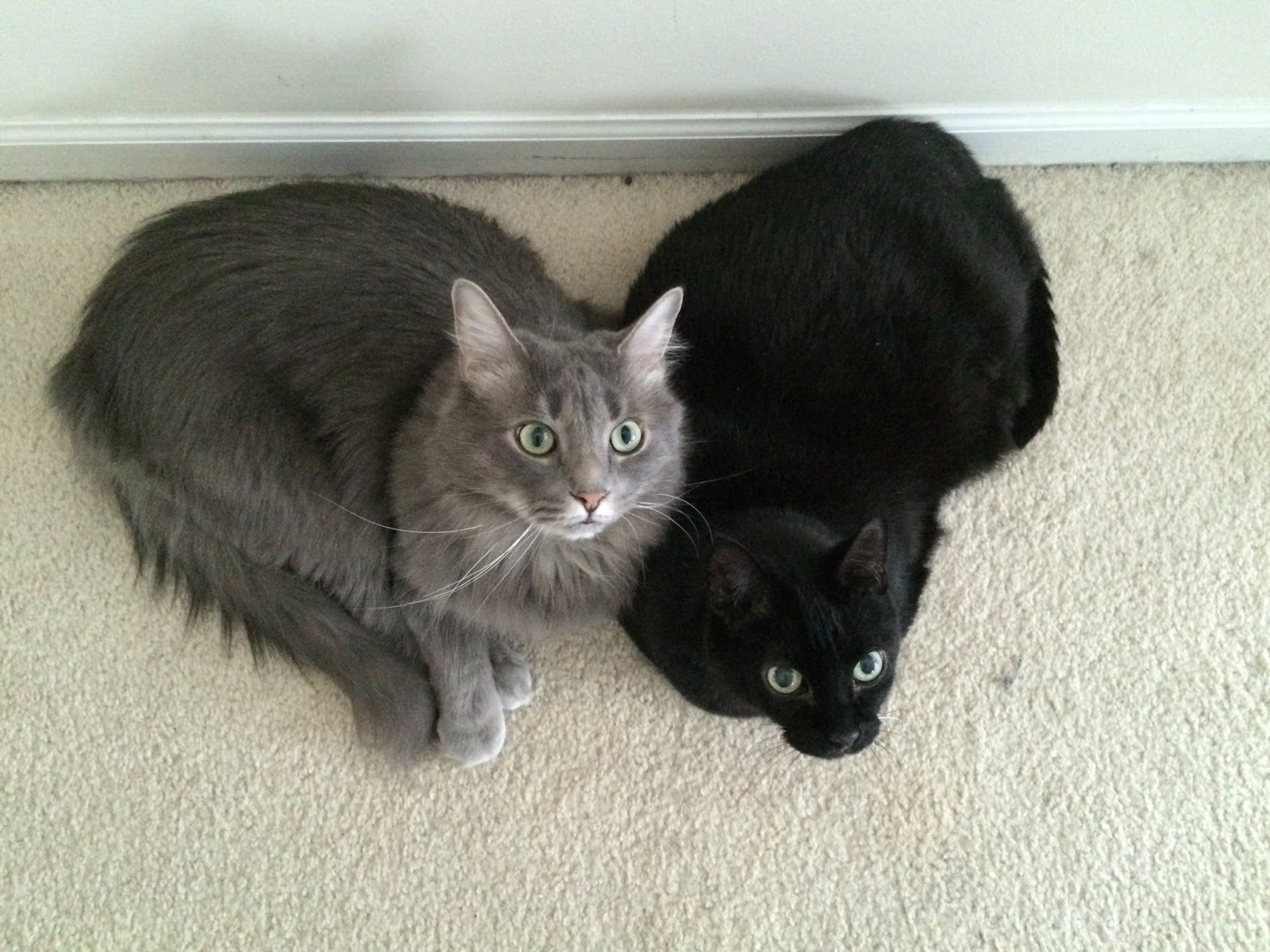
Can you tell which cat has bladder stones?


In light of the numerous cases of bladder stones, crystals and inappropriate urination issues we have seen in the last month, I thought that I would share my own experience with bladder stones, in the hopes that others will take away the same lessons that I learned.

Marley
For over a decade, I shared my life with two lovely cats who were brother and sister. Mina, the sister, is still with me, but I lost Marley to lung cancer in 2013. Both cats came from a rescue group in East Lansing, siblings from a litter of hand-raised kittens whose mother had died when they were 10 days old. Both cats were fairly healthy during their younger years - Marley had a congenital cataract, Mina had some foul diarrhea. Marley had chronic skin allergies. Both cats went through a period of time when they had adverse vaccine reactions. Mina occasionally has bouts of bronchitis. Together, they
kept my hands full!

In September of 2009, I noticed that Marley had stopped squatting to urinate. I was annoyed by the habit, because he would stand in the litterbox and a big stream of urine would splatter out onto the floor in front of the box. I watched this go on for two weeks, because he didn't seem to be in pain - he didn't vocalize or strain when he urinated, he didn't seem to be going all that frequently - maybe 2-3 times daily. He didn't seem to be drinking more water than usual, and the urine wasn't bloody. I wondered if he had developed some arthritis in his hips - after all he was 9 years old at the time. I brought him in to work with me and after a thorough exam, we took hip x-rays. Dr. Brooks looked at the x-ray and said, "Well, his hips are fine, but he has bladder stones." I thought she was teasing me. I couldn't believe it. I looked for myself. Sure enough, there they were - 7 stones (I would share the x-ray, but it is in attic storage, now, and I don't like attics). A few weeks later, I scheduled him for surgery - I forget now, why I waited. It might have been a busy surgery schedule. I might have been saving up money. Anyway, it was a dumb idea to wait, because I was on pins and needles the whole time, worrying that he might become obstructed with a stone. This was a little silly, not because it wasn't possible, but because it takes weeks to months for stones to form, so he could have become obstructed at any time prior to his diagnosis, and I had not been worried, before. Worrying wasn't going to help him. Surgery was the only option.

Calcium oxalate stones
Surgery went smoothly, and 7 large stones (and two smaller stones that were not visible on the x-ray) were removed. We sent off the stones for analysis at the Minnesota Urolith Center and the report stated that they were 70% Calcium Oxalate Monohydrate and 30% Ammonium Acid Urate stones. After surgery, Marley didn't like using the clay litter we use here in the hospital, so he urinated bloody urine on the floor and towel until we switched him back to scoopable clumping litter. At home, he resumed urinating in the box normally, squatting like a good boy.

After that, he switched to a canned stone-prevention diet. Calcium oxalate stones do not dissolve with a dietary change, but they can be prevented from re-forming in many cases. Marley had bladder radiographs and urine rechecks every 6 months until 2012. I had a baby and went on maternity leave around the time that he was due for a recheck. In retrospect, I should have brought him in for a recheck early, but I was caught up in my own medical issues at the end of my pregnancy, and I figured a few months' delay was not that important.

But it was. In May of 2012, four months after the birth of my daughter, I was scheduling Marley for a
One large stone that required surgery to remove, and the many smaller stones we expressed.
repeat cystotomy. He had a bladder full of stones again. They were smaller, this time, but one stone was large enough that it could not be expressed. Marley recovered well from his second cystotomy and continued to do well until July 2013, when cancer took its toll.

Mina
Shortly after I lost Marley, his biological sister, Mina, started vomiting. She has had occasional bouts of acute vomiting, and was empirically
diagnosed with inflammatory bowel disease in 2005. In August 2012, she had a bout of vomiting that lasted about a week, and I brought her in for abdominal x-rays. At that time, she was having no issues urinating in the litterbox. She did not have any intestinal abnormalities, but there was a shadow in her bladder, which turned out to be a "puddle" of small stones. Fortunately, since she is a female, we were able to express all the small stones out of her bladder, and surgery was avoided. We sent in the stones to the Minnesota Urolith Center and they were 100% Calcium Oxalate stones. She has also been eating a crystal prevention diet and so far, she has had no further sign of stones on any of her followup xrays or urine samples.

If I had taken my own advice, many years ago, and fed canned food to my cats more often, I might

Sometimes, a lot of small stones look like one large stone
never have had to deal with this issue, as their urine might have been more dilute and less likely to form stones. I was very fortunate that neither of my cats decided to start urinating outside the litterbox due to discomfort - in fact, they are both very good examples of the fact that cats hide their problems from their owners. As a technician, I should be more attuned to signs and symptoms of illness, and I was unaware of the issues my own cats had. They are also a good testament to the importance of follow-up. Even if your cat seems fine after a treatment or procedure, it is important to follow-up on schedule. If I had brought Marley back 3 months earlier for a recheck, he might have been able to avoid the second cystotomy surgery. It may be that Mina will be one of the lucky few cats that never re-forms stones after a cystotomy, but you can be sure that I will continue to check her every 6 months!
Mina would rather nap than have a bladder recheck

Saturday, June 23, 2012

Why would you want to take my cat "in the back"?

It can be a little distressing when the veterinarian or technician announces that they are taking your pet back to the "treatment area" for a nail trim, blood draw, blood pressure exam or other procedure. What goes on behind closed doors? Why do they request that you remain in the exam room?


The treatment room at Exclusively Cats Veterinary Hospital is a large room with special spotlights, tall tables, anesthesia machines, and various equipment for anything from a nail trim to a small surgical procedure, such as abscess treatment. The boarding rooms are off this room, as is the ICU area. It is the center of the hospital.

Just like small children, pets will often act out in front of their "parents" either because they are feeding off the emotional state of their owners, or because they know what to expect as a reaction from their owners if they make certain sounds or motions. Once removed from the exam room, they usually calm down somewhat to evaluate the unknown environment and unknown people around them.

In some cases, with extremely stubborn or unruly patients (we call them "fractious"), it may be for your own safety that we take your cat "to the back". Ultimately, even though we are an animal health facility, our professional responsibility is also to make sure that no harm comes to the human caretakers in our office (i.e. YOU). Cats generally lash out at anyone nearby when they are upset, and don't care whether they are friend or foe. It is our wish that no client receive an injury from their cat - especially not while at our office! Cat bites can be extremely traumatic, both emotionally and health-wise. Some people are extremely sensitive to the bacteria that is found in many cats' mouths - it is possible that a cat bite could send a person to the hospital for IV antibiotics! While we don't want to frighten anyone, we do want clients to take cat bites seriously, and to allow us to remove a stressed-out or aggressive cat to a more controlled situation if it appears that someone might get injured.

Additionally, while we all love animals - that's why we chose to work with them, our job is to make sure that procedures are accomplished with minimal stress and maximum efficiency for the sake of the cat. Once the pet is in the treatment area, we still treat your cat with respect and care - we NEVER scruff them, and still speak reassuringly towards them, but we may work more quickly and with less conversation than we would if you were present.

Even if your cat is the best patient ever, and acts better in your presence than away from you, it is often preferable to use the treatment area because a wider variety of tools are available, along with better lighting, better tables, and additional staff close at hand in case they are needed - other doctors for a quick second opinion, or another technician for additional handling, calming or for running additional tests, etc. again, all in the interest of providing your pet with the care it needs in a professional and efficient manner.
 
Also, your pet is not the only cat in the treatment area. We often have multiple procedures occurring on different tables - a blood draw on an uncooperative patient, a wound treatment or anal gland expression - something that is not for the faint of heart to observe, or a family may be visiting one of our critical care patients, or there may be a very high-tension cat waiting for surgery (the kind that screams when someone walks by the cage). Having extra commotion in the treatment area could disturb these procedures or aggravate cats that are close to the end of their ropes. In addition, we use chemotherapeutic medications, radioactive iodine and x-ray equipment - these are things that our highly trained staff has been specially educated to use safely, but which could be risk factors for people visiting in the back. In fact, we are legally bound not to allow non-staff-members to be in the room when we take x-rays or to allow anyone into the Radioactive Iodine boarding room other than those registered with our Nuclear Physicist. For these reasons, we often discourage people from coming back into the treatment area when we take their cats "in the back".

There are definitely times that we welcome you "in the back" - to visit a critical patient that is hospitalized with us, to say goodbye to your cat if you are leaving them with us for the day, to see our boarding facilities, or to show you the result of an exam performed under anesthesia. However, most of the time, we hope you understand when we ask you to wait in the exam room, or tell you to go grab some lunch while we run diagnostics. It's not because we don't like you! It is for the safety and well-being of all involved. If you ever feel uncomfortable with a request or recommendation that we make, please do let us know - our goal is to make sure that you and your cat get the best care that we can provide!

Monday, August 22, 2011

Does An Apple A Day Keep the Veterinarian Away? - Feline Health Myths Part 3


Myth: My cat doesn’t need to go to the vet because it is indoor only.

Reality: Over the last five years, the number of times pets visit their veterinarian has decreased significantly. Over that same time period, the incidence of preventable diseases has also increased in cats. In the 2011 State of Pet Health report released in April, the number of cats with fleas increased by 12% and is now double the number of dogs seen with fleas annually. The number of cases of cats with roundworms (which are communicable to humans) increased by 12.6%. The number of cats diagnosed with tapeworms increased by 15%. However, what is interesting is that the greatest increases were seen in diseases that are unrelated to whether cats go outside. Diabetes in cats increased by 16%, ear infections in cats have increased by 34% and dental disease now affects about 88% of all cats over the age of 3 years.

Partnership for Preventive Pet Healthcare logo
The American Veterinary Medical Association (AVMA), one of 16 veterinary health organizations engaged in the Partnership for Preventive Pet Healthcare, recommends yearly checkups at the minimum for all pets, whether they go outside or not. Disease in animals is very subtle, especially in cats. Cats are not pack animals like dogs, so their instinct is to hide their illness from others. It often isn’t until they are very sick that cats show obvious outward signs of poor health. Cats will continue to eat normally despite badly infected, diseased teeth. Kidneys can sustain loss of up to 75% of their function before cats or dogs begin to show outward signs of illness. Often the first obvious sign of high blood pressure (hypertension) in cats is sudden or gradual blindness.

Often the first sign of a problem is weight loss. This loss can be subtle and gradual, so it is important for your veterinarian to have a history of healthy weight trends for your cat. Even if you feel your cat is in perfect health, he should have an annual checkup – in fact, the annual exam is probably of more importance than vaccinations. At Exclusively Cats Veterinary Hospital an individualized vaccination schedule for your cat is always determined by multiple factors, such as age, health status, previous vaccination history and any previous vaccine reactions.

The doctor’s physical exam includes:
  •  a dental exam – are there any painful teeth or abnormalities to the mouth?
  •  a weight and diet assessment – is your cat overweight, underweight, just right. Could any change of weight or other health factor be due to a change in diet?
  • Dr. Bailey examines a white cat named Buddyan assessment of your cat’s skin and coat – does your cat have fleas? Dandruff? Itchy skin? Is there hair missing anywhere?
  •  an assessment of the ears and eyes – are your cat’s deep ear canals clean? Is the eardrum visible? Are the eyes clear? Does your cat show any signs of losing sight?
  •  an assessment of the heart and lungs – are there any unusual sounds in the chest? Is the heartbeat regular and normal, or is there a murmur?
  •  an assessment of the abdominal organs and the musculoskeletal system – are your cat’s kidneys normal in size and shape? Is there anything in the abdomen that feels out of place? Does your cat sit, walk and stand normally?
  •  Is your cat using the appropriate parasite control for its lifestyle? Are any previously discussed issues resolved or recurrent?
In addition to the exam, the veterinarian will discuss your cat’s lifestyle and condition with you. During your visit, be sure to bring up any health-related or behavioral issues, or even general cat care questions you may have. The staff should be more than willing to answer your questions and help make your relationship with your cat the best it can be!

Depending on what the veterinarian finds on physical exam and discusses with you during your visit, he or she may recommend additional tests such as a blood panel, fecal exam or urinalysis.