Showing posts with label vaccines. Show all posts

Monday, November 24, 2014

Woman's 50+ cats being killed after kitten gets rabies


After several kittens in a litter had died, this owner took a sick kitten to the veterinarian, where it bit one of the technicians. The technician followed the law and reported the animal bite and Animal Control was called to investigate. The unvaccinated kitten was tested for rabies and was positive.

This household had some indoor cats, and some indoor/outdoor cats, and only 15 rabies vaccine certificates - one reading only "a black cat" (there were 30 black cats in the household).

There are several important things to take away from this article:

1) It is a good idea to keep copies of your pets' current and up-to-date medical or vaccination records available, and make sure that your veterinarian accurately identifies each pet in your home on their medical records.

2) If your cat bites someone and the victim needs to seek medical attention, the bite will be reported to Animal Control and an investigation will occur. Depending on the circumstances, if your pet's rabies vaccine is not up to date, this could mean that your pet will be quarantined in a special facility at your expense, or it may mean that your pet will be euthanized and tested for rabies.  In fact, depending on the inflexibility of the law, your pet may be euthanized after exposure to a rabid animal as in this case in New Hampshire in which a dog that was two weeks overdue for a rabies vaccine was euthanized after being bitten by a rabid skunk.

3) Many people develop severe infections after cat bites, so medical attention after ANY cat bite is highly recommended - even if it is your own cat! 

4) The domestic animal most commonly reported to have rabies across the United States is the cat ( 247 cats, 89 dogs, 86 cattle, 31 horses/mules, 9 sheep/goats, 3 pigs, 2 llamas in 2013). It is also the most commonly affected domestic animal in the state of Michigan. The most common wild animal to test positive for rabies in Michigan in the bat, followed by the skunk.

Closer to home, Dr. Bailey's son, Christopher, was exposed to rabies while working with a cat at a veterinary hospital in Oakland County about 5-6 years ago (not ECats), about a year after our technician, Jennifer was exposed to a rabid kitten at another hospital in Oakland County (also not ECats) in 2007. Christopher had to receive rabies prophylaxis treatment, while Jennifer only needed to be re-vaccinated, since she had been vaccinated prior to travel to Africa back in 1998. Additionally, Dr. Bailey's good friend and colleague, Dr. Michael Ray had an encounter with a rabid cat at his feline hospital in Roswell, GA, two weeks ago.

 Drs. Scott Weese and Maureen Anderson of the Ontario Veterinary College's Centre for Public Health and Zoonoses comment on the situation: Cat Hoarding and Rabies

Monday, August 18, 2014

Cats and Vaccinations - Frequently Asked Questions


Black cat licking veterinarian after exam  | Exclusively Cats Veterinary Hospital, Waterford, MI
"Thank you" kisses for Dr. Demos!
The most important reason that your cat should visit the veterinarian 1-2 times yearly is for the expert physical exam your pet's doctor performs. A proactive approach to your cat's health, focused on wellness and preventive care can be beneficial because illness and disease can be detected earlier, when treatments may be more successful and less costly. In addition to physical examinations and discussing your cat's diet and litterbox habits, when your veterinarian discusses your cat's health with you, he or she will likely recommend updating your cat's vaccinations.

What are vaccinations?

Vaccinations are injections of a substance that stimulates a cat's immune system, preparing the body to fight disease-causing organisms. Most vaccinations are developed for viral infections - diseases that cannot be treated with antibiotics. Some vaccines are developed for severe bacterial diseases, too.

Types of Vaccines -
  • Inactivated vaccines or "killed virus" vaccinations are vaccines that contain viruses that are unable to reproduce in the body. The majority of this type of vaccine contains adjuvants.
  • Modified-live vaccines contain viruses that can replicate, but do not cause clinical disease. While it is unlikely, it is theoretically possible for this type of vaccine to revert to virulence and cause disease.
  • Recombinant vaccines do not contain the whole virus, but specific parts of the virus DNA that the body's immune system recognizes as an invader, but that don't actually cause disease. These strings of proteins are either inserted into a non-disease-causing virus (vectored vaccine) or are inserted into bacterial DNA (called plasmids) so that antigens can be harvested and purified for use in vaccines (subunit vaccine).

Why do cats need vaccinations?

Vaccinations are very important to the health of your cat - the diseases we vaccinate for are diseases that do not respond well to treatment, and in most cases are deadly or produce life-long complications. Diseases like distemper are extremely long-lasting in the environment, lasting for years and can be brought into your home on your hands, feet or clothing if you come into contact with the virus particles in the environment. Additionally, the virus that causes distemper is resistant to disinfectants, can be passed to kittens through breast milk from the mother and can be acquired in utero. During the summer, cats that go outdoors are at higher risk because they are more likely to spend a longer or more frequent amount of time outdoors. Other diseases that we vaccinate for can be transmitted through the air. Rabies virus is transmitted by the bite of an infected animal, and despite common misconception, an infected animal is not always the raging, frothing creature that you see in the movies. Most skunks do not show signs or symptoms of infection, and any skunk that you encounter should be considered to be a carrier of rabies. In  companion animals, signs of infection may not show up for 10 days after the animal begins shedding the virus - so if your cat gets into a fight with a stray cat that seems healthy, that cat could be rabies positive, but may not be recognizably so until it has disappeared into the woods again.

But my cat doesn't go outside he doesn't need vaccinations!

Indoor cats are definitely at lower risk for communicable diseases, however there are many factors that still create risk for these cats. If you bring a new cat into the house from a rescue or shelter, you may be bringing disease into your home. A trip to the pet store to buy cat food may result in virus particles on your clothing that you can bring home to your cat. A friend with a sick pet may bring virus particles into your home while visiting. Airborn viruses can travel into your home through open windows and doors. You may bring virus particles in on your shoes after working in the yard. A stray cat may visit your screen door. Your cat may need to be boarded in an emergency situation, and would require vaccinations to do so.

In the case of rabies, the major carrier of this disease in Michigan is the bat. We very frequently receive phone calls from people telling us that they found a live or dead bat in their home, and most people do not know that a bat has access to their home until it is inside. Most bats are able to squeeze through extremely narrow openings; the little brown bat can enter a space (5/8" by 7/8") and the big brown bat can squeeze through an opening (1-1/4" by 1/2"). Bat bites are almost microscopic, so you would be unable to tell if your cat had been bitten by the bat. If your unvaccinated cat were to escape from your home and get bitten by an unknown animal, vaccination after the fact would not be guaranteed protection, and Michigan Public Health officials must proceed as though the animal that bit your pet was positive, euthanizing and testing your cat. If your unvaccinated cat bites a person, it could result in a 10 day quarantine at an animal shelter at your expense.

Rabies is a life threatening disease and in companion animals, there is no cure. The only definitive test for rabies requires euthanasia of the animal in question and examination of the brain tissue. By the time your pet starts showing signs of disease, you could already have been exposed. While rabies vaccinations are not required by law for cats in the state of Michigan, the safest thing to do for you and your cat is keep your pet's vaccines up to date.

For the health and safety of all of our patients and staff, all cats that come into our hospital for surgical or dental care or boarding must be up to date on vaccinations.


How often do cats need vaccinations?

The number and frequency of vaccines recommended for a cat is often a complex and individualized plan based on each cat's age, lifestyle, risk assessment and health status. However, there are some general guidelines that have been established by scientific study and experts in the field that are upheld by professional groups that specialize in feline medicine, such as the American Association of Feline Practitioners (AAFP) and the International Society of Feline Medicine (ISFM).  In some states, certain vaccinations and schedules are required by law.

Kittens are more susceptible to disease because their immune systems are not fully developed. Kittens raised by their mothers receive antibodies from their mothers, but these antibodies can interfere with vaccinations. Since we do not know for certain how long maternal antibodies remain active, or if every mother cat provides antibodies to all the major diseases, kittens need a series of vaccines to provide immunity. This series should continue until the kitten is at least 16 weeks of age. Additionally, any cat receiving a vaccination for the first time, no matter how old they are, will usually need a series of two vaccinations to ensure adequate protection.


It is recommended that even if a cat is not due for vaccination in a given year, they should be evaluated by a veterinarian at least annually, to ensure that health and risk status has not changed.

Cats should be tested for Feline Leukemia before starting the series of Feline Leukemia vaccinations because there is no medical benefit in giving a Leukemia vaccine to an infected cat. There are no negative side effects to vaccinating an infected cat, but this also eliminates the possibility of failing to recognize vaccine failure. If a previously untested cat who has been vaccinated for Feline Leukemia is later tested and is positive for Feline Leukemia, there is no way to tell if the Leukemia virus has been present long term or if the cat was recently exposed and the vaccine did not protect him. 

What are the possible side effects of vaccination?

The currently available feline vaccines do have an excellent safety record, however negative events following vaccination can occur. It is important to report these events to your veterinarian if they do occur, as veterinarians are requested to report adverse events to the manufacturer, as well as the USDA. It is also important to note that not all negative events that may follow vaccination can be directly said to be caused by the vaccine with 100% certainty. 

During the years 2002 - 2005, more than 1.25 million vaccines were given to cats at Banfield Hospitals across the US. In that time period, 51.6/10,000 cats had reactions within 30 days of vaccination (0.52%). Of these reactions, 54% experienced lethargy (weakness/tiredness) with or without fever, 25% experienced pain at the injection site, 10% experienced vomiting, 6% experienced facial swelling, 2% experienced generalized itching. Death occurred in 4 cats (0.04%) - two of these deaths were related to anaphylaxis (allergic reaction). Vaccines containing a Chlamydophila component were more likely to cause lethargy and fever than those without. Several other vaccine reaction studies report a rate of adverse reaction between 0.23% and 3% depending on the type of vaccination, the number of vaccinations given at one time, and the type of reaction being monitored.

Anaphylaxis or "allergic reaction" occurs rarely (about 1-5/10,000 cats).  It can be identified as vomiting, diarrhea, respiratory distress, facial itching or swelling, and collapse. Often, this type of reaction can be adequately controlled with the use of antihistimines or steroid medications or a different vaccine formulation.

Vaccine-associated sarcomas are a known problem, but the exact reasons that they form is not yet understood. Many suggest that the development of these tumors may result from inflammation or trauma at the injection site. Feline injection-site sarcomas (FISS) are rare, occurring in fewer than one out of every 10,000-30,000 cats, but the severity of this side effect is frightening to many people. In recent years, many precautions have been taken to minimize the trauma and inflammation caused by vaccination, and the frequency of this problem has significantly decreased. At Exclusively Cats, we give vaccinations in insulin syringes, to decrease the needle trauma associated with vaccination. We allow the vaccines to warm to room temperature before giving them, and we choose to use primarily non-adjuvanted vaccines. In addition, we vaccinate cats only as frequently as medically necessary to provide immunity, and we avoid vaccinating cats that have other compromising health issues (which is why we do not administer vaccinations without a physical exam). In addition, we use recommended vaccination sites low on the leg so that, in the eventuality that a sarcoma does develop, the limb can be amputated if necessary, to prevent the spread of the tumor to the rest of the body and prolong the life of your cat.

More about the diseases that we vaccinate for:
Feline Panleukopenia (also known as Feline Distemper, Feline Parvo, or Infectious Enteritis)
Feline Leukemia
(more to come...)

Monday, October 28, 2013

Raising Orphaned Kittens Part 3: When to call the Veterinarian


One of the hardest parts about fostering orphaned kittens is that kittens can easily get sick. Sick kittens should be dealt with quickly, because they are small and fragile, especially if they have no mother cat.


If one or more of your orphans becomes sick, you should call a veterinarian and discuss the problem. The veterinarian may or may not advise you to bring the kitten in.

At home, you can take your kitten's temperature, if you feel comfortable doing so. You will need a regular thermometer (preferably one that you will not want to use again!) and some KY jelly.  Put some KY on the tip of the thermometer and stick just the tip into the kitten's anus. The kitten will likely protest. Hold the thermometer there until the thermometer beeps (or for about a minute if it is a mercury thermometer). If the kitten's temperature is over 103 or under 99, it is important to call the veterinarian.

Abnormal signs to watch for in a kitten:
  • Discharge from the eyes or nose.
  • Poor appetite
  • Lethargy (lack of energy)
  • Diarrhea 
  • Vomiting
  • Weight loss or failure to gain weight
  • Coughing or sneezing
Emergencies requiring immediate veterinary attention
  • Continuous diarrhea
  • Continuous vomiting
  • Bleeding of any kind 
  • Any trauma: hit by a car, dropped, limping, stepped on, unconscious.
  • Difficulty breathing.
  • A kitten that does not respond or that hasn't eaten for more than a day.

WHAT TO LOOK FOR:

-Watch closely for respiratory signs.  Kittens have weak immune systems, especially when raised away from their mother, as they are not getting any antibodies from their mother. They can easily and quickly succumb to disease and infection if not treated appropriately. 
-Aspiration pneumonia is a concern for bottle-fed kittens; be careful when feeding and give them only what they can swallow at one time. Make sure to feed them in an upright position to decrease risk. 
-Watch stool and urine output closely, and observe for any signs of constipation from the milk formula. Some formulas can increase the risk of diarrhea and some can increase the risk of constipation - either one can be a significant issue for tiny kittens.
-Watch for lethargy/or inappetance.
-If you ever have any questions about kittens’ health please call your veterinarian.

Diarrhea and parasites of the digestive tract
Diarrhea is common in kittens and can have many causes including: parasites, viruses, bacteria, food changes, stress, overfeeding. Because kittens can become dehydrated very quickly, make sure to discuss your kitten's diarrhea with your veterinarian sooner rather than later. If the diarrhea is severe, lasts more than 3 or 4 feedings, or contains blood or obvious parasites, you should call a veterinarian and bring in as much as possible of the feces in a Ziploc bag.

Several causes of diarrhea in kittens involve protozoan (single-celled) parasites, such as coccidia, giardia, and tritrichomonas.  These parasites are common in kittens, and occasionally found in adults.  They are not generally treated with common de-wormers, but antibiotics. For diagnosis of these parasites, especially giardia and tritrichomonas, extremely fresh stool is best for diagnosis.

Most large intestinal worms do not cause diarrhea, but can be very debilitating to kittens in large numbers. Sometimes, if the numbers are large enough, or many worms are dying, the dead worms will pass in the stool. More often, the diagnosis for these parasites is by seeing the microscopic worm eggs in a stool sample. If you see spaghetti-like worms in the stool, you are seeing roundworms. These worms can come up in vomit or stool. The cysts of roundworms can persist for years in soil and be spread to other cats or human children, so it is important to deworm cats as directed by a veterinarian.

If you see rice-like worms on the stool or in the hair around your kittens' tails, you are seeing tapeworm segments. These rice-shaped pieces of the worms are mobile when they exit the body, so they may work their way off the stool or kitten and into the environment. They are not infective at this stage. They are spread by fleas or by eating rodents. Tapeworms do not generally cause diarrhea, but it is advisable to treat your kitten for tapeworms, especially if you know that he has had fleas in the past.

Several types of bacteria, including Clostridium, are potential causes of diarrhea in kittens, and all require microscopic examination, bacterial culture, or PCR testing for diagnosis. These are among the fecal pathogens that can be spread to people if adequate hygiene is not observed after handling sick kittens or litterboxes. Most bacteria respond quickly to antibiotics prescribed by a veterinarian.

Finally, there are a number of viral causes of diarrhea, with feline distemper (also known as panleukopenia or feline parvo virus) being the most devastating. If distemper is suspected, seek veterinary care immediately. Treatment for distemper involves aggressive nutritional supplementation and hospitalization, and you may have a number of kittens die if an entire litter is exposed.This is one of the reasons that you should make sure any older cats in your household are up to date with their annual vaccinations before bringing a kitten into the home. Thoroughly disinfect anything that has been exposed to the sick kittens with a bleach solution.

Ear mite
Ear Mites
Ear mites are tiny arthropod parasites which live in the ear canal. Common signs of ear mites are ears full of coffee-ground-like crumbling debris, itchy ears, head shaking.In very large infestations, you may actually see the pinpoint white mites moving in the debris in the ear. They are highly contagious, but easily treated.

Failure to thrive
Once in a while, one or more kittens in a litter that were healthy and vigorous at birth will begin to "fade" after a week or two of life. They will stop growing, begin to lose weight, stop nursing and crawling. They may cry continuously and lose the ability to stay upright. The mother cat may push them out of the nest, where they often chill and starve to death. Kittens fade very quickly - they will not last 48 hours without veterinary care, and probably will not recover even with intensive care.
There is no clear cause or reason for this condition - it has been linked to birth defects, environmental stress and infectious disease. Early veterinary treatment is imperative, but even with tube feeding, rehydration and monitoring, many, if not most fading kittens will die.

Feline Leukemia (FeLV) and Feline immunodeficiency (FIV)
FeLV and FIV are retroviruses cats get from other cats (or their moms). Testing for disease can help you make the decision whether to foster a kitten, or whether to add kittens to a litter or keep them in isolation. It is often a good idea to have positive test results confirmed.

In the early stages of FeLV, infected cats appear healthy but over months to years, they develop severe, ultimately fatal disease. In very young kittens, it is advisable to test at least twice as some kittens can be transiently positive, or falsely negative.

On the other hand, testing for FIV is more difficult until after a kitten is four months old. The good news about FIV is that it is much harder to transmit than FeLV, and cats that have been infected with FIV can live long, healthy lives, often not experiencing detrimental disease symptoms until the age of 8 years or more.

A flea on a flea comb
Fleas
Fleas are insects that love to feed on kittens. Each flea only consumes a small amount of blood, and most adult cats are relatively unaffected by large flea infestations, however fleas commonly attack in large numbers and an infestation in a kitten can lead to severe anemia and even death. It is essential that your home be free of fleas before bringing home a small kitten.

If your foster kitten enters your home with fleas, it is important to remove them without causing harm.  Fleas can be transported from the kittens isolated in one area to the main part of the house on clothing, shoes, etc. Therefore, it is also important to treat any other animals in the home with monthly flea prevention or a stray flea, flea egg, pupa or larva may cause an infestation in your house - any unprotected animal in the house can then become a reservoir for the infestation.

Check with your veterinarian before applying any commercial flea products to your kitten, as some flea medications can be harmful to cats. One safe way to remove fleas from very young kittens (less than 6 - 8 weeks) is daily flea combing. Keep a jar of soapy water near you to dip the comb into as it comes off the cat full of fleas. Try not to moisten the kitten too much, and make sure to thoroughly dry your kittens after you are done combing.

If the Kitten is 4 Weeks old and over two pounds in weight, Capstar can be given orally up to once a day to kill adult fleas. This product starts to work within 30 minutes and is effective against adult fleas for 4-6 hours. It does not have any affect on, eggs, larva, or other adult fleas in the kittens environment.

If the kitten is 6 weeks old or older, you can use topical monthly applications available from a veterinarian. Despite your best efforts at flea control, you should plan to treat the kittens for a minimum of 90 days to ensure that all the fleas are out of the household. For more information about flea control, please refer to our blog article "Fighting Fleas Fairly...For Good!"

Upper respiratory tract infection (URI)
Upper respiratory infections are very common in kittens, especially if they have been through a shelter situation and exposed to other cats. These infections are caused by airborne viruses and bacteria which are contagious and spread very quickly.

Signs of URI to watch out for:
  • Sneezing and discharge from eyes or nose
  • Congested breathing
  • Loss of appetite
  • Lethargy
  • Dehydration
Vomiting
If your kitten is vomiting, it is possible that the kitten is eating his meals too quickly. You should watch him when he eats and not allow him to eat too much too quickly. If your kitten vomits 2-3 times in a row, it should see a veterinarian. Vomiting can be another sign of distemper in kittens, so it should not be taken lightly.

Friday, March 29, 2013

New Kitten FAQ


Cute blue eyed kitten
KITTENS: RECOMMENDATIONS FOR NEW OWNERS

We would like to congratulate you on the acquisition on your new kitten.  Owning a cat can be an extremely rewarding experience, but it also carries with it quite a bit of responsibility.  We hope this document will give you the information needed to make some good decisions regarding your kitten.

First let us say that we are grateful that you have chosen us to help you with your kitten's health care.  If you have questions concerning any subject related to your kitten's health, please feel free to call our hospital.  Either one of the technicians or one of the doctors will be happy to help you.

How should I introduce my new kitten to its new environment?

A cat is naturally inclined to investigate its new surroundings.  At first, you should limit the cat's area of exploration so that these natural tendencies do not create an unmanageable situation.  After confining the cat to one room for the first few days, you should slowly allow access to other areas of the home. 

What type of playing should I expect from a kitten?

Kitten getting tummy rubs
Kittens love to play with just about ANYTHING! 
Stimulating play is important during the first week.  Stalking and pouncing are important play behaviors in kittens and have an important role in proper muscular development.  If given a sufficient outlet for these behaviors with toys, your kitten will be less likely to use family members for these activities.  The best toys are light weight and movable.  These include wads of paper and small balls.  Kittens should always be supervised when playing with string or ribbons to avoid swallowing them.  Any other toy that is small enough to be swallowed should also be avoided. 

Can I discipline a kitten?

Disciplining a young kitten may be necessary if his or her behavior threatens people or property, but harsh punishment should be avoided.  Hand clapping and using shaker cans or horns can be intimidating enough to inhibit undesirable behavior.  However, remote punishment is preferred.  Remote punishment consists of using something that appears unconnected to the punisher to stop the problem behavior.  Examples include using spray bottles, throwing objects in the direction of the kitten to startle (but not hit) her,  and making loud noises.  Remote punishment is preferred because the kitten associates punishment with the undesirable act and not with you.

When should my kitten be vaccinated?

There are many diseases that are fatal to cats.  Fortunately, we have the ability to prevent many of these by the use of very effective vaccines.  In order to be effective, these vaccines must be given as a series of injections.  Ideally, they are given at about 6-8, 12, and 16 weeks of age, but this schedule may vary somewhat depending on several factors. 
The routine vaccination schedule will protect your kitten from five diseases: distemper, three respiratory organisms, and rabies.  The first four are included in a combination vaccine that is given at 6-8, 12, and 16 weeks old.  Rabies vaccine is given at 12 or 16 weeks of age.  Leukemia vaccine is necessary if your cat does or will go outside or if you have another cat that goes in and out since this deadly disease is transmitted by contact with other cats, especially when fighting occurs.  A vaccine is also available for protection against feline infectious peritonitis (FIP); this vaccine is probably not necessary for all cats and is recommended in selected situations.

Why does my kitten need more than one vaccination for feline distemper, upper respiratory infections, and leukemia?

Kittens receive a temporary form of immunity through their mother's milk while nursing.  This immunity is in the form of proteins called antibodies.  For about 24-48 hours after birth, the kitten's intestine allows absorption of these antibodies directly into the blood stream.  This immunity is of benefit during the first few weeks of the kitten's life, but, at some point, this immunity fails and the kitten must be able to make its own long-lasting immunity.  Vaccinations are used for this purpose.  As long as the mother's antibodies are present, vaccinations do not "take."  The mother's antibodies will neutralize the vaccine so the vaccine does not get a chance to stimulate the kitten's immune system.

Many factors determine when the kitten will be able to respond to the vaccines.  These include the level of immunity in the mother cat, how much of the antibody has been absorbed, and the number of vaccines given the kitten.  Since we do not know when an individual kitten will lose the short-term immunity, we give a series of vaccinations.  We hope that at least two of these will fall in the window of time when the kitten has lost the immunity from its mother but has not yet been exposed to disease.  A single vaccination, even if effective, is not likely to stimulate the long-term immunity which is so important. 

Rabies vaccine is an exception to this, since one injection given at the proper time is enough to produce long-term immunity.

Do all kittens have worms?

This is a type of roundworm
Intestinal parasites are common in kittens.  Kittens can become infected with parasites almost as soon as they are born.  For example, the most important source of roundworm infection in kittens is the mother's milk.  The microscopic examination of a stool sample will usually help us to determine the presence of intestinal parasites.  We recommend this exam for all kittens, if we can get a stool sample.  Please bring one at your earliest convenience.  Even if we do not get a stool sample, we recommend the use of a deworming product that is safe and effective against several of the common worms of the cat.  It is important that deworming be repeated in about 3-4 weeks, because the deworming medication only kills the adult worms.  Within 3-4 weeks the larval stages will have become adults and will need to be treated.  Cats remain susceptible to reinfection with hookworms and roundworms.  Periodic stool analysis and/or deworming throughout the cat's life may be recommended for cats that go outdoors.

Tapeworm segments in a cat's fur
Tapeworms are the most common intestinal parasite of cats.  Kittens become infected with them when they swallow fleas because the eggs of the tapeworm live inside the flea.  When the cat chews or licks its skin as a flea bites, the flea may be swallowed.  The flea is digested within the cat's intestine; the tapeworm hatches and then anchors itself to the intestinal lining.  Therefore, exposure to fleas may result in a new infection, which can occur in as little as two weeks.  Cats may also become infected with tapeworms if they hunt and eat mice.

A lungworm under the microscope

Cats infected with tapeworms will pass small segments of the worms in their stool.  The segments are white in color and look like grains of rice.  They are about 1/8 inch (3 mm) long and may be seen crawling on the surface of the stool.  They may also stick to the hair under the tail.  If this occurs, the segments will dry out, shrink to about half their size, and become golden in color. 


Tapeworm segments do not pass every day or in every stool sample; therefore, inspection of several consecutive bowel movements may be needed to find them.  We may examine a stool sample in our office and not find them, then you may find them the next day.  If you find them at any time, please notify us so we may provide the appropriate drug for treatment.
Giardia organisms


Depending on a kitten's history, other common parasites that we look for are lung worms, heartworms, and infections with single-celled organisms like Giardia or Coccidia.


There are lots of choices of cat foods.  What should I feed my kitten?

Diet is extremely important in the growing months of a cat's life, and there are two important criteria that should be met in selecting food for your kitten.  We recommend a name-brand food made by a national cat food company (not a generic or local brand), and a form of food made for kittens.  This should be fed until your kitten is about 12 months of age.  In the United States, we recommend that you only buy food which has the AAFCO certification.  Usually, you can find this information very easily on the label.  AAFCO is an organization which oversees the entire pet food industry.  It does not endorse any particular food, but it will certify that the food has met the minimum requirements for nutrition.  Most of the commercial pet foods will have the AAFCO label.  Generic brands often do not have approval.

Feeding a dry, canned, or semi-moist form of cat food is acceptable. At Exclusively Cats Veterinary Hospital, we recommend feeding a small amount of dry food and 3-6oz of canned food daily.  

Each type of food has advantages and disadvantages.  Dry food is definitely the most inexpensive.  It can be left in the cat's bowl at all times.  If given the choice, the average cat will eat a mouthful of food about 12-20 times per day.  The good brands of dry food are just as nutritious as the other forms. 

Semi-moist and canned foods are also acceptable.  However, both are considerably more expensive than dry food.  They often are more appealing to the cat's taste; however, they are not more nutritious.  If you feed a very tasty food, you are running the risk of creating a cat with a finicky appetite.  In addition, the semi-moist foods are high in sugar.

Table foods are not recommended.  Because the foods we eat are generally very tasty, cats will often begin to hold out for these and not eat their well-balanced cat food.  If you choose to give your kitten table food, be sure that at least 90% of its diet is good quality commercial kitten food.

We enjoy a variety of things to eat in our diet.  However, most cats actually prefer not to change from one food to another unless they are trained to do so by the way you feed them.  Do not feel guilty if your cat is happy to just eat one food day after day, week after week.

Commercials for cat food can be very misleading.  If you watch carefully you will notice that commercials promote cat food on one basis, TASTE.  Nutrition is rarely mentioned.  Most of the "gourmet" foods are marketed to appeal to owners who want the best for their cats; however, they do not offer the cat any nutritional advantage over a good quality dry food, and they are far more expensive.  If your cat eats a gourmet food very long, he will probably not be happy with other foods.  If he needs a special diet due to a health problem later in life, he will be very unlikely to accept it.  Therefore, we do not encourage feeding gourmet cat foods.

How do I ensure that my kitten is well socialized?

Mother siamese mix with kittens
The socialization period for cats is between 2 and 12 weeks of age.  During that time, the kitten is very impressionable to social influences.  If the kitten has good experiences with men, women, children, dogs, other cats, etc., she is likely to accept them throughout life.  If the experiences are absent or unpleasant, the kitten may become apprehensive or adverse to any of them.  Therefore, during the period of socialization, we encourage you to expose your cat to as many types of social events and influences as possible.

What can be done about fleas on my kitten?

Adult flea
Many of the flea control products that are safe on adult cats are not safe for kittens less than 4 months of age.  Fleas may not stay on your kitten all of the time.  Occasionally, they will jump off and seek another host.  Therefore, it is important to kill fleas on your new kitten before they become established in your house.  Be sure that any flea product you use is labeled safe for kittens.
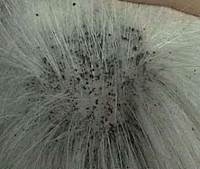
Flea dirt on a cat
This is "flea dirt" - a sure sign of fleas
Flea and tick dip is not recommended for kittens unless they are at least 4 months of age.  Remember, not all insecticides that can be used on dogs are safe for cats and kittens. 

In addition to flea treatments and preventives, it is important to control fleas in the environment by thoroughly vacuuming areas where the kitten spends time.

Can I trim my kitten's sharp toe nails?

Kittens have very sharp toe nails.  They can be trimmed with your regular finger nail clippers or with nail trimmers made for dogs and cats.  If you trim too much, you will cut into the quick of the nail which will bleed and be painful.  If this happens, neither you nor your cat will want to do this again.  Therefore, a few points are helpful:
Trimming cat nails


You can use normal human nail clippers to trim your cat's nails.1. If your cat has clear or white nails, you can see the pink of the quick through the nail so it is easy to avoid.

2. If your cat has black nails, you will not be able to see the quick so only cut 1/32" (1 mm) of the nail at a time until the cat begins to get sensitive.  The sensitivity will usually occur before you are into the blood vessel.  With black nails, it is likely that you will get too close on at least one nail.

3. If your cat has some clear and some black nails, use the average
     clear nail as a guide for cutting the black ones.

4. When cutting nails, use sharp trimmers.  Dull trimmers tend to crush the nail and cause pain even if you are not in the quick. 

5. You should always have styptic powder available.  This is sold in pet stores under several trade names, but it will be labeled for use in trimming nails.

What are ear mites?

Cat ear mite
Ear mite under the microscope
Ear mites are tiny insect-like parasites that live in the ear canal of cats (and dogs).  The most common sign of ear mite infection is scratching of the ears.  Sometimes the ears will appear dirty because of a black material in the ear canal; this material is sometimes shaken out.  The instrument we use for examining the ear canals, an otoscope, has the necessary magnification to allow us to see the mites.  Sometimes, we can find the mites by taking a small amount of the black material from the ear canal and examining it with a microscope.  Although they may leave the ear canals for short periods of time, they spend the vast majority of their lives within the protection of the ear canal.  Transmission generally requires direct ear-to-ear contact.  Ear mites are common in litters of kittens if their mother has ear mites.

Why should I have my female cat spayed?

Spaying or ovariohysterectomy is the removal of the uterus and the ovaries. It offers several advantages:

1.      The female's heat periods result in about 2-3 weeks of obnoxious behavior.  This can be quite annoying if your cat is kept indoors.  Male cats are attracted from blocks away and, in fact, seem to come out of the woodwork.  They seem to go over, around, and through many doors.  Your cat will have a heat period about every 2-3 weeks until she is bred.

2.      It has been proven that as the female dog gets older, there is a significant incidence of breast cancer and uterine infections if she has not been spayed.  Spaying before she has any heat periods will virtually eliminate the chances of either.  There is mounting evidence to believe that this is also true of cats.

3.      Spaying prevents unplanned litters of kittens.

4.      If you do not plan to breed your cat, we strongly recommend that she be spayed before her first heat period.  This can be done anytime after she is 5 months old.

Why should I have my male cat neutered?

Neutering or castration offers several advantages.  Male cats go through a significant personality change when they mature.  They become very possessive of their territory and mark it with their urine to ward off other cats.  The tom cat's urine develops a very strong odor that will be almost impossible to remove from your house.  They also try to constantly enlarge their territory which means one fight after another.  Fighting results in severe infections and abscesses and often engenders rage in your neighbors.  We strongly urge you to have your cat neutered at about 6 to 9 months of age.  If he should begin to spray his urine before that time, he should be neutered immediately.   The longer he sprays or fights, the less likely neutering will stop it.

If I choose to breed my cat, when should that be done?

If you plan to breed your cat, she should have at least one or two heat cycles first.  This allows her to mature physically and she will be a better mother without so much physical drain.  We do not recommend breeding after 5 years of age unless she has been bred prior to that.  Having her first litter after 5 years of age is more physically draining to her and increases the chances of her having problems during the pregnancy and/or delivery.  Once your cat has had her last litter, she should be spayed to prevent the female problems older cats have.

My kitten is already becoming destructive with her nails.  What can be done?

There are several options that can be considered: offering scratching posts, frequent nail clipping, nail shields, surgical declawing, and tendonectomy.

1.      Offering desirable scratching posts near the area where your kitten is scratching is an important tool in helping direct them to appropriate places to express this natural behavior. Many people make the mistake of sticking a scratching post in a far corner or offering scratching accessories that are too small or unstable. Cats need a post that allows them to stretch to their full length to scratch and sturdy enough not to fall over when they do so. You may need to experiment to learn if your cat is a vertical scratcher or a horizontal scratcher, and whether he or she prefers wood, sisal rope, carpet or cardboard as a scratching texture. There is a new product called FeliScratch that is a synthetic copy of the Feline Interdigital Pheromone that they excrete when they scratch. Applying this to a desirable scratching post will help your cat choose an acceptable place to scratch in your house. 

2.        The nails may be clipped according to the instructions above.  However, your cat's nails will regrow and become sharp again in about 4-7 days.  Therefore, to protect your property, it will  be necessary to clip them one to two times per week.

Soft nail caps protect the nails, but do keep them extended
3.      There are some commercially available products that are called nail caps.  These are generally made of smooth plastic and attach to the end of the nail with a special glue.  The nails are still present, but the caps prevent them from causing physical harm.  After 2-4 weeks the nails will grow enough that the caps will be shed.  At that time, you should be prepared to replace them. While soft nail caps protect your furniture from scratching, they do keep the nails in a state of extension, and can cause painful, severe problems if not changed regularly.

4.      Surgical declawing is the removal of the nail at its base.  This surgery is controversial, and you can read further about position of the AAFP on this surgery on their website. This is done under general anesthesia and with proper surgical techniques and adequate pain control, post-surgical discomfort should not exceed that of any other surgical procedure, especially when it is performed on a kitten. As with any surgical procedure, there can be complications and side effects. It should be noted that a declawed cat will not realize the claws are gone and will continue to "sharpen" the claws as normal on various objects, including scratching posts and furniture items. This surgery can be performed as early as 12 weeks of age or anytime thereafter.  It can also be done the same time as spaying or neutering.  Once declawed, your cat should always live indoors since the ability to defend itself is compromised.

5.      Tendonectomy is the surgical removal of a small part of the tendon on the bottom of each toe.  This tendon is needed to make the nail extend.  The cat retains its nails, but it cannot extend them for sharpening and scratching.  The disadvantage of this procedure is that the nails continue to grow and may grow into the pads.  Therefore, the nails should be clipped every 7 to 14 days.

You can also consider additional ways of modifying behavior, which may prevent the cat from scratching furniture in the house or being destructive.

This client information sheet is based on material written by Ernest E. Ward Jr., DVM.

Monday, August 22, 2011

Does An Apple A Day Keep the Veterinarian Away? - Feline Health Myths Part 3


Myth: My cat doesn’t need to go to the vet because it is indoor only.

Reality: Over the last five years, the number of times pets visit their veterinarian has decreased significantly. Over that same time period, the incidence of preventable diseases has also increased in cats. In the 2011 State of Pet Health report released in April, the number of cats with fleas increased by 12% and is now double the number of dogs seen with fleas annually. The number of cases of cats with roundworms (which are communicable to humans) increased by 12.6%. The number of cats diagnosed with tapeworms increased by 15%. However, what is interesting is that the greatest increases were seen in diseases that are unrelated to whether cats go outside. Diabetes in cats increased by 16%, ear infections in cats have increased by 34% and dental disease now affects about 88% of all cats over the age of 3 years.

Partnership for Preventive Pet Healthcare logo
The American Veterinary Medical Association (AVMA), one of 16 veterinary health organizations engaged in the Partnership for Preventive Pet Healthcare, recommends yearly checkups at the minimum for all pets, whether they go outside or not. Disease in animals is very subtle, especially in cats. Cats are not pack animals like dogs, so their instinct is to hide their illness from others. It often isn’t until they are very sick that cats show obvious outward signs of poor health. Cats will continue to eat normally despite badly infected, diseased teeth. Kidneys can sustain loss of up to 75% of their function before cats or dogs begin to show outward signs of illness. Often the first obvious sign of high blood pressure (hypertension) in cats is sudden or gradual blindness.

Often the first sign of a problem is weight loss. This loss can be subtle and gradual, so it is important for your veterinarian to have a history of healthy weight trends for your cat. Even if you feel your cat is in perfect health, he should have an annual checkup – in fact, the annual exam is probably of more importance than vaccinations. At Exclusively Cats Veterinary Hospital an individualized vaccination schedule for your cat is always determined by multiple factors, such as age, health status, previous vaccination history and any previous vaccine reactions.

The doctor’s physical exam includes:
  •  a dental exam – are there any painful teeth or abnormalities to the mouth?
  •  a weight and diet assessment – is your cat overweight, underweight, just right. Could any change of weight or other health factor be due to a change in diet?
  • Dr. Bailey examines a white cat named Buddyan assessment of your cat’s skin and coat – does your cat have fleas? Dandruff? Itchy skin? Is there hair missing anywhere?
  •  an assessment of the ears and eyes – are your cat’s deep ear canals clean? Is the eardrum visible? Are the eyes clear? Does your cat show any signs of losing sight?
  •  an assessment of the heart and lungs – are there any unusual sounds in the chest? Is the heartbeat regular and normal, or is there a murmur?
  •  an assessment of the abdominal organs and the musculoskeletal system – are your cat’s kidneys normal in size and shape? Is there anything in the abdomen that feels out of place? Does your cat sit, walk and stand normally?
  •  Is your cat using the appropriate parasite control for its lifestyle? Are any previously discussed issues resolved or recurrent?
In addition to the exam, the veterinarian will discuss your cat’s lifestyle and condition with you. During your visit, be sure to bring up any health-related or behavioral issues, or even general cat care questions you may have. The staff should be more than willing to answer your questions and help make your relationship with your cat the best it can be!

Depending on what the veterinarian finds on physical exam and discusses with you during your visit, he or she may recommend additional tests such as a blood panel, fecal exam or urinalysis.